Why So Many Indians Give Up Yoga Because of Pain
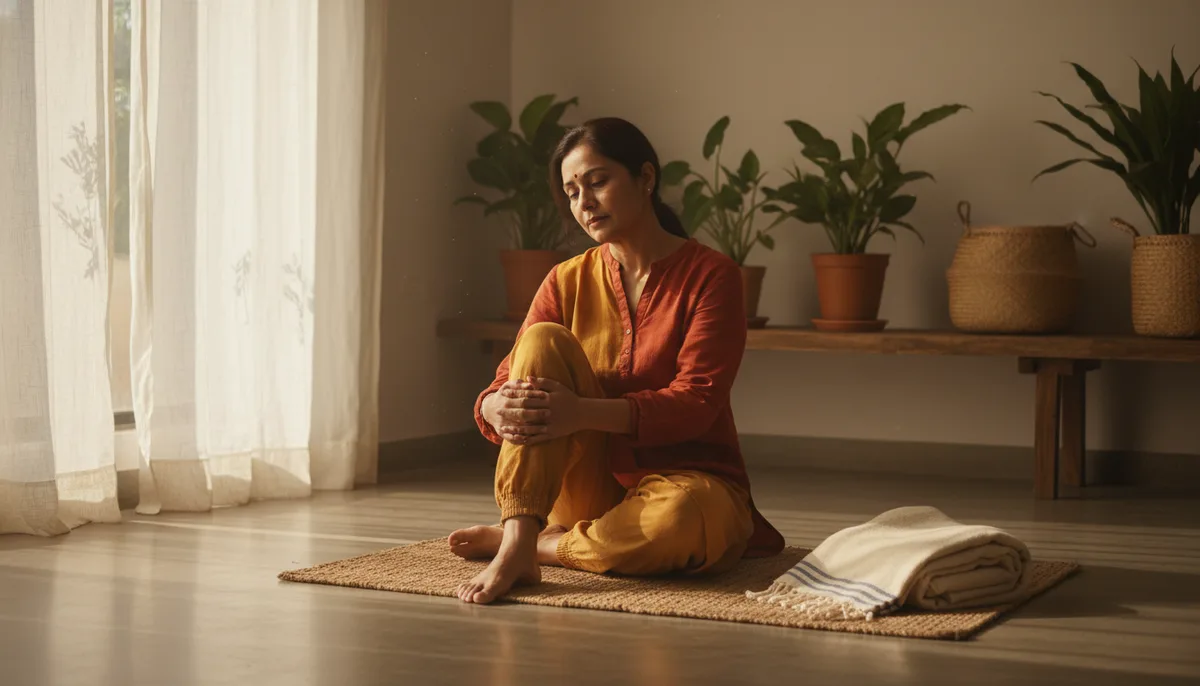
Ask anyone in their thirties or forties in Bangalore, Mumbai, or Pune, and you will likely hear the same story: they tried yoga once, felt something uncomfortable in their knee or lower back, and quietly decided it was not for them. Maybe a well-meaning instructor told them to push deeper into a pose. Maybe the group class moved too fast. Maybe they simply did not know that modification was an option.
The truth is, yoga was never meant to be a one-size-fits-all practice. The idea that you need perfectly flexible hamstrings or pain-free knees to begin is one of the biggest myths keeping Indian adults away from something that could genuinely help them feel better. If you have been sitting at a desk for eight hours a day, carrying stress in your shoulders, or waking up with a stiff lower back, yoga is not off-limits for you. It may actually be one of the most practical things you can do.
This guide is specifically for people who want to practice safely at home, with the kinds of limitations that are very common in Indian adults: tight hips from years of sitting cross-legged on the floor, knee discomfort, or that persistent ache in the lumbar region that comes from a sedentary workday.
Understanding What Is Actually Causing Your Discomfort
Before you modify anything, it helps to understand the difference between discomfort you can work through and pain you should stop for. As a general rule, a dull stretch sensation is fine. A sharp, pinching, or stabbing feeling in a joint is a signal to back off immediately.
Most knee discomfort during yoga comes from one of two places: the pose is being held with poor alignment, or the supporting muscles around the knee - the quadriceps, hamstrings, and calves - are too tight to allow the joint to sit comfortably. Back stiffness is almost always about tight hip flexors (common in people who sit for long periods) combined with weak core muscles that are not supporting the spine.
None of these are permanent conditions. They are patterns, and patterns can change with consistent, gentle movement. That is the honest promise of a home yoga practice.
Key Modifications for Common Poses
Protecting Your Knees in Seated and Kneeling Poses
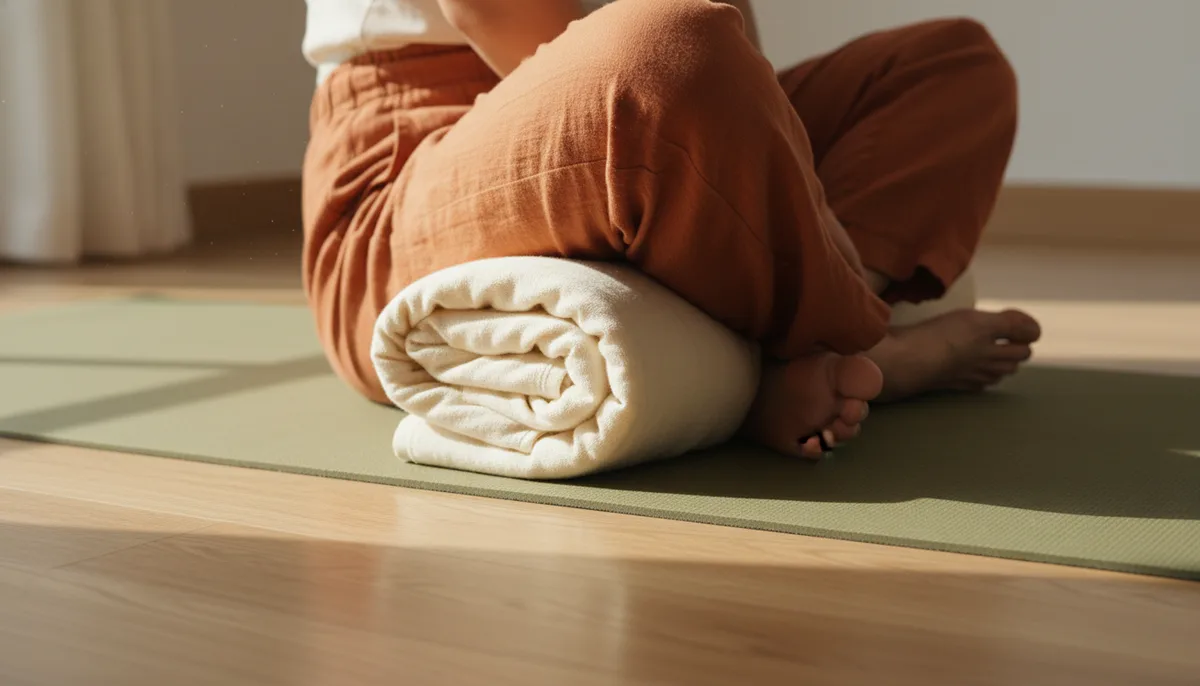
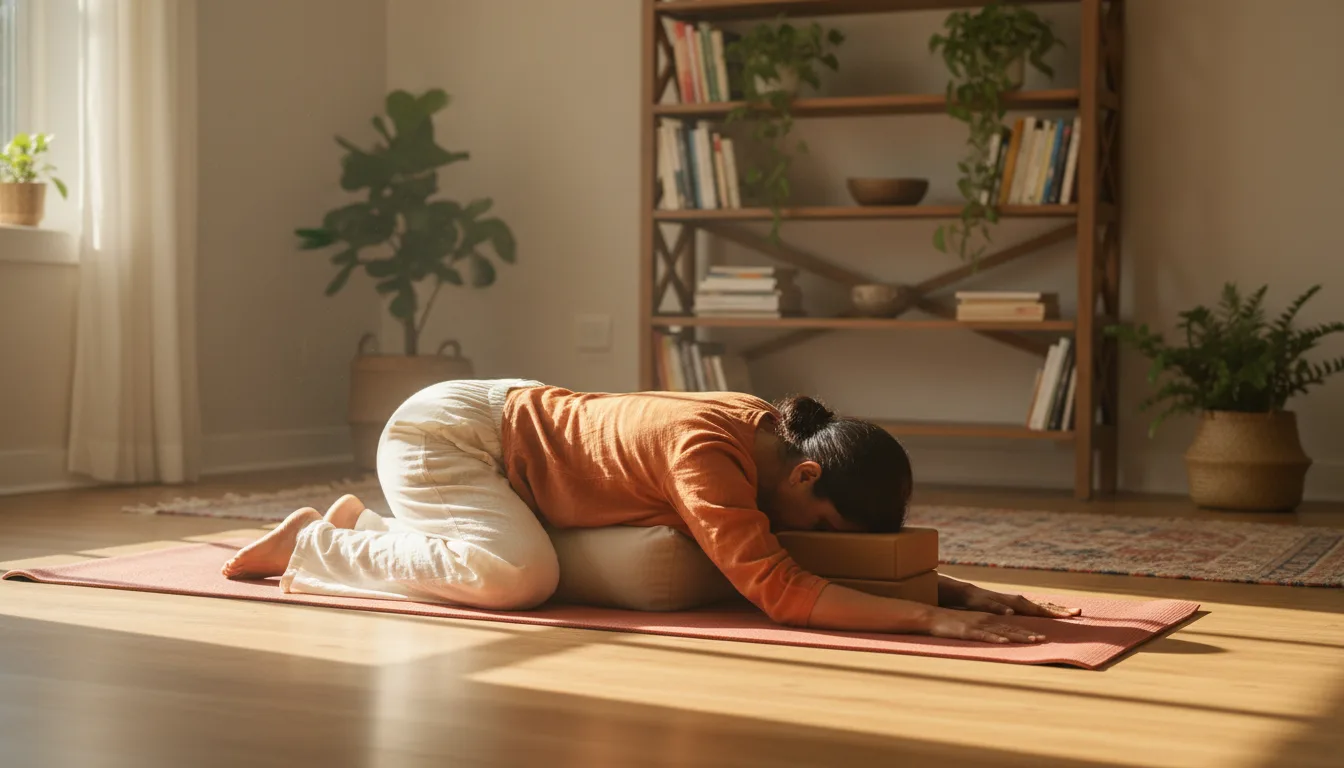
If poses like Vajrasana (thunderbolt pose) or Balasana (child's pose) cause knee pain, the solution is usually simple: fold a blanket or thick towel and place it behind your knees before bending them. This small lift reduces the compression on the joint significantly. You can also sit on a rolled blanket instead of directly on your heels.
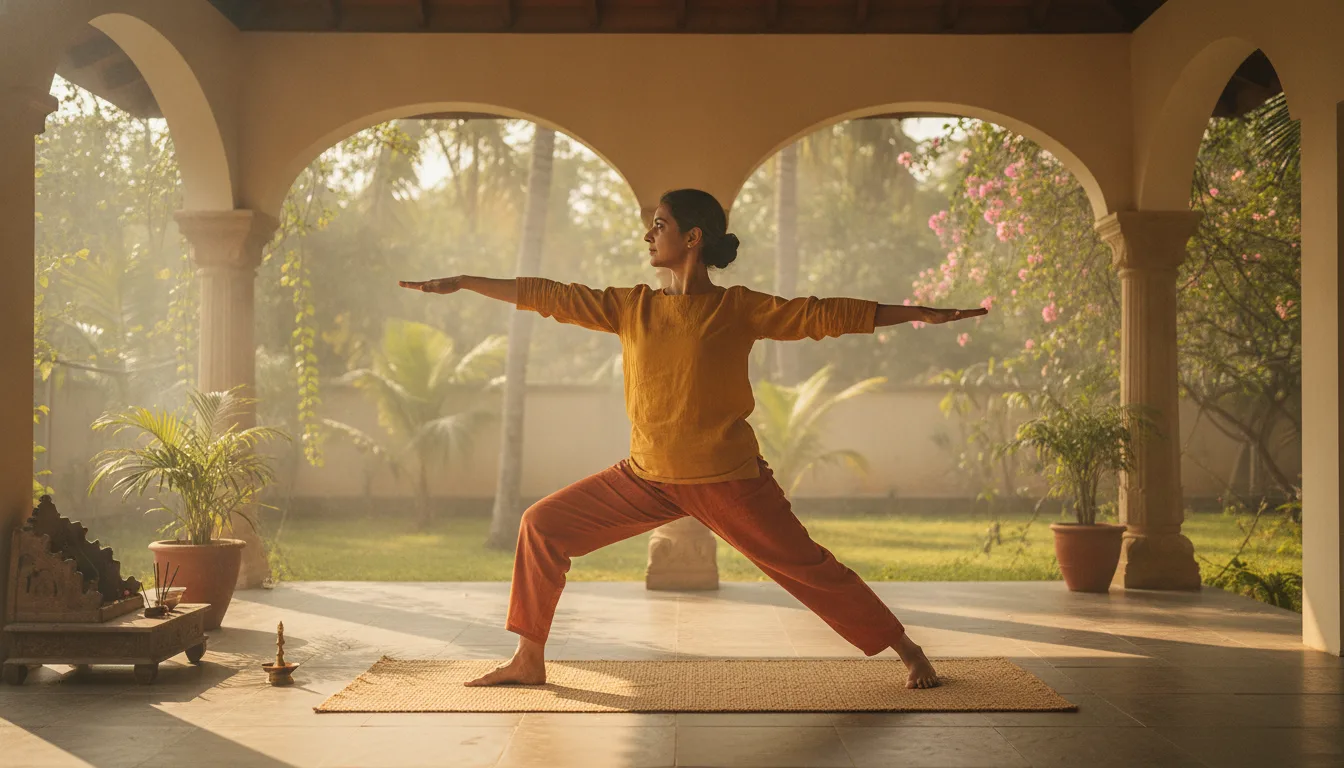
For poses like Virabhadrasana (warrior pose), make sure your bent knee stays directly over your ankle and does not drift inward. This single alignment cue resolves the majority of knee discomfort in standing poses.
Easing a Stiff Lower Back
Twists and forward folds are often recommended for back pain, but done incorrectly they can make things worse. The key is to always lengthen the spine before you bend or twist - think of creating space between your vertebrae rather than collapsing into the pose.
Supta Pawanmuktasana (wind-relieving pose) done lying on your back is one of the safest and most effective moves for lower back relief. Draw one knee to your chest, hold for five breaths, and switch sides. No equipment needed, no risk of strain. Setu Bandhasana (bridge pose) with feet flat on the floor is another gentle strengthener that supports the lumbar region without compressing it.
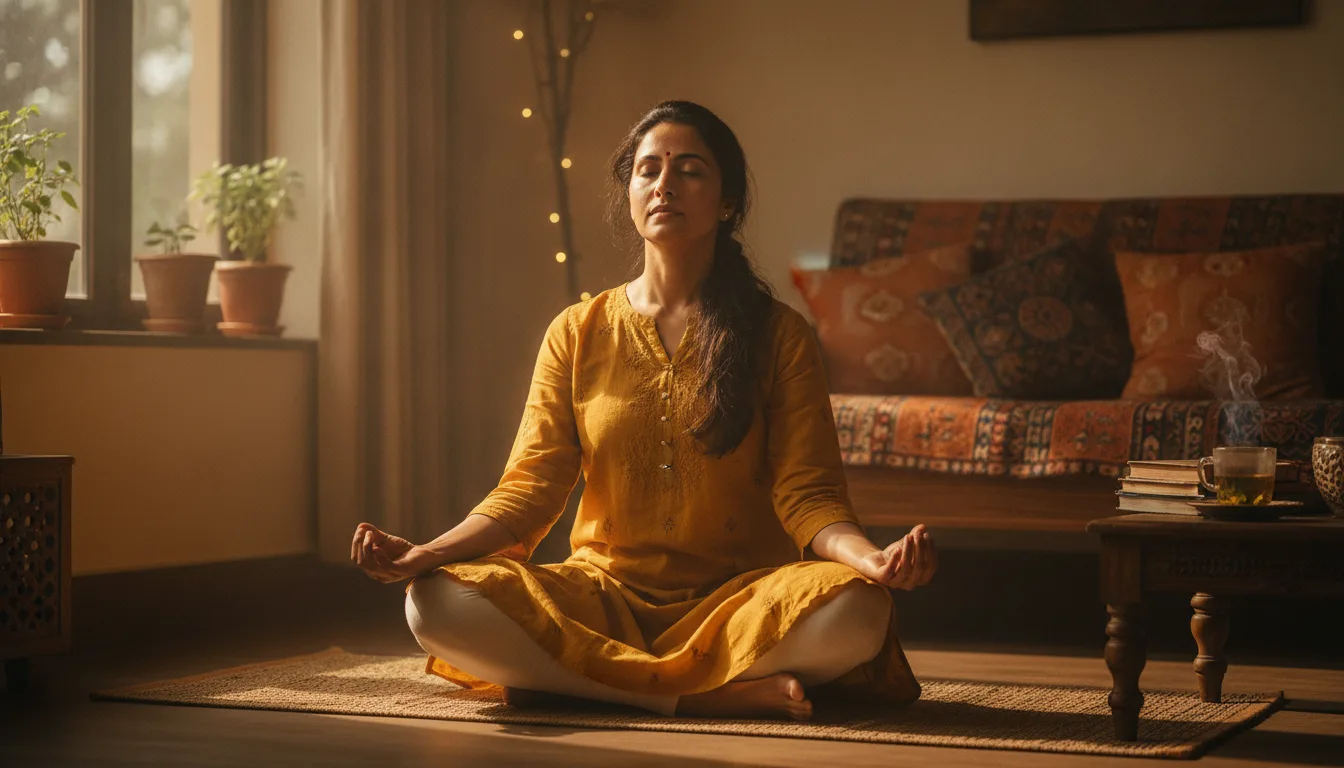
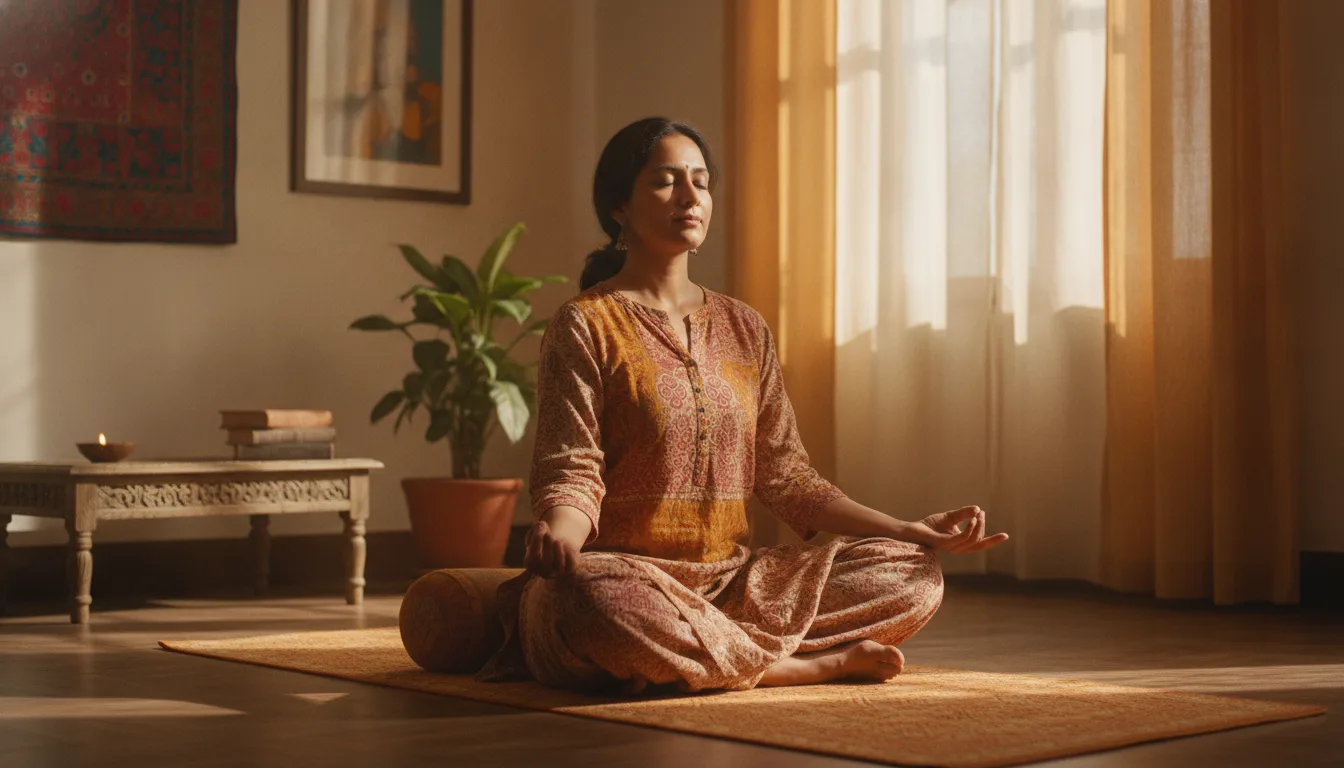
If sitting up straight on the floor is uncomfortable (as it often is for people with tight hamstrings), sit on a folded blanket to tilt the pelvis slightly forward. This small change makes seated poses dramatically more accessible.
Building a Safe Home Practice From Scratch
One of the advantages of practicing at home is that nobody is watching the clock or the person on the next mat. You can move at your own pace, hold modifications without self-consciousness, and listen to what your body actually needs that day.
A good starting point for anyone working with knee or back issues is a short practice: ten to fifteen minutes of gentle movement, three to four times a week. Consistency matters more than duration. Doing twelve minutes every other day will do far more for a stiff back than one long session on a Sunday.
If you are not sure where to begin, Grihasana Premium is designed exactly for this - daily home practice sessions that are built around real bodies with real limitations, not the picture-perfect poses you see in international wellness magazines.
A simple weekly structure for beginners working with stiffness might look like this:
- Day 1: Gentle warm-up, simple seated stretches, Pawanmuktasana series
- Day 2: Rest or a five-minute breathing practice
- Day 3: Standing poses with wall support, modified warrior sequence
- Day 4: Rest
- Day 5: Floor-based practice, bridge pose, gentle twists
- Day 6 and 7: Light movement or rest, depending on how you feel
Props You Probably Already Have at Home
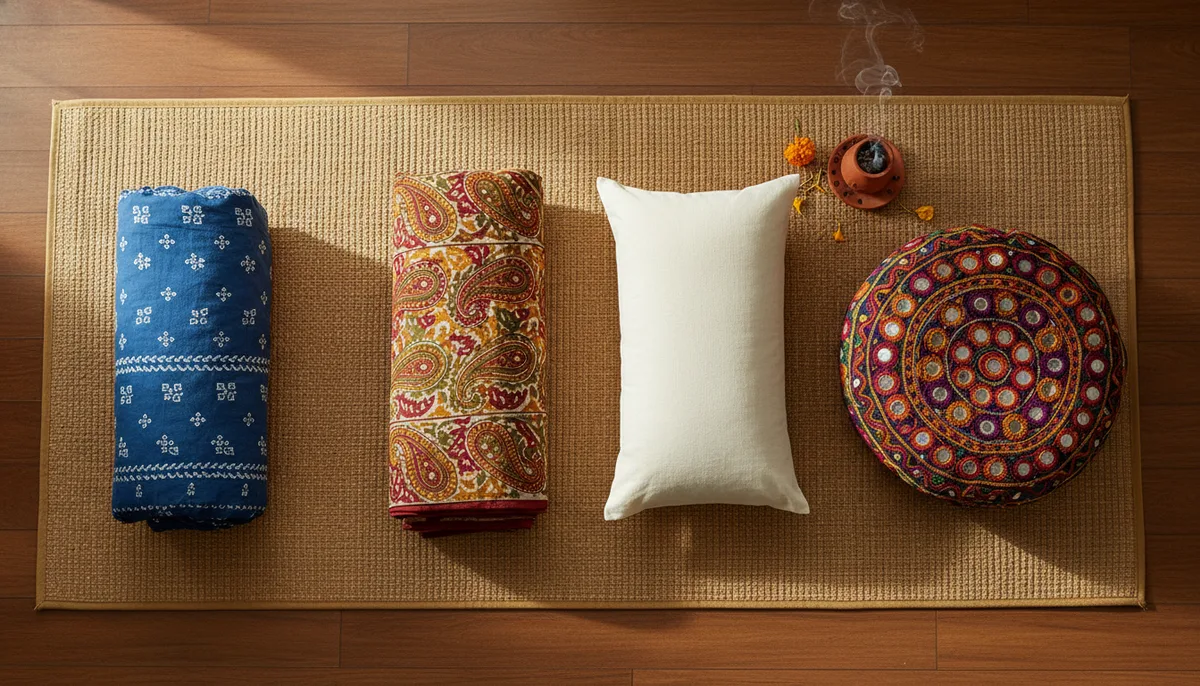
You do not need to buy a professional yoga block or a special strap to practice with modifications. Indian homes are already full of useful props:
- A thick cotton towel or dupatta can replace a yoga strap for gentle hamstring stretches
- A folded bedsheet or divan cushion works as a block to sit on or support your hips
- A wall is the most underrated yoga prop - it can support your balance in standing poses and help you maintain alignment
- A firm pillow can go under your knees when lying down to protect the lower back
The point is, accessibility is already in your home. You just need the right guidance to use it safely.
What to Expect in the First Few Weeks
The first week of returning to movement after a long break - or starting for the first time - can feel awkward. You might notice that one side is much tighter than the other, or that poses you expected to be easy feel surprisingly hard. This is completely normal and not a sign that something is wrong.
By the end of the second and third week, most people notice small but real changes: it is slightly easier to get up from the floor, the morning stiffness fades a little faster, or they simply feel calmer during the day. These are the real markers of progress, not whether you can touch your toes.
If you want a structured way to build this habit without the guesswork, starting with the Grihasana Premium plan gives you a week-long trial at just Rs. 749 - enough time to feel whether the practice is working for your body before committing to a longer plan. There are no auto-renewals and no surprise charges: the plan runs for its fixed duration and you choose what to do next.
A Note for People Returning After Injury or Surgery
If you are returning to movement after a knee surgery, a slipped disc diagnosis, or any other medical event, please get clearance from your doctor or physiotherapist before beginning. Yoga at home can be a wonderful complement to your recovery, but it should not replace professional medical guidance.
That said, many physiotherapists in India now actively recommend gentle yoga as part of post-recovery care - particularly for back and hip issues. The two work well together when approached thoughtfully.
The Long View: Why Gentleness Wins
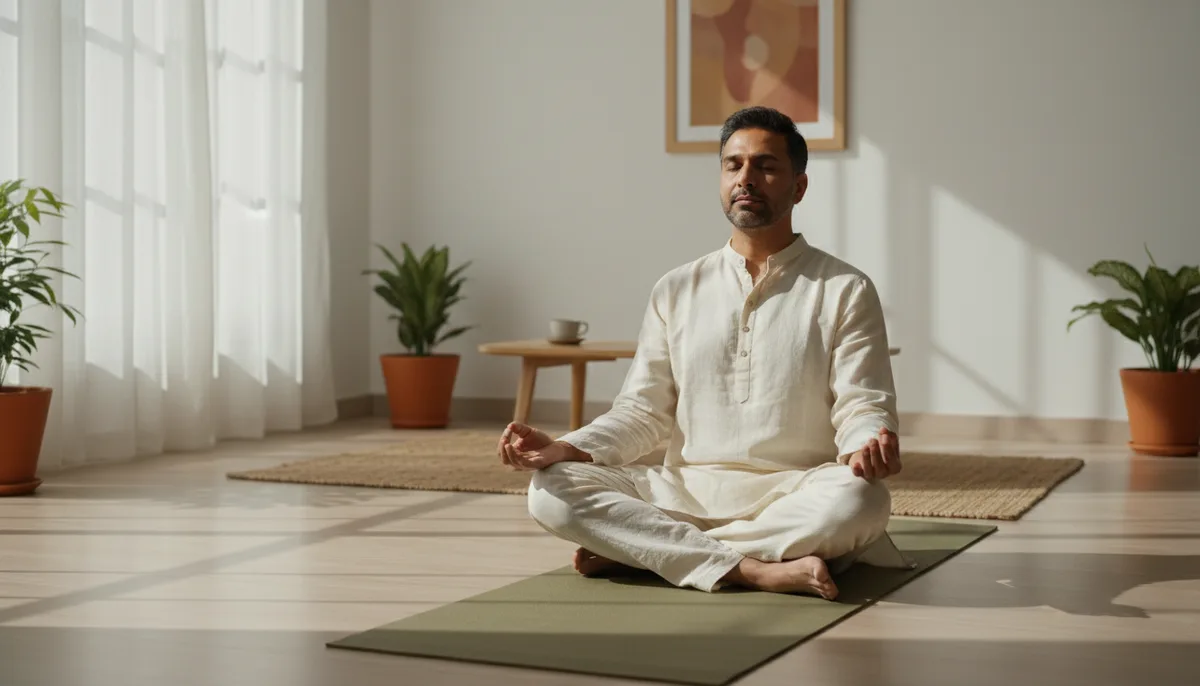
There is a version of yoga that is about pushing harder, holding longer, and achieving increasingly complex poses. That version is not for everyone, and it is certainly not the only valid version.
A quieter, more sustainable approach - ten minutes a day, modifications included, at home on your own mat - builds something far more valuable than flexibility. It builds the kind of body awareness that helps you move better through daily life: getting on and off the floor comfortably, carrying groceries without straining your back, sitting through a long family gathering without your hips aching.
That is what a home yoga practice can offer when it is built around your actual body, not an ideal one. And that is exactly the kind of practice Grihasana was built to support - one gentle session at a time, in the quiet of your own home.