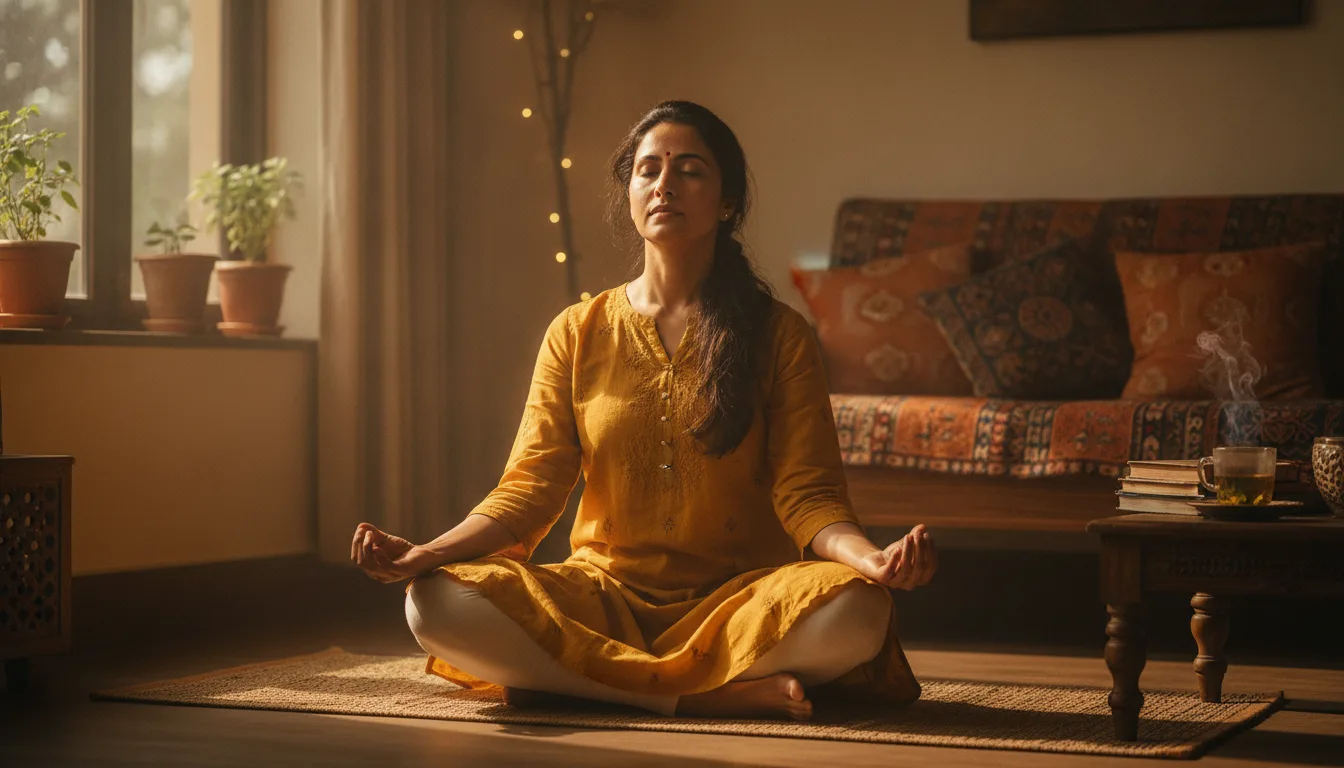
When Your Mind Won't Slow Down
You finish dinner, sit down for a moment of quiet, and then it begins. The mental list. Did you reply to that email? What about tomorrow's meeting? The school fees. The argument from last week that you haven't fully processed. Before you know it, an hour has passed and you're more wound up than when you sat down.
This is not a personal failing. This is the texture of modern Indian life. We carry a lot - work pressures, family responsibilities, social expectations, and a constant buzz of news and notifications. It is no wonder that more and more people are quietly struggling with anxiety and overthinking.
The good news is that yoga - done gently and consistently at home - can help your nervous system find a quieter gear. Not because it is magic, but because it gives your body and breath something concrete to do instead of feeding the mental spiral.
Why Yoga Works for an Anxious Mind
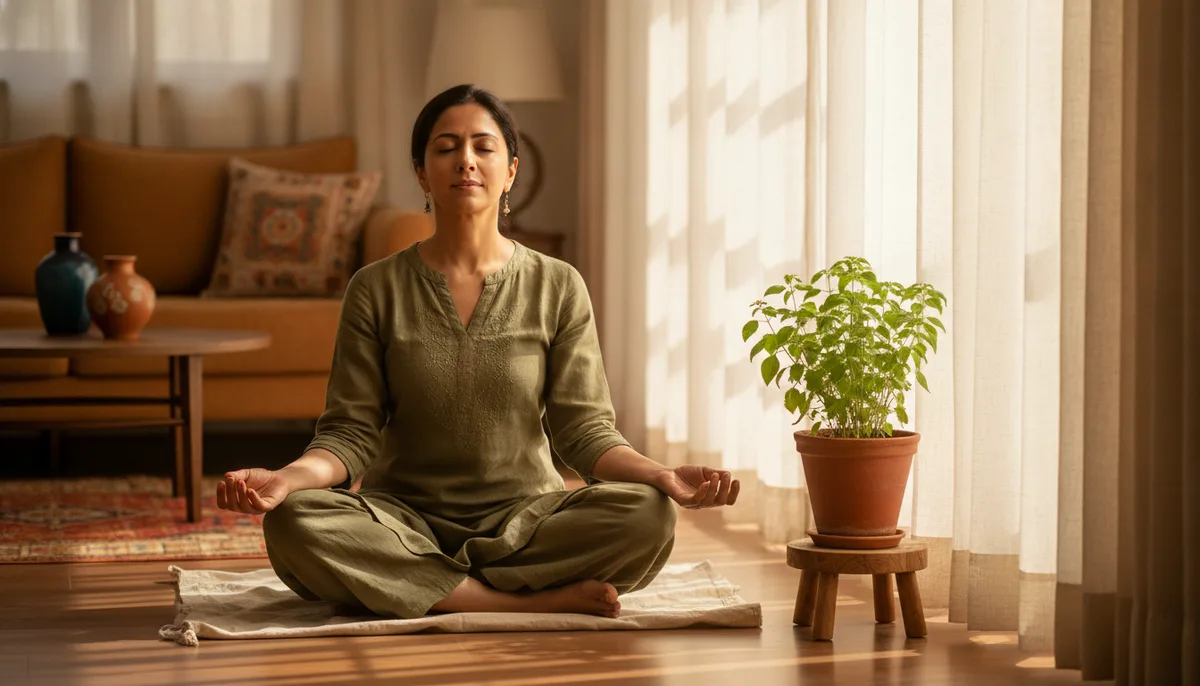
Anxiety lives in the body as much as it does in the mind. You may notice a tight chest, shallow breathing, tense shoulders, or a clenched jaw - especially during stressful weeks at work or around big family events. Yoga works by gently interrupting these physical patterns.
When you slow your breath and hold a simple pose, your body receives a signal that it is safe. The nervous system begins to settle. This is not a dramatic shift - it is subtle, like turning a dimmer switch rather than flicking a light off. Over days and weeks of consistent practice, that calmer baseline becomes your default.
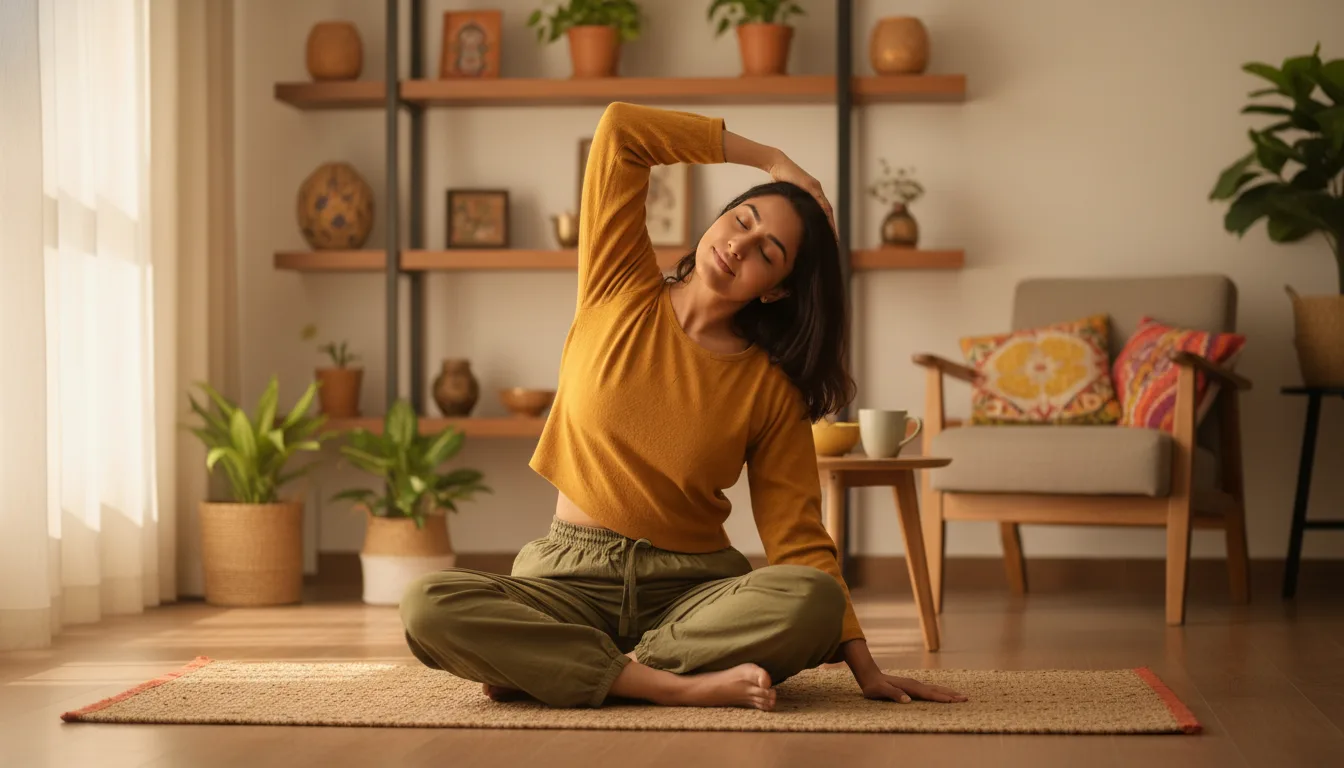
You do not need a 60-minute power session to get there. Even 10 to 15 minutes of intentional, slow movement can shift how you feel by the end of it.
Poses That Help With Overthinking
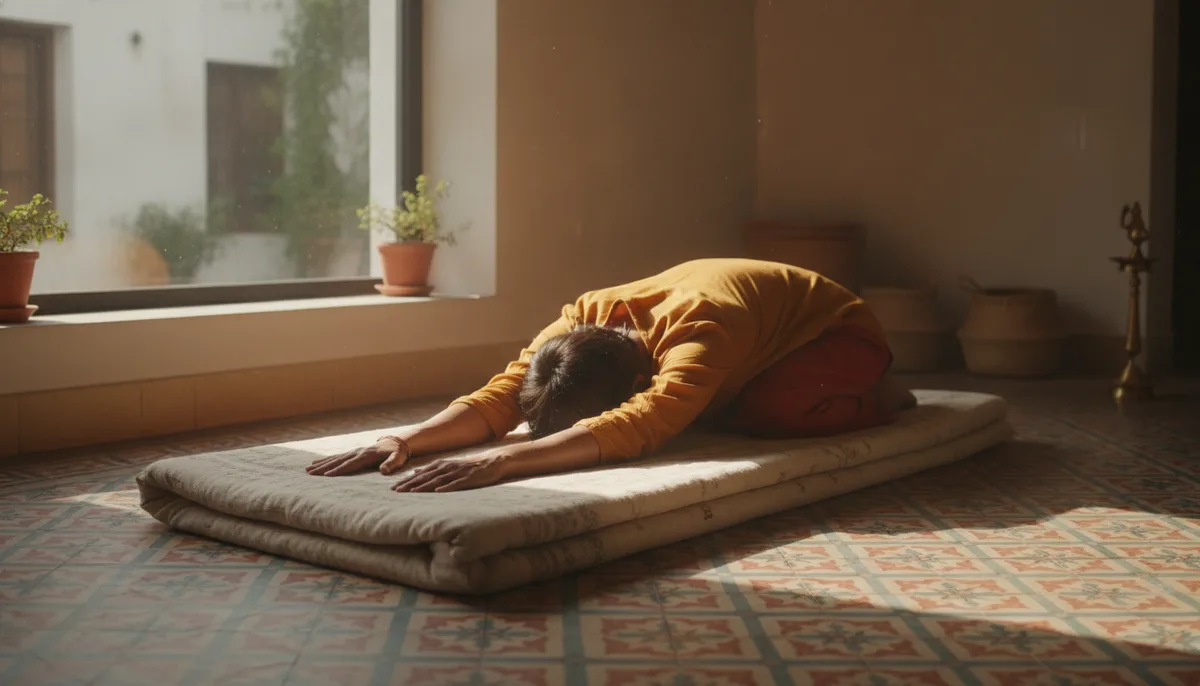
These poses work best when done slowly, with attention on the breath rather than perfecting the shape. If your mind wanders (and it will), simply notice that and come back to what your body is doing. That act of returning is the practice.
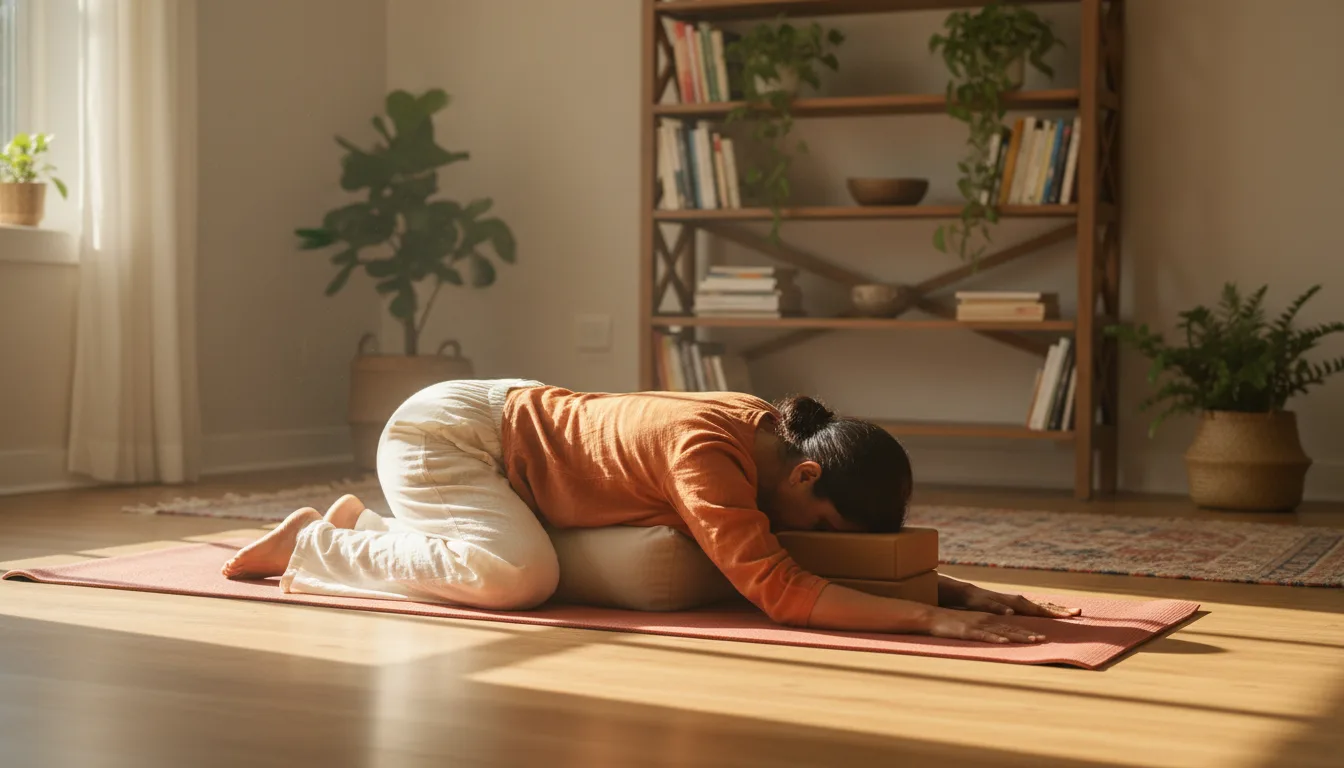
Child's Pose (Balasana)
Kneel on your mat and lower your chest toward the floor, arms stretched forward or resting alongside your body. Let your forehead touch the ground. Stay here for 8 to 10 slow breaths. This pose is naturally calming because it mimics the body's instinctive curl of self-protection, while the pressure of the forehead on the mat has a genuinely grounding effect. It is one of the safest poses for most bodies and an excellent starting point if anxiety is high.
Legs Up the Wall (Viparita Karani)
Sit sideways next to a wall, then swing your legs up so they rest vertically while your back is flat on the floor. Use a folded blanket under your lower back if needed. Stay for 5 to 10 minutes. This is one of the most powerful restorative poses in yoga - reversing the blood flow gently and activating the parasympathetic nervous system, which is the part of your body responsible for rest and calm. Many people find their racing thoughts visibly slow within two or three minutes.
Seated Forward Fold (Paschimottanasana)
Sit with your legs extended. On an exhale, hinge forward from the hips rather than rounding the back. Rest your hands on your shins, ankles, or feet - wherever you comfortably reach. Do not strain. The folding inward is symbolic and physical at once: it draws your attention inside and quiets the outward-facing, reactive energy that anxiety tends to generate.
Supine Twist (Supta Matsyendrasana)
Lie on your back, hug one knee into your chest, then let it fall gently across your body to the opposite side. Extend your arms wide and look toward the raised hand. Hold for five breaths, then switch sides. Twists are particularly effective for releasing tension in the mid-back and chest, areas where many people physically hold stress.
Breathing Practices That Calm the Mind
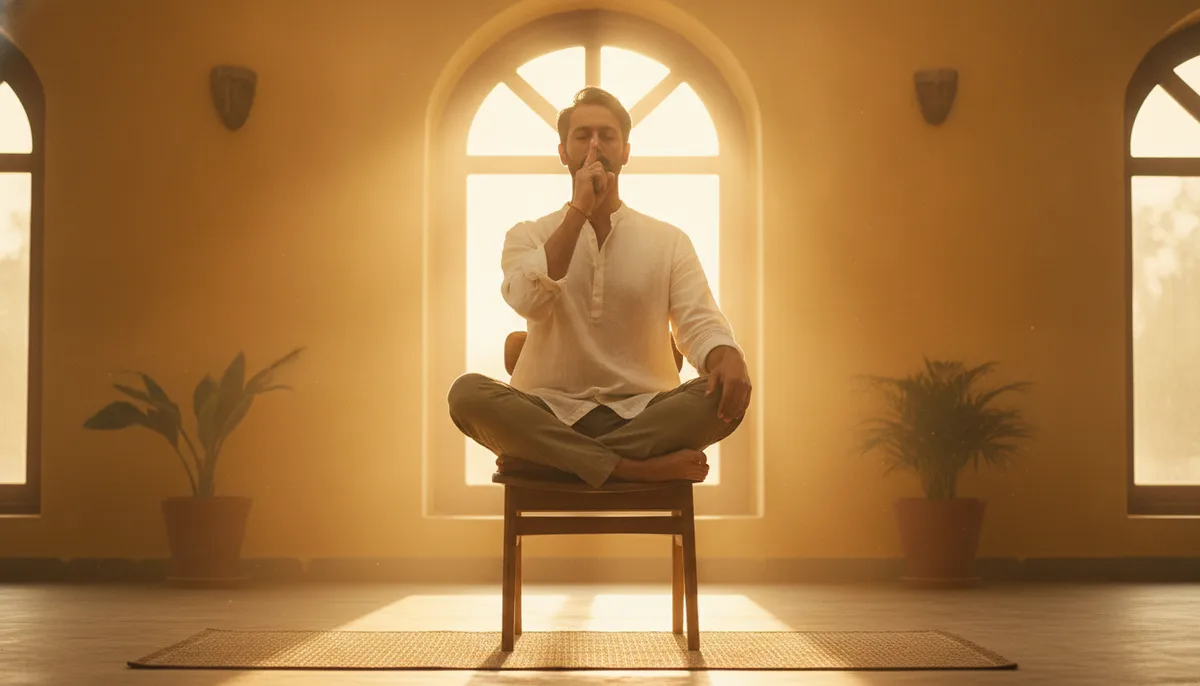
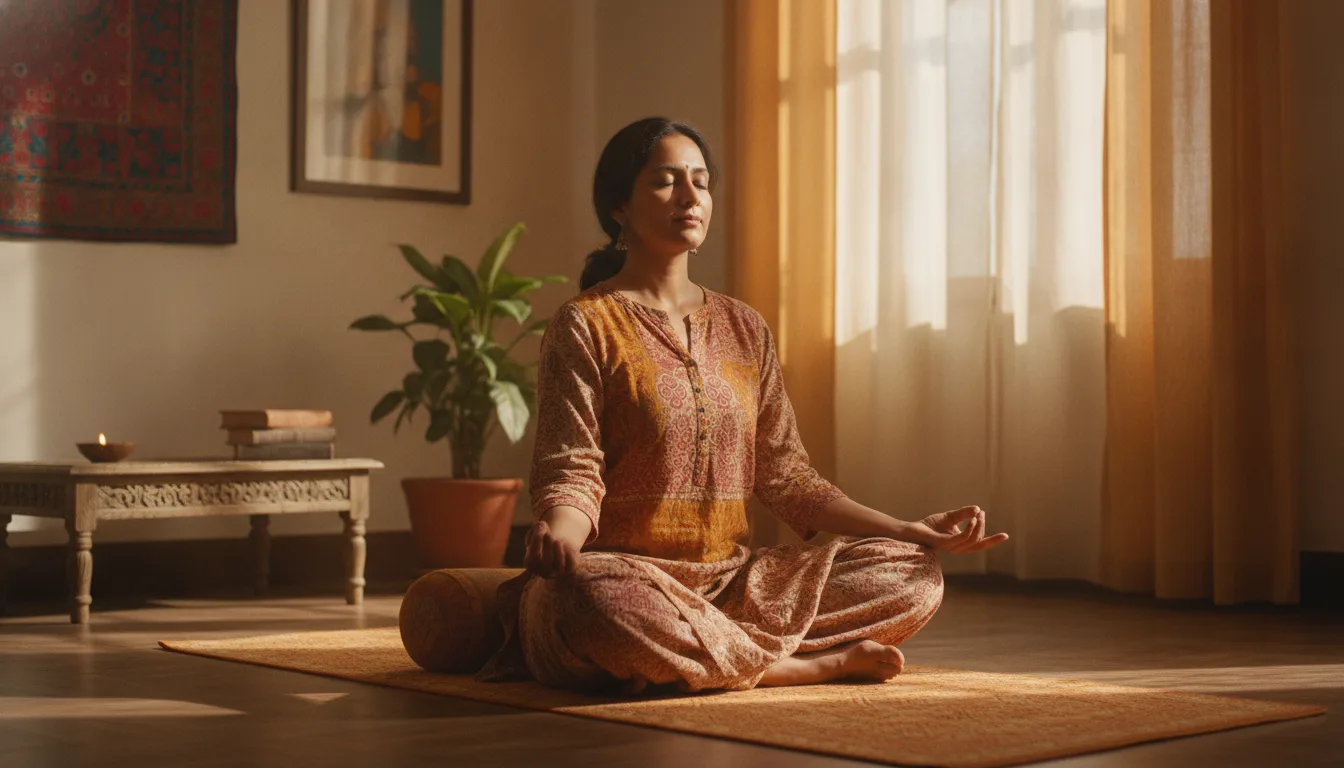
If poses feel like too much on a particularly anxious day, breath alone is enough. In yoga, the breath is always available - you do not need a mat, you do not need silence, you do not need five minutes free. You just need to notice it.
4-7-8 Breathing
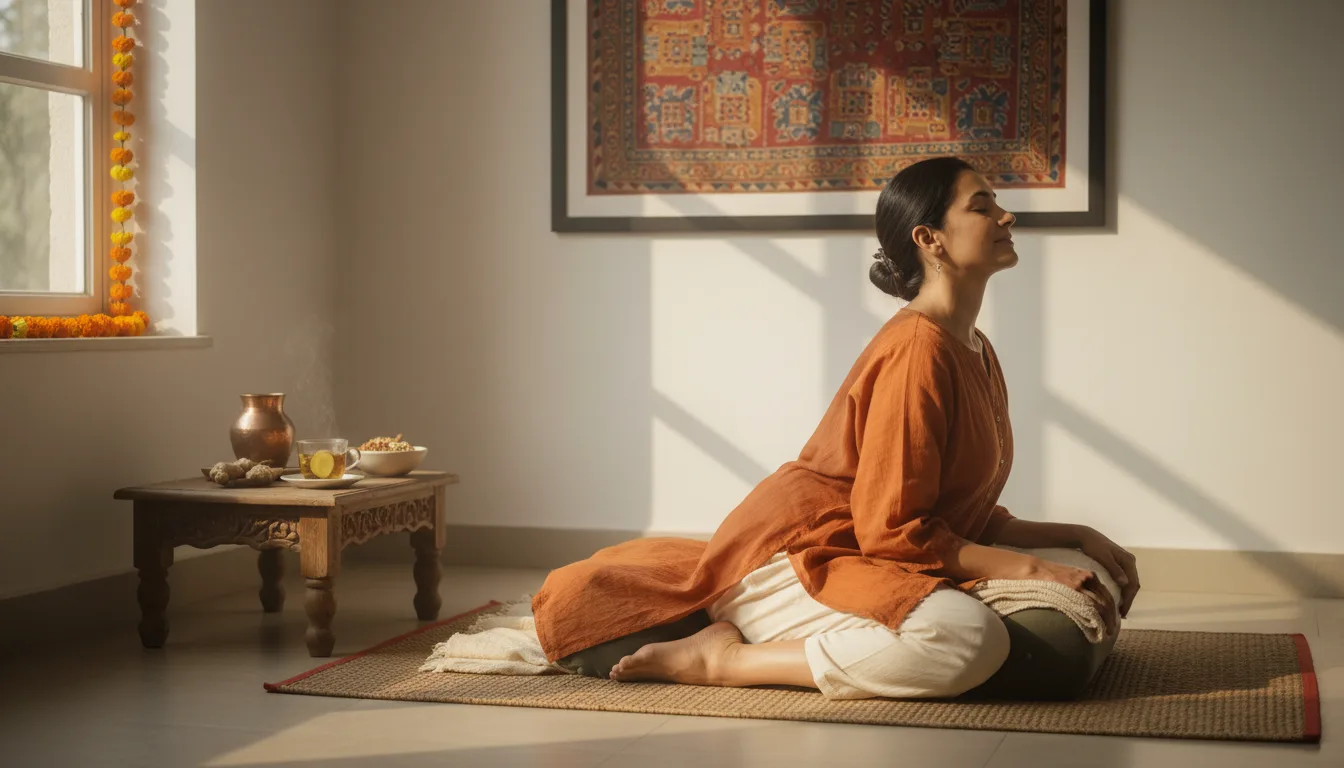
Inhale for a count of four, hold for seven, exhale for eight. The extended exhale is the key. A long exhale activates your vagus nerve, which plays a central role in calming the stress response. Practice this sitting comfortably before bed, during a lunch break, or any time you feel a wave of anxiety building.
Alternate Nostril Breathing (Nadi Shodhana)
Use your right hand to close your right nostril with your thumb and inhale through the left. Then close the left nostril with your ring finger, release the thumb, and exhale through the right. Continue alternating. This technique is grounding in a very literal sense - it requires enough attention to pull you out of the spiral, while the regulated breathing does its calming work simultaneously. Even three to five minutes makes a noticeable difference.
Building a Routine Around Your Day
The best time for this kind of practice is whenever you can actually do it. That said, two moments in the day tend to be especially valuable for anxiety-prone minds.
Morning, before the day accelerates: Five minutes of slow movement or breathing before you check your phone sets a calmer tone for everything that follows. It does not have to be long. Even Child's Pose for ten breaths followed by a few minutes of 4-7-8 breathing is genuinely useful.
Evening, to separate the day from sleep: Many people find that anxiety peaks in the evening when the day's activity stops and the mind tries to process everything at once. A short wind-down practice of Legs Up the Wall and a seated forward fold can help create that transition between "doing" and "resting".
If you are not sure where to begin or want a structured path rather than a self-assembled sequence, Grihasana Premium offers guided sessions designed specifically for home practice - including routines focused on calming the nervous system, built for Indian schedules and bodies.
Making It Work in a Real Indian Home
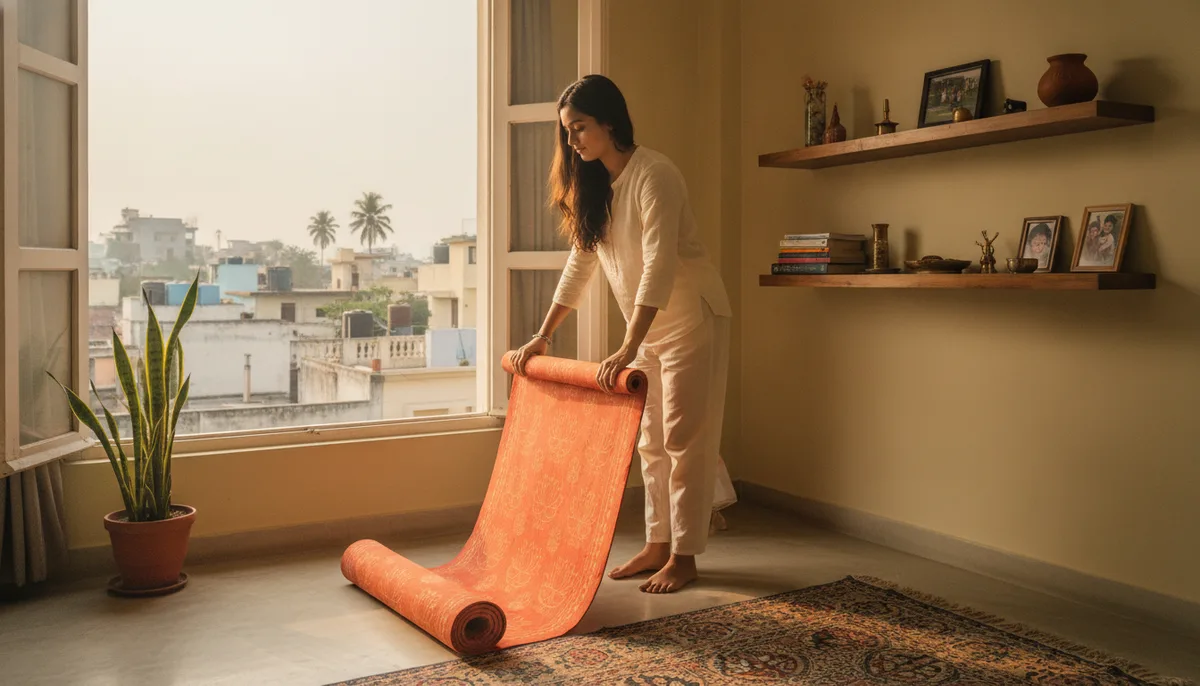
Most yoga advice assumes you have a dedicated room, a pristine mat, and total silence. In reality, you might be practicing between school pickups in Pune, or after a long shift in Chennai, or in a shared room in a busy Mumbai flat. That is not an obstacle - it is just the context.
A folded bedsheet works as well as a yoga mat for floor-based poses. You do not need incense or music. You do not need to explain to your family what you are doing or why. You can close a door (if you have one) or simply sit in a corner and begin.
Consistency matters far more than conditions. A five-minute practice in an imperfect setting every day will do more than a perfectly arranged hour-long session once a week. Start with what you have, where you are.
The Grihasana 1-Week Trial is a low-commitment way to try a guided home routine and see whether the structure helps. Many people find that having a session ready to follow removes the decision fatigue of figuring out what to do - which in itself reduces a small but real source of daily anxiety.
A Note on Expectations
Yoga will not make your problems disappear. The difficult conversation will still need to happen. The deadline will still be there. What changes, over time, is how you relate to the pressure - with a little more steadiness, a little more space between the trigger and your reaction.
That is not a dramatic transformation. It is something quieter and more durable: a nervous system that knows how to find its way back to calm, even when things get loud.
If you are dealing with persistent anxiety that significantly affects your daily life, please speak with a doctor or mental health professional. Yoga is a supportive practice, not a replacement for professional care.
For everyone else - the overthinkers, the late-night worriers, the people who carry too much and rarely put it down - a short, gentle practice at home might be exactly the kind of anchor you have been looking for. You do not need to do it perfectly. You just need to begin.