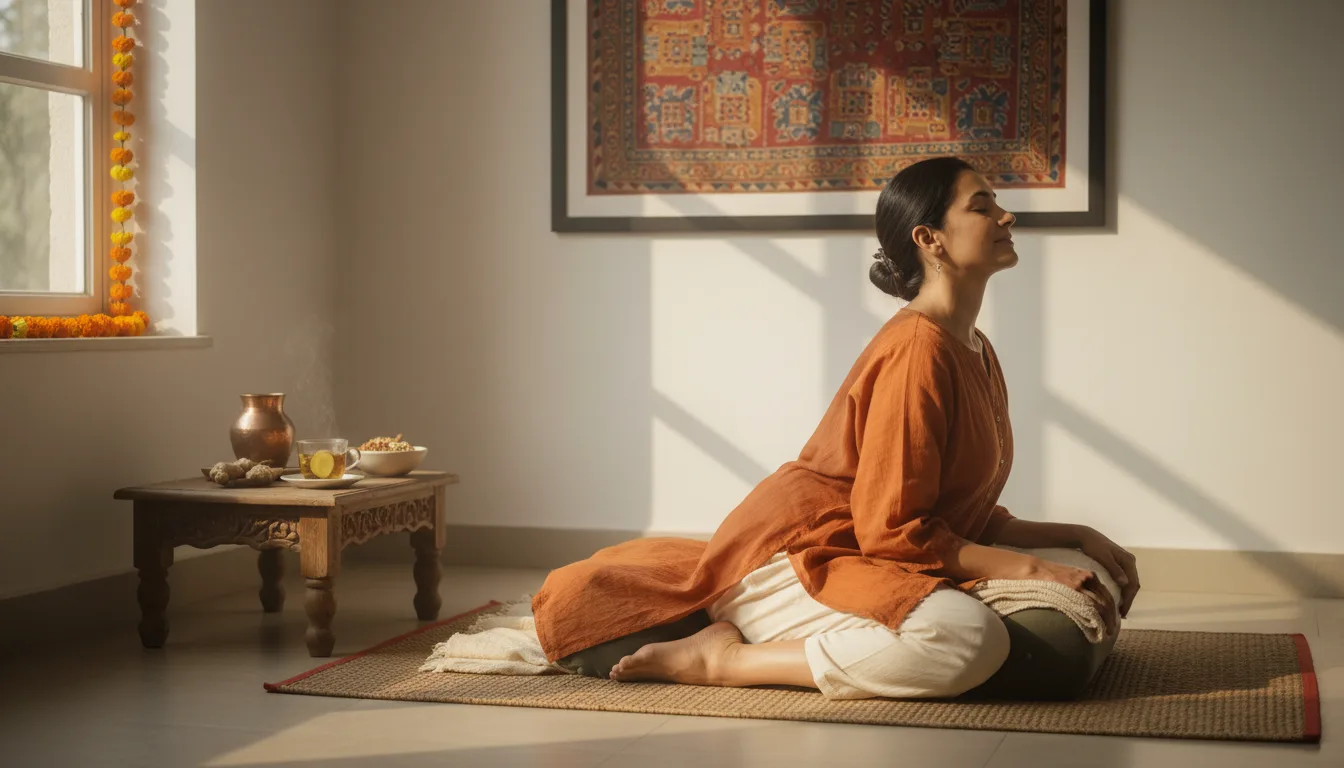
Why Digestion Deserves Its Own Practice
If you have ever eaten a full plate of rajma rice at lunch and then tried to sit at your desk, you know the feeling. The heaviness. The slight bloat. The low-grade tiredness that makes the afternoon feel very long. This is not a personal failing - it is just the body working hard on a big job.
Indian cooking is wonderfully rich. Ghee, lentils, whole spices, fermented foods, seasonal vegetables cooked low and slow - it is nourishing, but it asks something of the digestive system. And most of us follow it up by sitting still for hours. Your gut does not love that combination.
Gentle movement after meals - the right kind, at the right pace - can make a real difference to how you feel. Not vigorous sun salutations. Not a gym session. Just a few quiet poses and some mindful breathing that encourage your digestive system to do its job a little more comfortably.
What Yoga Actually Does for Digestion
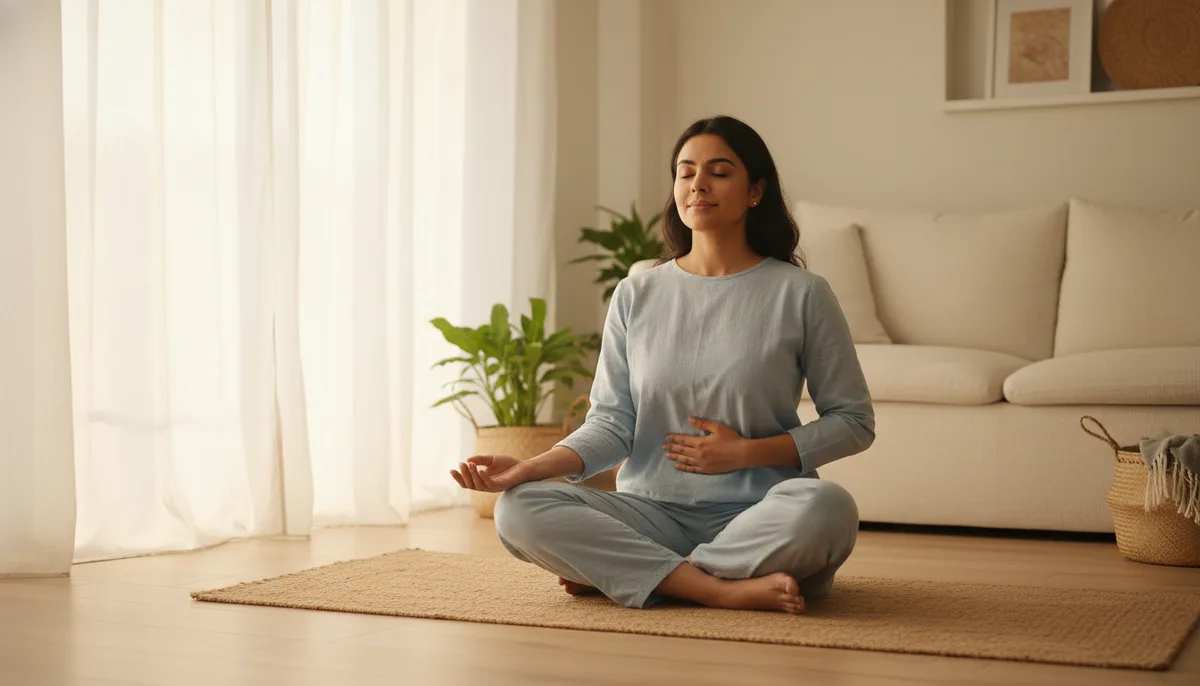
The connection between movement and digestion is not mystical - it is fairly mechanical. Twisting poses gently compress and then release the abdominal organs, encouraging peristalsis (the wave-like movement that moves food through your gut). Forward folds create gentle pressure on the belly. Diaphragmatic breathing massages the digestive organs from above with every inhale and exhale.
Beyond the physical, there is also the nervous system angle. Your gut has its own nervous system, and it works better when you are calm. When you are stressed, digestion slows down. Slow yoga breathing activates the parasympathetic response - the rest-and-digest mode - which is exactly what your gut wants after a meal.
None of this requires a studio, a mat with a logo, or 90 minutes. Ten to fifteen minutes after your meal is enough to feel a difference.
When to Practice - and When to Wait
This is important: you do not want to do yoga immediately after eating. Give yourself 20 to 30 minutes after a light meal, and about 45 minutes to an hour after a heavier one. If you have had a full South Indian thali or a festive meal during Diwali or Eid, wait a bit longer before moving.
The poses below are gentle enough that you do not need to be in activewear. If you have eaten at your office desk and have five minutes before the next meeting, a seated twist works just fine in your regular clothes.
Five Poses That Support Digestion
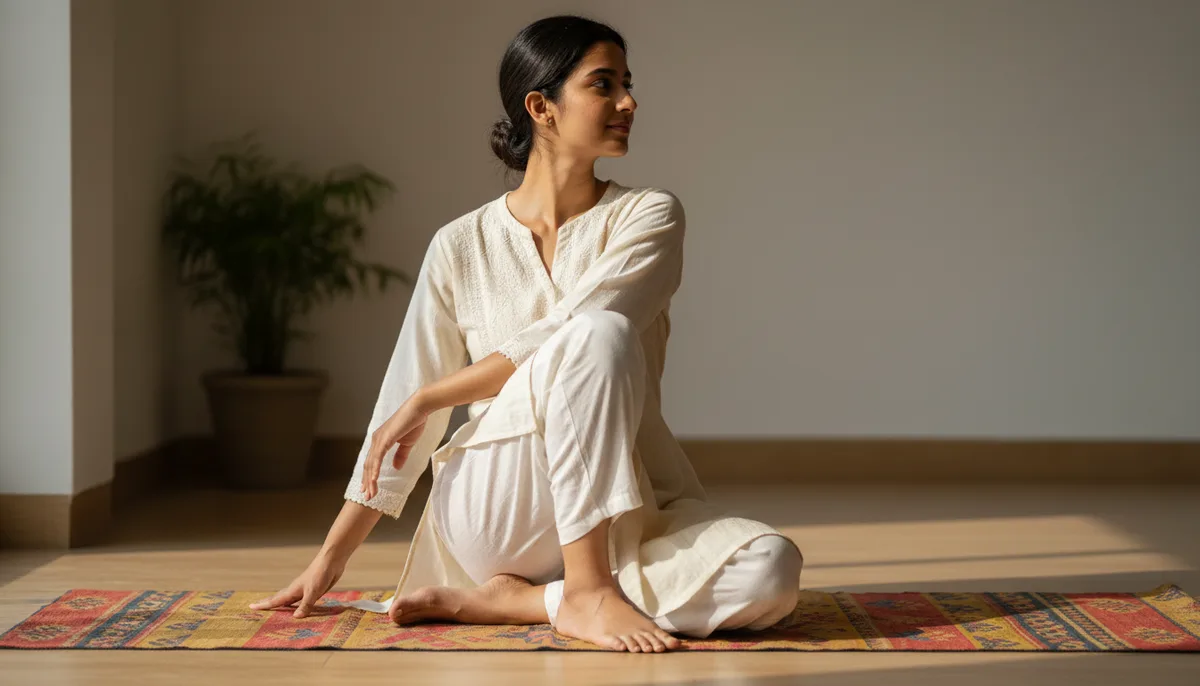
Seated Spinal Twist (Ardha Matsyendrasana)
Sit on the floor or a firm chair. Cross one leg over the other and gently twist toward the raised knee, using your arm as a lever. Hold for five to eight breaths, then switch sides. This is one of the most direct ways to stimulate the organs involved in digestion - the liver, stomach, and intestines all get a gentle squeeze.
Knees to Chest (Apanasana)
Lie on your back and draw both knees toward your chest. You can rock gently side to side. This pose relieves gas and bloating almost immediately for many people, and it requires essentially zero effort. It is a good one to do in bed after a late dinner if you are not feeling great.
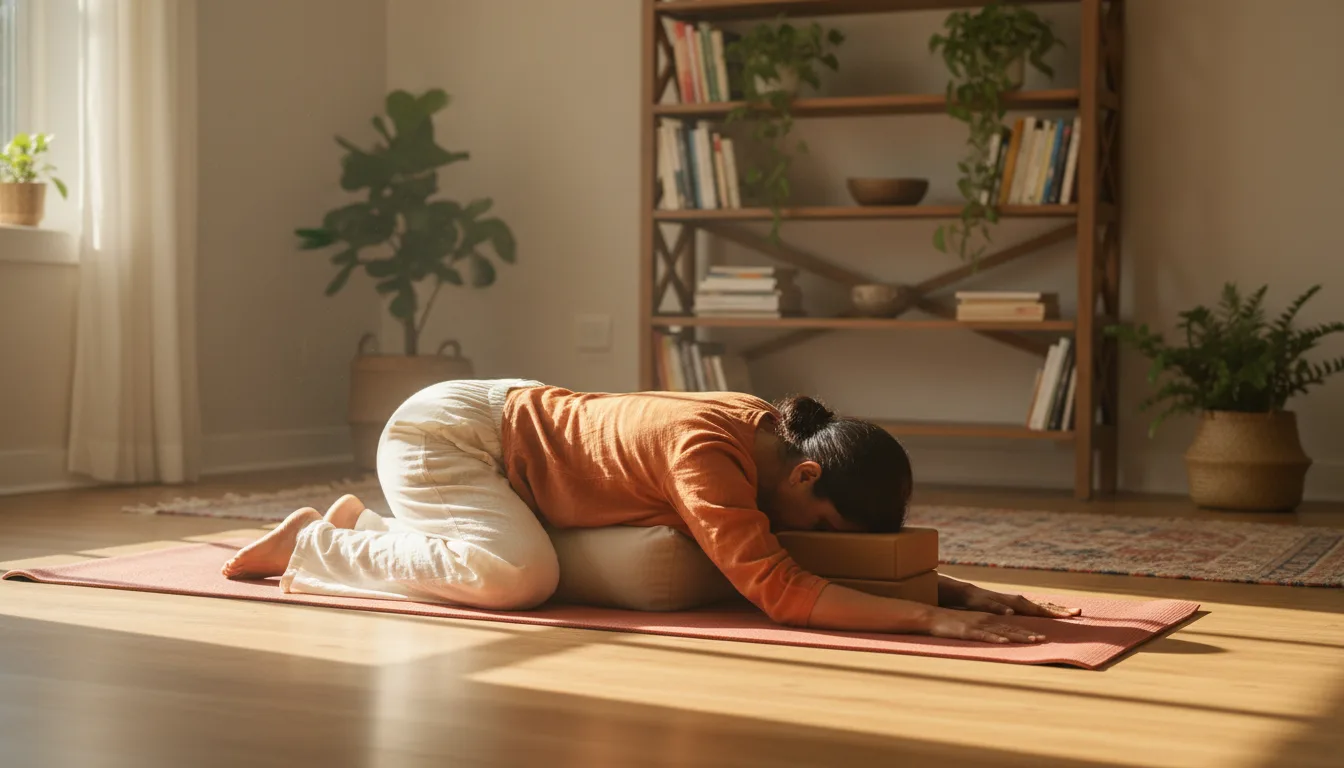
Child's Pose (Balasana)
Kneel and fold forward, arms extended or resting alongside your body. This pose puts gentle pressure on the abdomen and encourages a full, slow breath. Many people find it naturally calming. Hold for ten to fifteen breaths and just let your belly soften.
Supine Twist (Supta Matsyendrasana)
Lying on your back, drop both knees to one side and open your arms. This is a more passive twist than the seated version, and it is wonderful after dinner when you do not have much energy but still want to feel some movement in the body. Two minutes on each side, with slow breathing.
Cat-Cow (Marjaryasana-Bitilasana)
On all fours, alternate between arching your back and rounding it, following your breath. Inhale to arch, exhale to round. This gently mobilises the entire spine and massages the abdominal organs in a rhythmic way. Five to ten rounds is enough.
Breathing Practices That Help
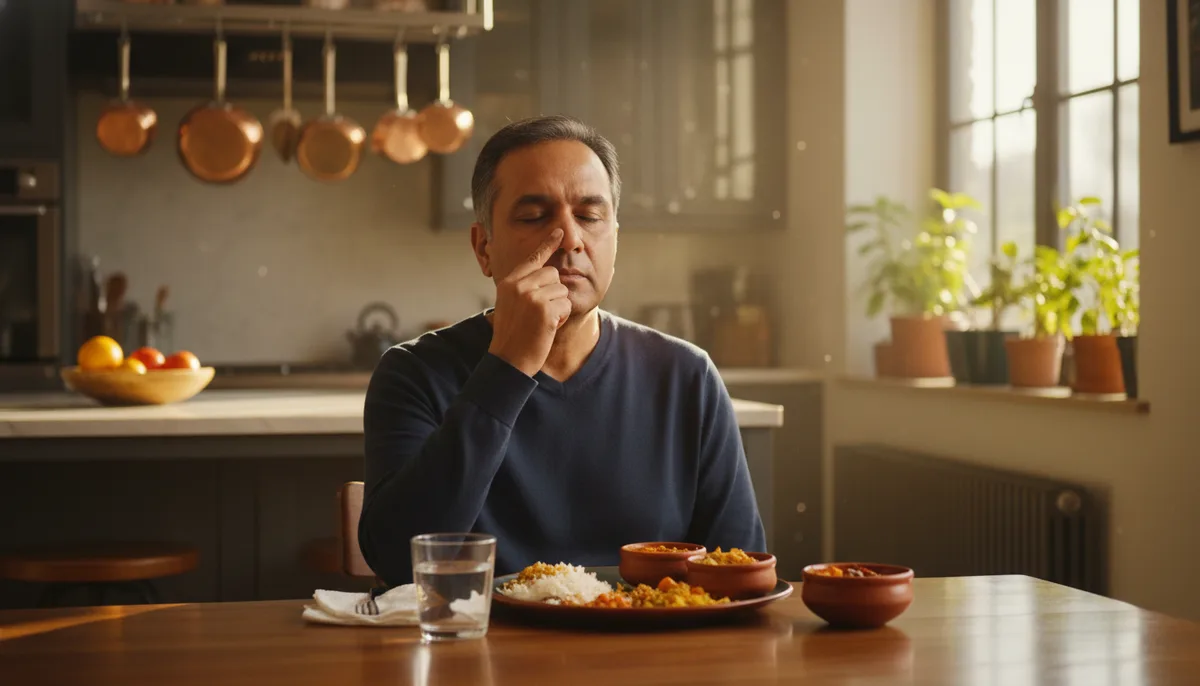
Pranayama - breathwork - deserves its own mention here because it works even when you cannot move at all. If you are at a family lunch and feeling too stuffed to excuse yourself for poses, you can still do this sitting quietly at the table.
Diaphragmatic breathing: Place one hand on your belly. Breathe in slowly so your belly rises first, then your chest. Breathe out fully, letting the belly fall. Do this for ten rounds. You are gently massaging your digestive organs from the inside with every breath.
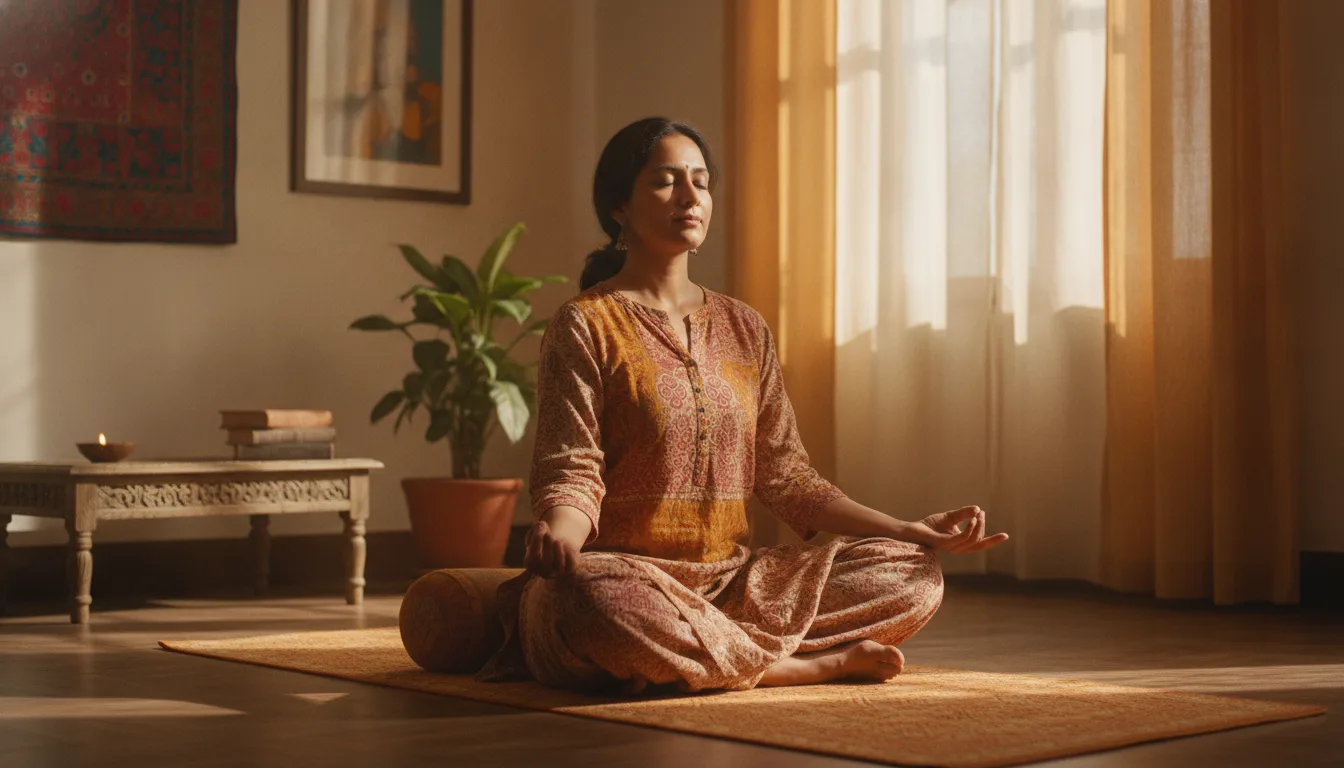
Nadi Shodhana (alternate nostril breathing): This one works especially well for calming the nervous system and moving the body into rest-and-digest mode. Using your right hand, close the right nostril and inhale through the left. Then close the left and exhale through the right. Inhale right, exhale left. That is one round. Five rounds is enough to feel the shift.
Both of these can be done seated, fully clothed, without anyone noticing. They travel well - useful during long festival gatherings or meals with extended family where stepping away for yoga is not practical.
Building It Into Your Day

The challenge with any new practice is making it feel normal rather than like a chore added to an already full day. The easiest approach is to attach it to something you already do.
After lunch, if you have a short break, use five minutes for the seated twist and a few minutes of belly breathing. After dinner, before you switch on the television or reach for your phone, try the knees-to-chest and supine twist sequence lying on a mat or even your bed.
You do not need to do all five poses every day. Two or three, done consistently, will compound into a noticeable change in how you feel after meals. Habits build on repetition, not perfection.
If you want a structured routine that takes the guesswork out of what to do and when, a guided home practice can help. Grihasana Premium includes short, focused sessions designed for Indian homes and Indian bodies - you can do them after meals, before bed, or whenever you have a quiet window. The sessions are designed to fit into real life, not around an imaginary schedule.
A Note on Common Digestive Issues
Many Indians deal with IBS, acidity, or irregular digestion - often made worse by irregular mealtimes, spicy food, and stress. Yoga will not cure any of these, and this article is not medical advice. But gentle movement and breathwork are genuinely low-risk tools that can make daily digestion more comfortable for most people. If you have a specific condition, it is worth talking to your doctor before starting any new movement practice.
What yoga can do is reduce the stress load on your gut, encourage regular movement of food through the digestive tract, and help you build awareness of how your body feels after different meals. That awareness alone is useful.
Starting Where You Are
You do not need to have a strong yoga background to do any of this. The poses listed here are among the most accessible in any practice - no flexibility required, no special equipment, no risk of overdoing it. If you have back or knee issues, the supine poses (knees to chest, supine twist) are the safest place to start.
If you are new to yoga entirely, Grihasana Premium offers a starting path that is built for people who have never done yoga before or who are coming back after a long break. The 1-week trial is a good way to see whether the approach suits you before committing to a longer plan.
Your kitchen already knows how to nourish you. A few quiet minutes of movement after meals is just helping your body do the rest of the work.