Why So Many Indians Are Dealing with Lower Back Pain
If your lower back aches by evening, you are not alone. Whether you spend long hours at a desk in Bengaluru or Chennai, stand on your feet all day, or juggle household work between school drop-offs and cooking, the lower back takes the brunt of a busy Indian life. Stiff mornings, a dull ache after sitting through meetings, or that tight pull when you bend to pick something up - these are signs your lower back needs some consistent attention.
The good news is that yoga, done gently and regularly, can make a real difference. Not dramatic overnight results, but the kind of quiet, steady relief that builds over weeks when you practice a little each day. This guide gives you exactly that - a grounded, practical home routine you can start today, even if your back is already sore.
Before You Begin: A Few Honest Notes
Yoga is not a substitute for medical advice. If you have a disc injury, sciatica, or have been advised rest by a doctor, please check with them before starting any new movement routine. This guide is designed for the common, everyday lower back tension that most adults experience - the kind that comes from too much sitting, not enough movement, and the general stress of daily life.
Also, skip any pose that causes sharp or shooting pain. Dull stretch is fine. Pain is not.
The Core Issue: Why Your Lower Back Tightens Up
Most lower back pain in otherwise healthy adults comes from a combination of tight hip flexors, weak core muscles, and compressed spinal discs. When you sit for a long time, your hip flexors shorten and pull on your lower spine. Your core - the muscles that support your spine from the front - gets lazy from disuse. The result is a back that is doing all the work it should be sharing with surrounding muscles.
Yoga addresses all three of these root causes. It lengthens the hip flexors, activates the core gently, and creates space between the vertebrae through gentle movement and breathing. The key word is gentle - aggressive stretching or intense backbends can make things worse, so this routine stays firmly in therapeutic territory.
Your Daily Lower Back Yoga Routine
This routine takes about 15 to 20 minutes. You can do it in the morning to start your day without stiffness, or in the evening to release tension after work. All you need is a mat or a clean floor space and a small folded blanket or pillow for support if needed.
1. Knees to Chest - Apanasana (2 minutes)
Lie on your back and gently draw both knees toward your chest. Hold them with your hands and take slow, deep breaths. With each exhale, let your lower back soften into the floor. This simple position decompresses the lumbar spine and is often the first thing that brings relief on a stiff morning. You can also rock gently from side to side.
2. Supine Twist (2 minutes each side)
From lying on your back, drop both knees to the right while you extend your left arm out. Look to the left. Breathe here for 60 to 90 seconds, then switch sides. Twists release tension in the muscles alongside the spine and give the lower back a gentle, passive stretch that feels immediately good. Do not force the knees to the floor - let gravity do the work.
3. Cat-Cow on All Fours - Marjaryasana-Bitilasana (2 minutes)
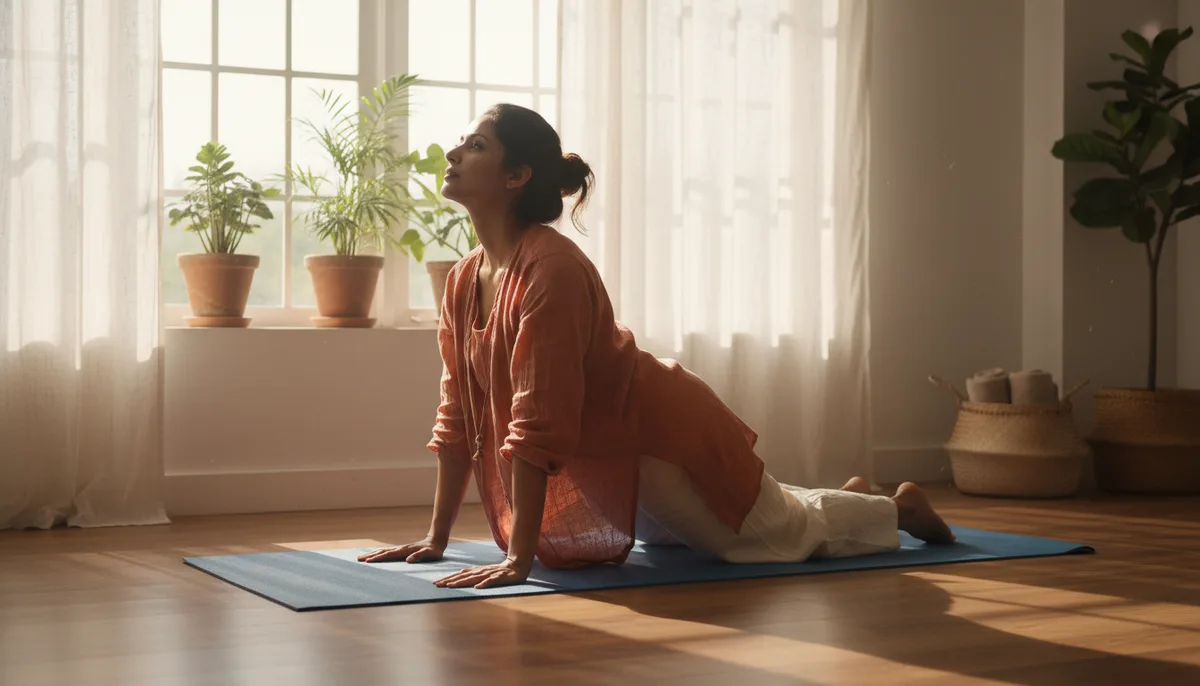
Come onto your hands and knees, wrists under shoulders, knees under hips. On your inhale, drop the belly and lift the chest (cow). On your exhale, round the spine toward the ceiling and tuck your chin (cat). Move slowly, matching the breath. This is one of the best movements you can do for a stiff lower back - it pumps fluid into the spinal discs and warms up the entire spine gently before asking more of it.
4. Child's Pose - Balasana (2 to 3 minutes)
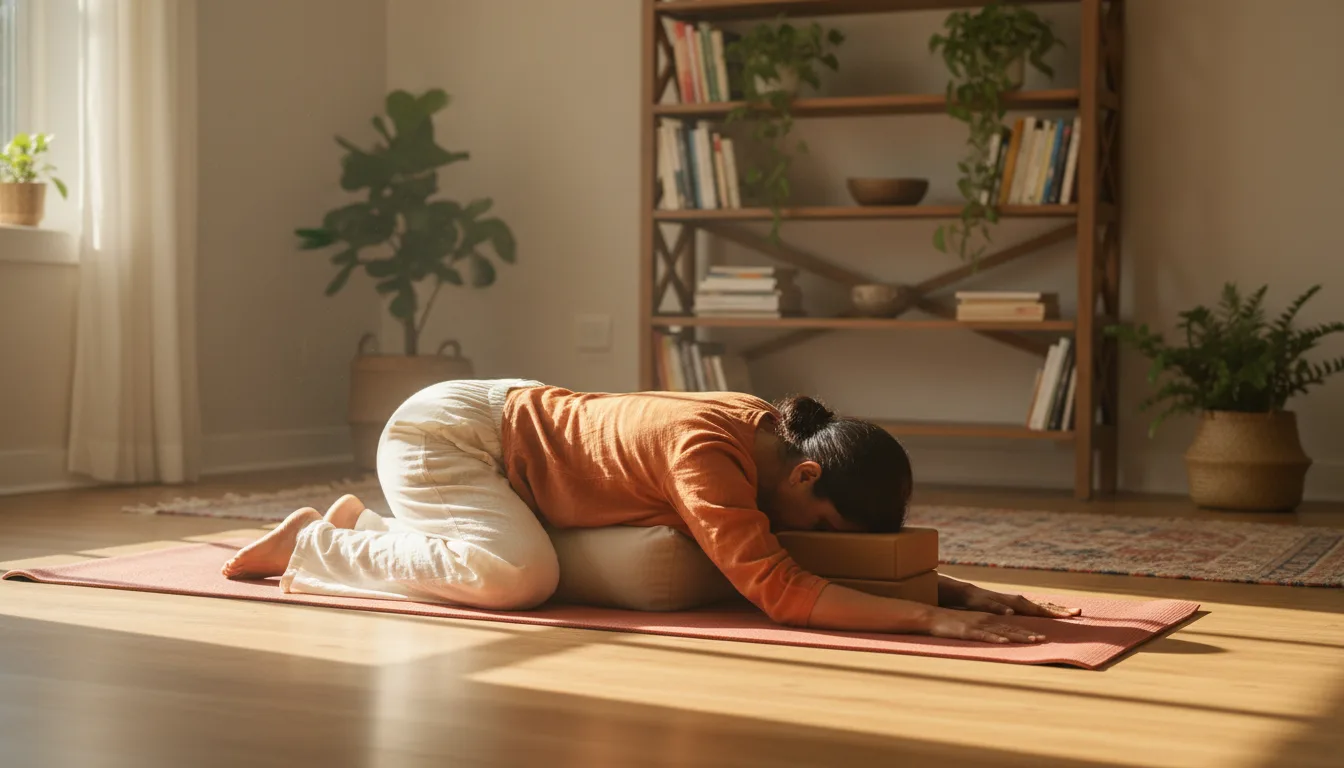
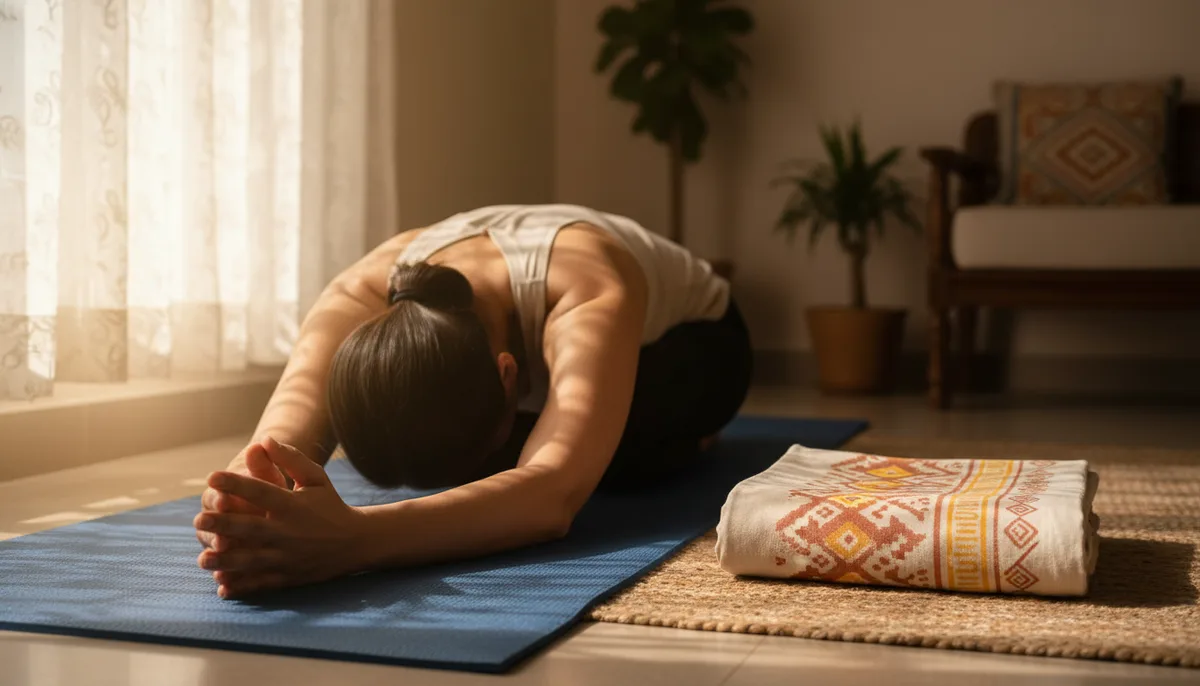
From all fours, sink your hips back toward your heels and stretch your arms forward on the floor. Rest your forehead down. If your hips don't reach your heels, place a folded blanket between your thighs and calves. Hold this position and breathe into your lower back. Child's Pose creates traction through the lumbar spine and is both a physical stretch and a moment of genuine rest. Many people find that just two minutes here reduces their back pain noticeably.
5. Low Lunge - Anjaneyasana (90 seconds each side)
Step your right foot forward between your hands and lower your left knee to the floor. Sink your hips forward gently and feel the stretch along the front of your left hip and thigh. This is the hip flexor stretch your lower back has been waiting for. Keep your hands on your front knee for support, breathe slowly, and switch sides. Tight hip flexors are one of the biggest contributors to lower back pain in people who sit for long periods.
6. Bridge Pose - Setu Bandhasana (60 seconds, 2 rounds)
Lie on your back with knees bent and feet flat on the floor, hip-width apart. Press your feet down and slowly lift your hips toward the ceiling. Hold for 5 breaths, then lower slowly. Bridge pose strengthens the glutes and lower back muscles in a controlled, safe way. It also stretches the hip flexors from the other direction. Come down slowly - do not let your hips drop.
7. Legs Up the Wall - Viparita Karani (5 minutes)
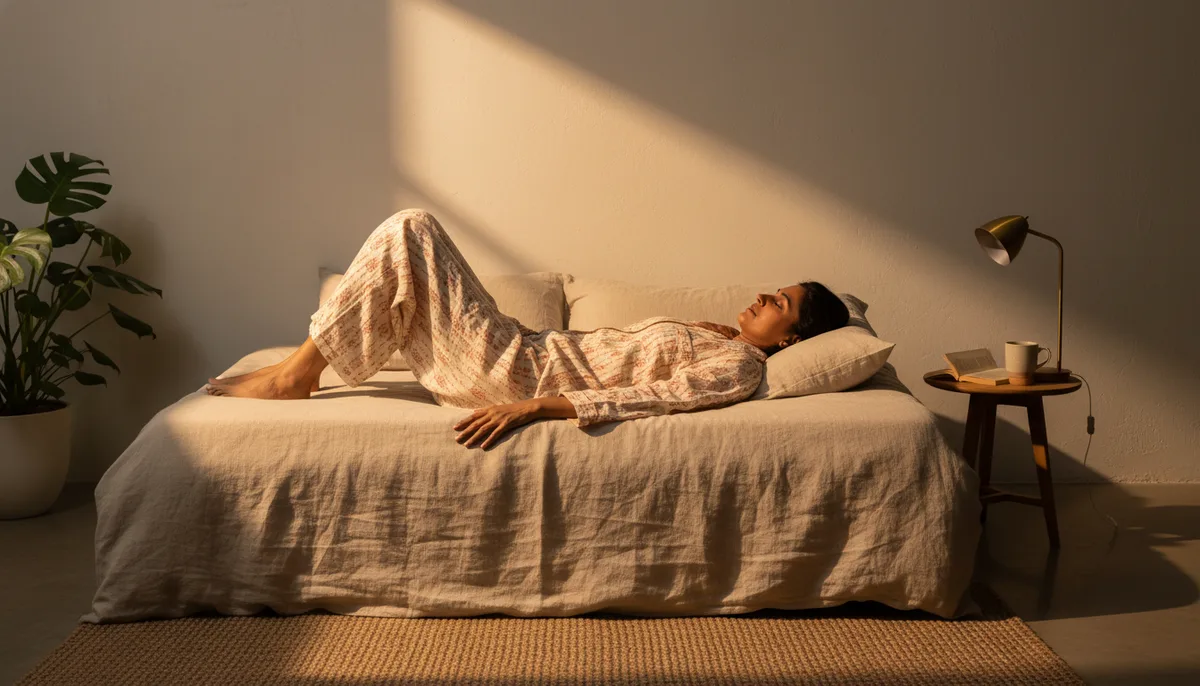
Finish by sitting close to a wall, lying back, and swinging your legs up the wall so your body makes an L shape. Let your arms rest at your sides. Close your eyes and breathe naturally. This restorative position relieves pressure on the lower back completely, improves circulation in the legs, and calms the nervous system. It is a perfect ending to a working day or a long evening of household tasks.
How Often Should You Practice?
Daily is ideal, even if you only have 10 minutes. Consistency matters far more than duration. Five minutes of Cat-Cow and Child's Pose every single day will do more for your lower back than an hour-long session once a week. Think of it as brushing your teeth for your spine - a small daily habit that prevents bigger problems.
If you are new to yoga or coming back after a long gap, start with three or four times a week and build from there. Your body will tell you when it wants more.
Making This Part of Your Home Life
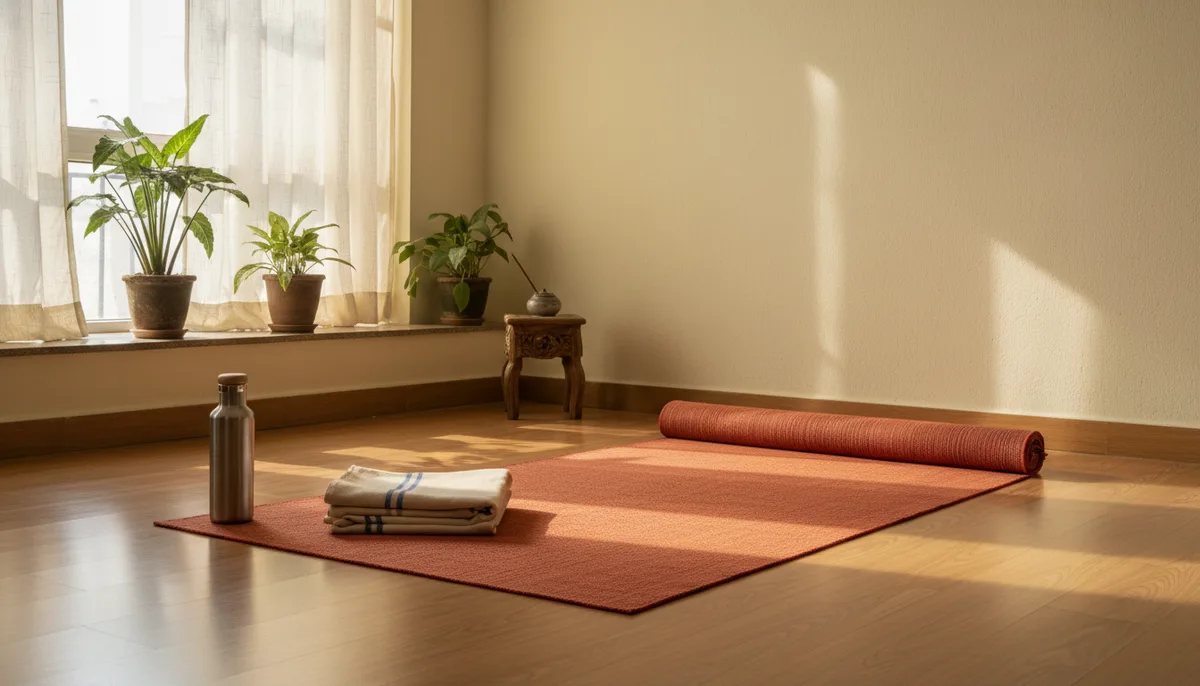
One of the most common reasons people abandon home practice is that it never quite becomes a habit. It helps to keep your mat unrolled in a visible corner of your room - in many Indian homes, a spot near a window or beside the bed works well. When the mat is already out, you are far more likely to step onto it for even five minutes.
If you want structured guidance rather than trying to remember poses on your own, a Grihasana Premium plan gives you daily guided sessions designed specifically for home practice in Indian living conditions - no wide open studio floors required, no equipment beyond a mat. The sessions are short enough to fit into a real day, and the sequences are progressive, so your body gradually builds strength and flexibility without being pushed too hard too fast.
The 1-week trial plan is a particularly good way to start if you are unsure - it lets you try structured home yoga before committing to a longer program, and the sessions can be accessed from any device, so you can practice whether you are at home in Pune, traveling to Delhi, or visiting family during a festival break.
Small Lifestyle Adjustments That Help
Yoga works best when paired with a few simple habits. Set a reminder to stand up and walk for two minutes every hour if you work at a desk. Check how you are sitting - many lower back problems come from slouching or crossing your legs for long periods. If you sleep on your side, placing a pillow between your knees can reduce overnight strain significantly.
None of these are dramatic changes. Together with a short daily yoga routine, they create an environment where your lower back can actually heal and stay comfortable rather than just getting brief breaks between long periods of tension.
What to Expect Over Time
In the first week or two, you may simply feel less stiff in the mornings. By the end of a month of regular practice, most people notice they are reaching, bending, and sitting more comfortably. The lower back does not announce its improvement loudly - it just quietly stops being the thing you notice all day. That quiet absence of pain is what consistent home yoga builds toward, and it is more than worth the fifteen minutes a day it asks of you.