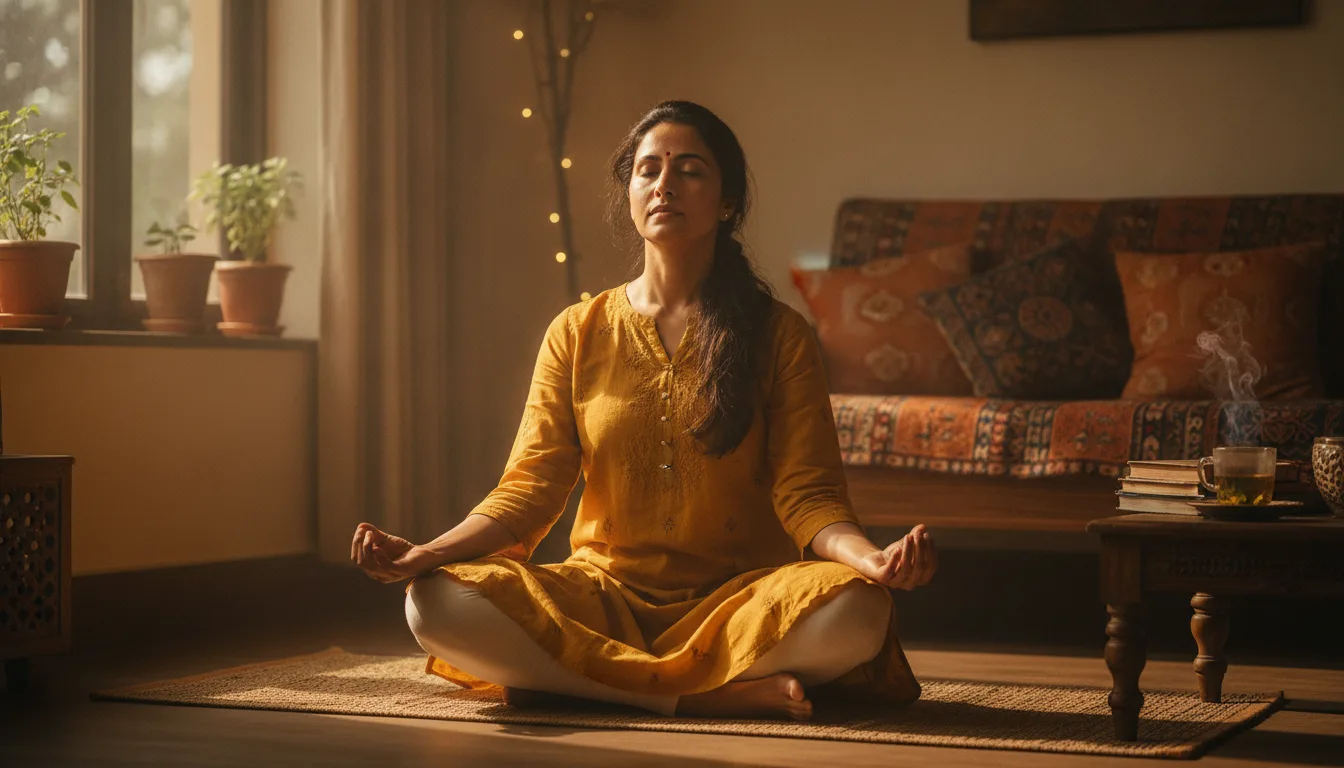
Why Women's Bodies Need a Different Kind of Yoga
Most yoga content online is built around a single, universal body - usually a young, flexible one with no injuries, no hormonal fluctuations, and no three-hour commute. For the majority of Indian women juggling work, family, and the weight of a dozen responsibilities, that image feels disconnected from reality.
The truth is, a woman's body changes significantly across her 20s, 30s, 40s, and 50s. Hormones shift monthly, seasonally, and across decades. Energy levels rise and dip in ways that have nothing to do with motivation or laziness. A yoga practice that ignores these rhythms will always feel like an uphill effort.
This guide is built around that reality. Whether you are in your late 20s dealing with irregular periods, in your 30s navigating postpartum recovery, or in your 40s noticing the first signs of perimenopause - there is a home practice here for you.
Yoga During Your Menstrual Cycle
One of the most common questions Indian women ask is simple: should I do yoga during my period? The honest answer is that it depends entirely on how you feel - and what kind of yoga you choose.
During the first two days, when cramping and fatigue are often at their peak, strong standing sequences or inversions like shoulder stands are best avoided. What helps instead is slow, supported movement that encourages blood flow without strain.
Poses That Help During Menstruation
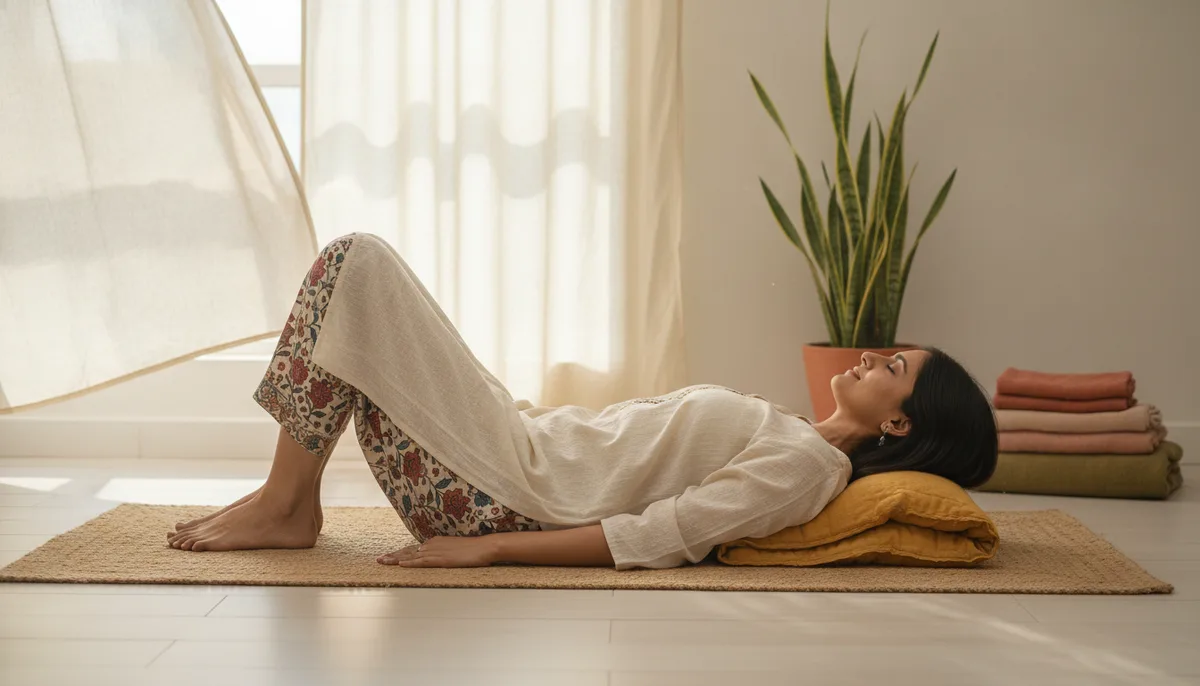
- Supta Baddha Konasana (Reclining Bound Angle): Lie on your back with the soles of your feet together. Place a folded blanket under your lower back for support. This gently opens the pelvis and eases cramping.
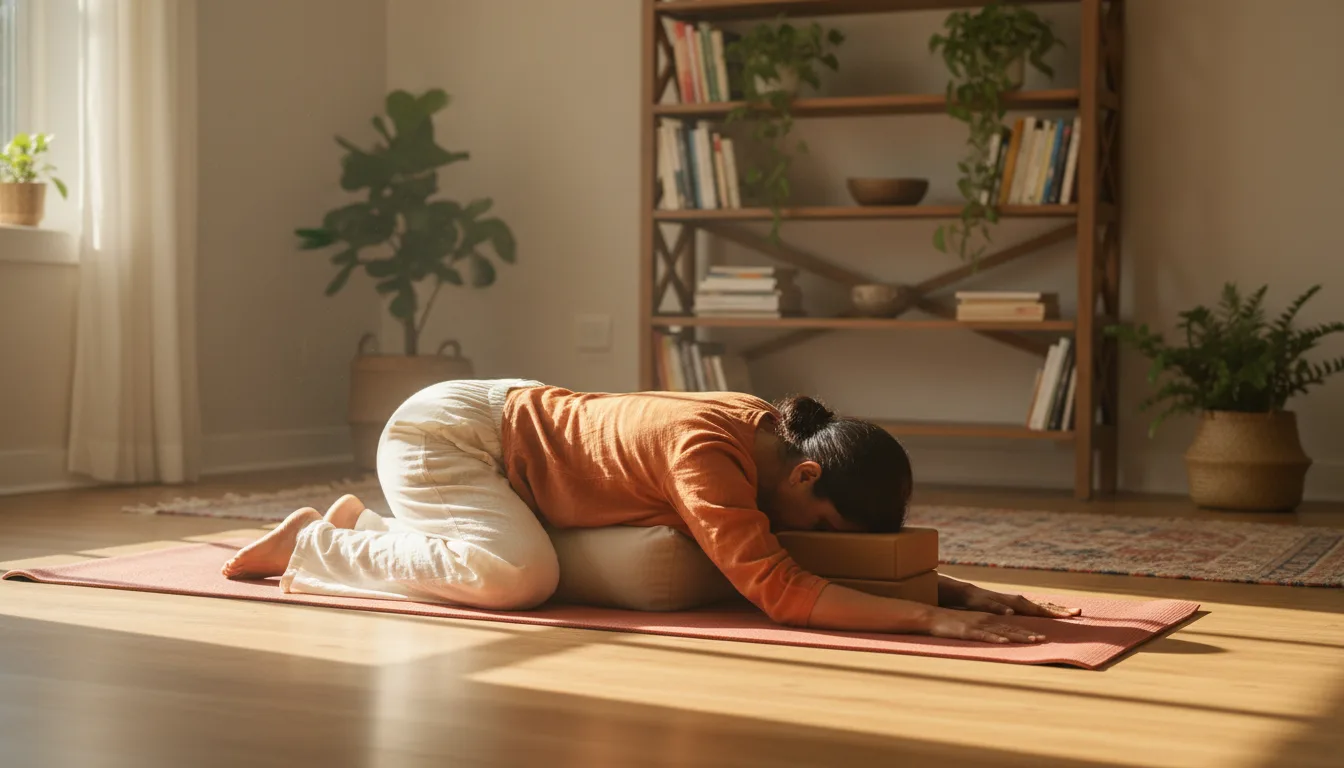
- Balasana (Child's Pose): A simple forward fold with knees wide releases tension in the lower back and sacrum - two areas that carry a lot of period discomfort.
- Viparita Karani (Legs Up the Wall): A mild inversion that relieves lower body heaviness without the intensity of a full inversion. Five minutes here can feel genuinely restorative.
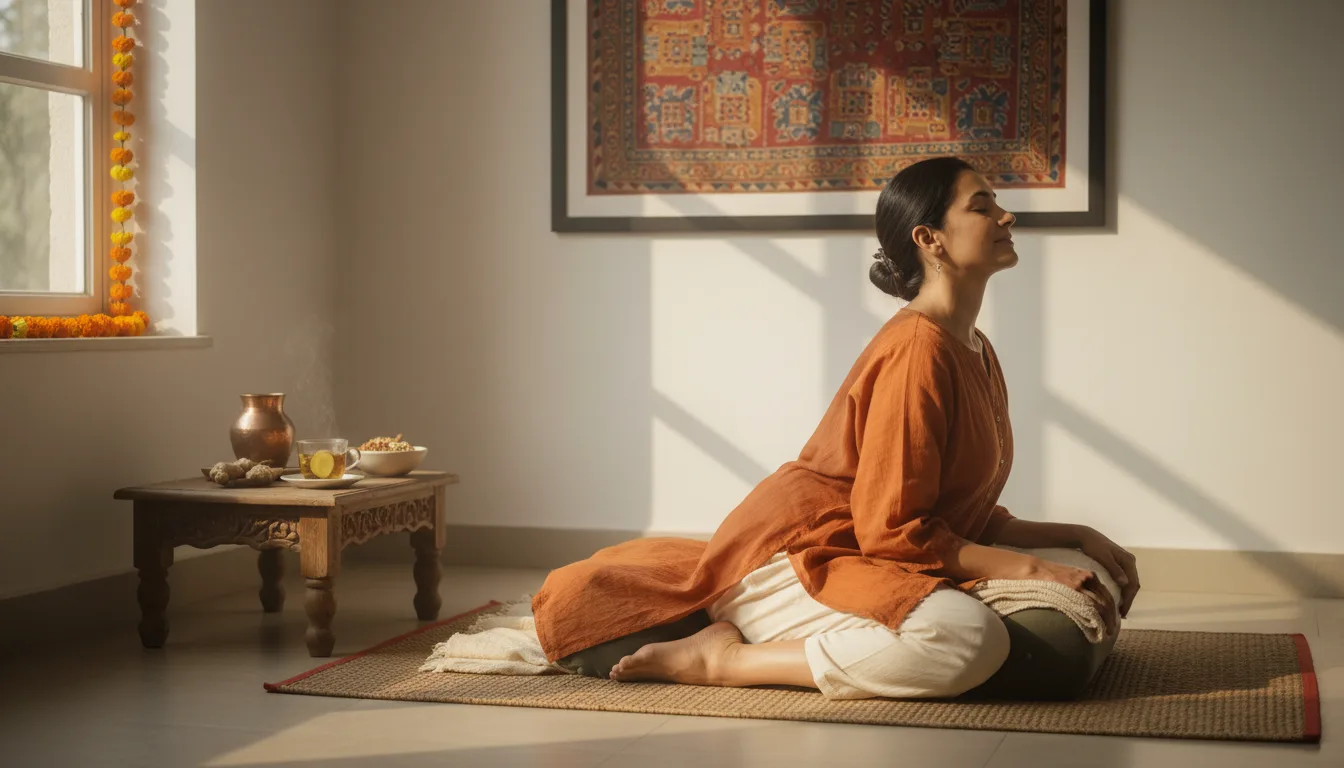
- Gentle seated twists: Twists help stimulate digestive function, which often slows around menstruation and contributes to bloating.
By day three or four, energy usually returns and you can ease back into a fuller practice. The key is listening - your body will tell you clearly when it is ready to move more.
Building a Practice Around Hormonal Health
Hormonal balance is not a wellness buzzword. For millions of Indian women living with PCOS, thyroid disorders, or general hormonal irregularity, it is a daily concern that affects mood, weight, skin, and energy. While yoga is not a medical treatment, a consistent practice can support the nervous system in ways that ease some of the burden.
The science points toward the parasympathetic nervous system - the branch responsible for rest and recovery. When it is regularly activated through slow breathing and gentle movement, the body is less likely to stay locked in a cortisol-heavy stress response. Cortisol, over time, disrupts hormonal rhythms. Reducing it even modestly makes a real difference.
A 15-Minute Sequence for Hormonal Support
- 3 minutes: Diaphragmatic breathing lying down. One hand on the chest, one on the belly. Focus on expanding the belly on each inhale.
- 3 minutes: Slow Cat-Cow stretches, coordinated with the breath. Ten rounds, unhurried.
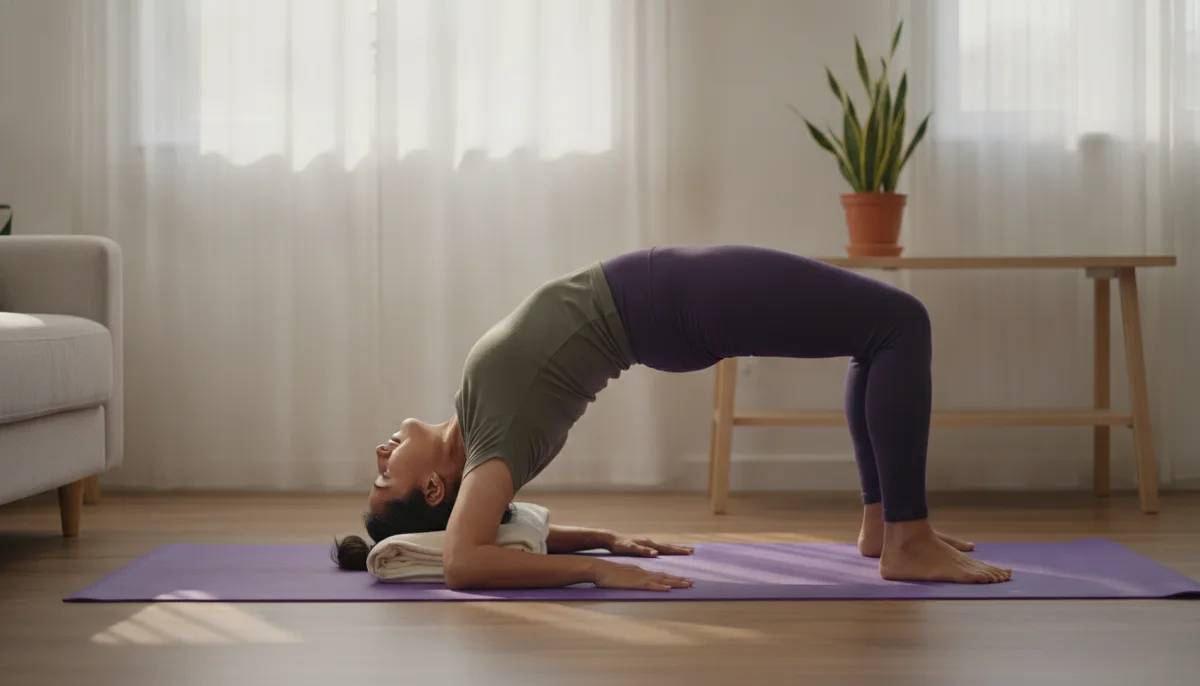
- 3 minutes: Supported Bridge Pose with a block or folded blanket under the sacrum. Let the hips be heavy.
- 3 minutes: Butterfly stretch seated, gently folding forward over the feet.
- 3 minutes: Savasana with one hand on your belly. Simply notice the breath without directing it.
Done consistently four to five times a week, this kind of practice builds a quieter baseline. Not dramatic results overnight - but a body that gradually feels less reactive, less tense.
If you want structure and guidance for this kind of daily routine, Grihasana Premium offers sessions specifically designed for home practice, built around real schedules - not an hour of free time most of us do not have.
Yoga After Pregnancy and During Postpartum Recovery
The postpartum period is both physically demanding and emotionally complex. Indian culture offers a lot of traditional wisdom here - the practice of resting for 40 days after delivery, eating warming foods, being supported by family. Modern life often makes that support harder to find, but the instinct behind it is sound: the body needs time.
Yoga after childbirth should begin very gently and only after your doctor has cleared you for movement - typically six weeks after a vaginal birth, longer after a caesarean section.
Where to Begin Postpartum
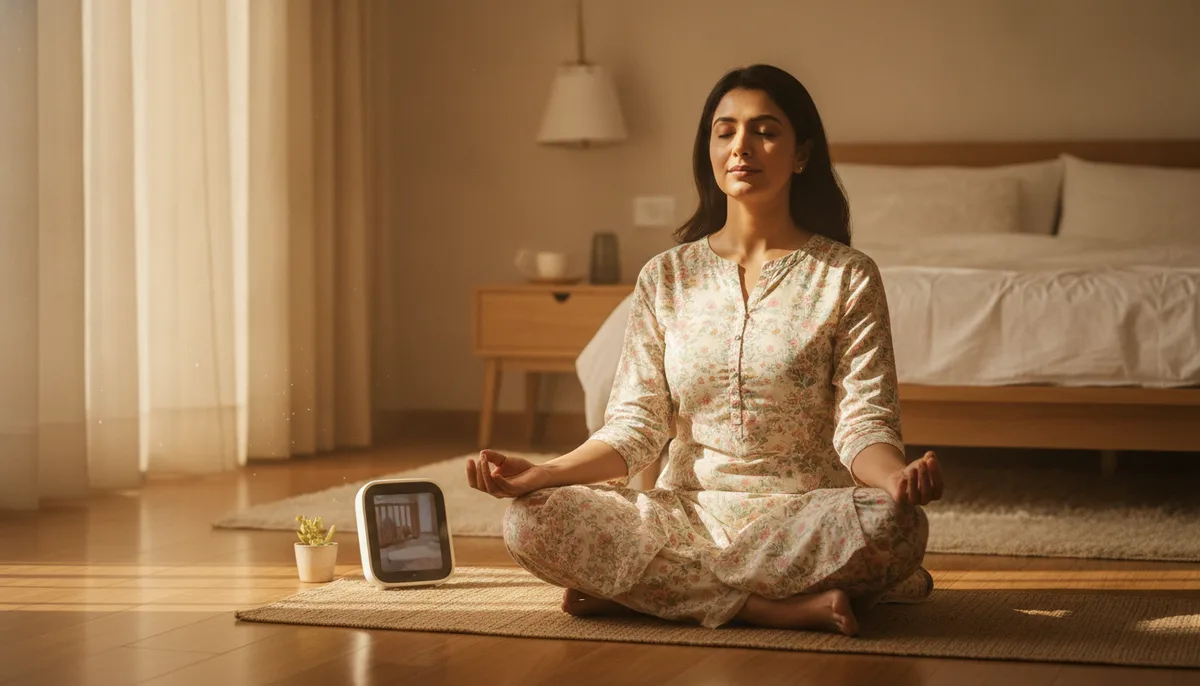
Start with breathwork. The diaphragm and pelvic floor work together, and rebuilding that connection after delivery is more important than any pose. Simple breathing exercises - expanding the ribcage in all directions with each inhale - help wake up the core without strain.
From there, gentle pelvic floor activation, low Cat-Cow movements, and supported reclining stretches form a safe starting point. The goal is not to return to a pre-pregnancy practice quickly. The goal is to feel at home in your body again - on your timeline.
A home-based practice is particularly valuable here because leaving the house with a newborn is its own logistical challenge. A few gentle minutes on a mat at home, when the baby is asleep and the house is quiet, is often the most realistic and nourishing option.
Perimenopause and Yoga: Navigating Midlife Change
Perimenopause - the years before menopause, often beginning in the early to mid 40s - is one of the least discussed phases of women's health in India. Hot flashes, disturbed sleep, joint stiffness, mood shifts, and energy swings are common. Yet many women are caught off guard, unsure of what is happening or what might help.
Yoga during this phase works best when it is a blend of two things: enough movement to maintain strength and bone density, and enough slowness to support the nervous system through hormonal turbulence.
What to Prioritise in Your 40s and 50s
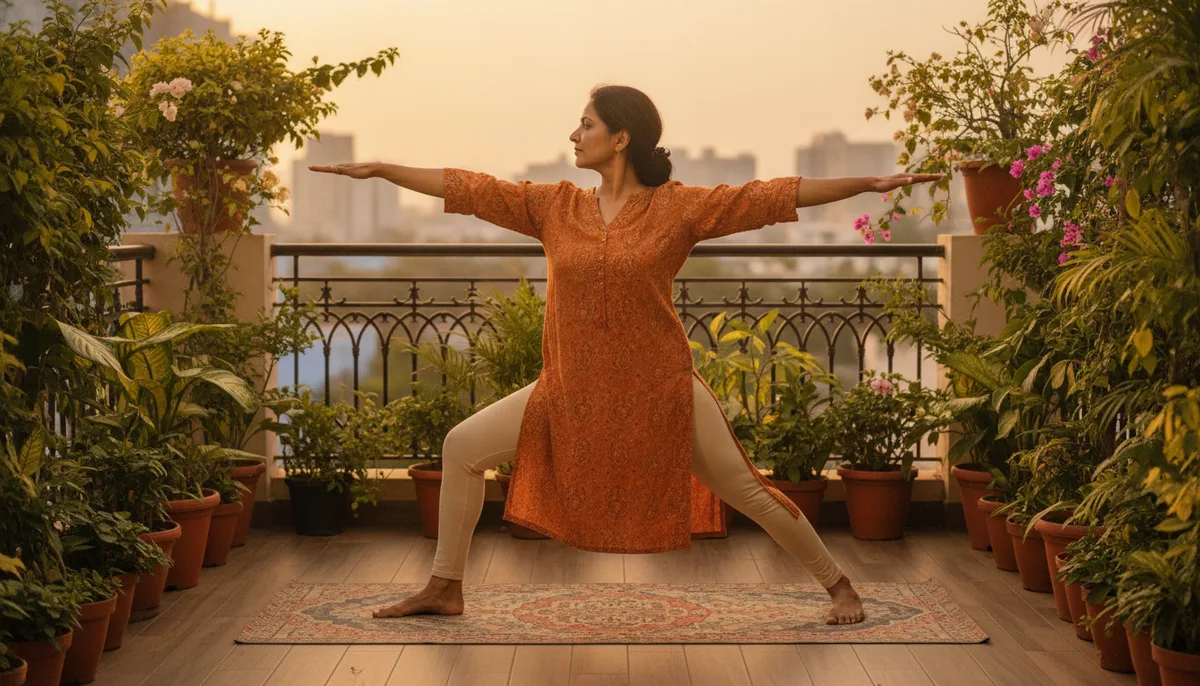
- Weight-bearing poses: Standing poses like Virabhadrasana (Warrior I and II) and Trikonasana help maintain bone density, which begins to decrease in the late 40s.
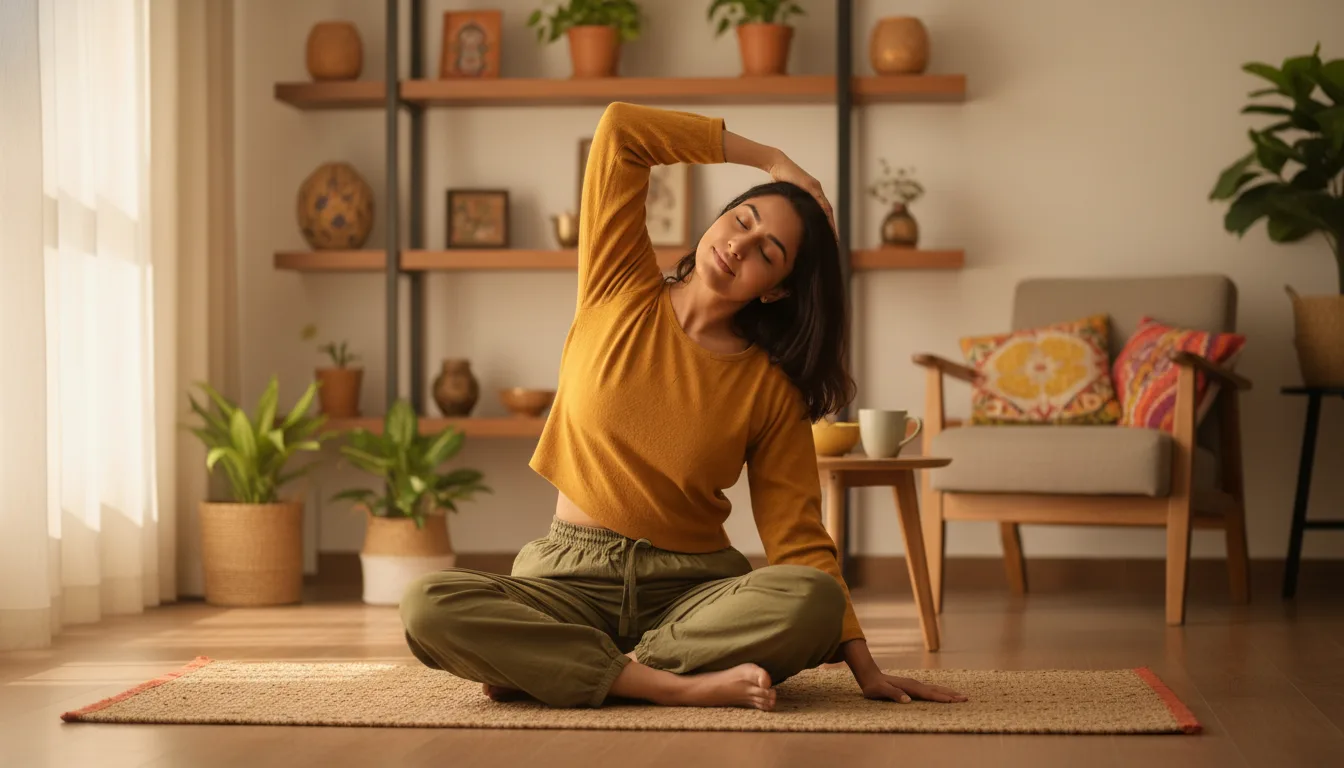
- Hip openers: Hormonal changes often show up as stiffness around the hips and lower back. Gentle hip-opening sequences a few times a week ease this considerably.
- Cooling breathwork: Sheetali and Sheetkari pranayama are traditional cooling practices that many women find genuinely helpful during hot flashes.
- Yoga Nidra: A guided deep relaxation practice, Yoga Nidra is particularly effective for sleep disruption - a very common complaint during perimenopause.
The mistake many women make is assuming they need to slow everything down or that active yoga is no longer for them. Strength and mobility matter more as we age, not less. The key is choosing movements that serve your body rather than fighting it.
Making It a Daily Practice at Home
Consistency is where the real benefit lives - not in perfect poses or long sessions, but in showing up on the mat regularly, even for ten minutes. For Indian women managing households, children, ageing parents, and demanding careers, the biggest obstacle is rarely willingness. It is time and structure.
A few things that genuinely help:
- Choose a fixed time - morning before the household wakes, or the brief quiet after lunch - and treat it as non-negotiable.
- Keep your mat visible and accessible. If it is rolled up in a cupboard, you will skip it. If it is already out, you will use it.
- Start with five minutes on hard days. Five minutes of breathing and gentle movement still counts. The habit matters more than the duration.
- Use guidance when motivation is low. A structured session from a reliable source removes the mental effort of deciding what to do.
This is exactly why a structured home plan can make a real difference. With Grihasana Premium, sessions are designed for real Indian home conditions - no props beyond a mat, no need for an hour of free time, and sequences that respect the fact that your body changes day to day.
If you are new and want to try before committing, the 1-Week Trial is a low-pressure way to see what a structured daily home practice actually feels like. There is no auto-renewal and no pressure - just seven days to find your rhythm.
A Note on Listening to Your Body
Across all of these stages - menstruation, postpartum, perimenopause, and everything between - one principle stays constant: your body's signals are information, not obstacles. Pain is a reason to stop or modify. Fatigue is a signal to rest or go slower. Energy is an invitation to explore.
Indian women are often conditioned to push through discomfort and prioritise everyone else's needs first. Yoga, done well, quietly interrupts that pattern. It creates a few minutes each day that belong entirely to you - not to productivity, not to anyone else's comfort. That, in itself, is worth building.