Why Your Neck and Shoulders Feel the Way They Do
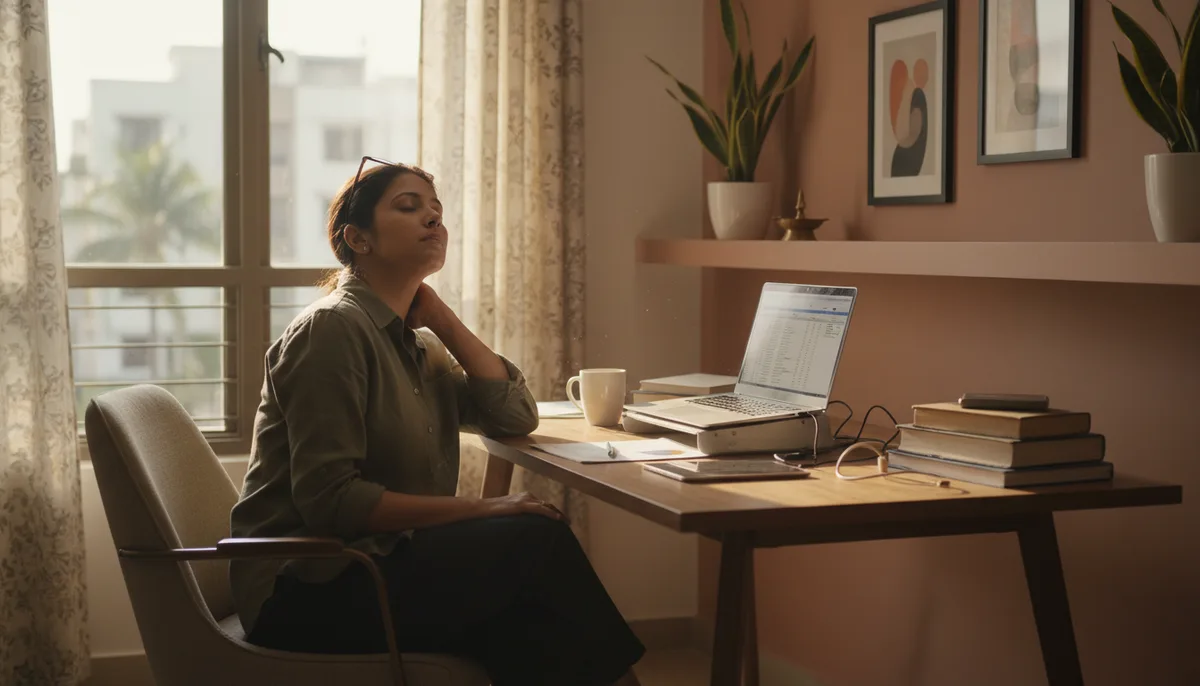
If you spend more than four hours a day at a desk, on a laptop, or scrolling a phone, there is a good chance your neck feels like a clenched fist by evening. For millions of Indian office workers in cities like Bengaluru, Mumbai, and Hyderabad, upper body stiffness has quietly become the default setting. Add a crowded Metro commute or a long drive through traffic, and the shoulders creep up toward the ears and stay there.
Homemakers and students are not exempt either. Cooking over a low counter, sitting cross-legged for long periods, or hunching over textbooks creates a similar kind of cumulative tightness. The muscles around the neck and shoulders were not designed to hold static tension for hours at a stretch. Over time, that tension becomes a pattern your body does not know how to exit on its own.
This is exactly where a consistent, gentle yoga practice helps. Not by "fixing" you overnight, but by giving your body a daily window to release what it has been holding.
What Makes This Different from Generic Stretching
Most people try a few neck rolls when they feel sore. Neck rolls help, but they only address the surface. Yoga for the neck and shoulders works on the whole chain: the muscles connecting your neck to your upper back, the space between your shoulder blades, the front of your chest (which tightens when you hunch forward), and the base of your skull.
When you work on all of these together, the relief is noticeably deeper and tends to last longer. The breathing that yoga weaves into movement also plays a real role here. A slow exhale signals your nervous system to let go. It is not poetic language - it is physiology. Slow, intentional breath genuinely reduces muscular guarding.
If you have been curious about building this kind of practice at home, Grihasana Premium includes guided sessions specifically designed for upper body release. They are paced for Indian adults who may be returning to yoga after years away, with no prior flexibility required.
A Gentle Routine You Can Do at Home
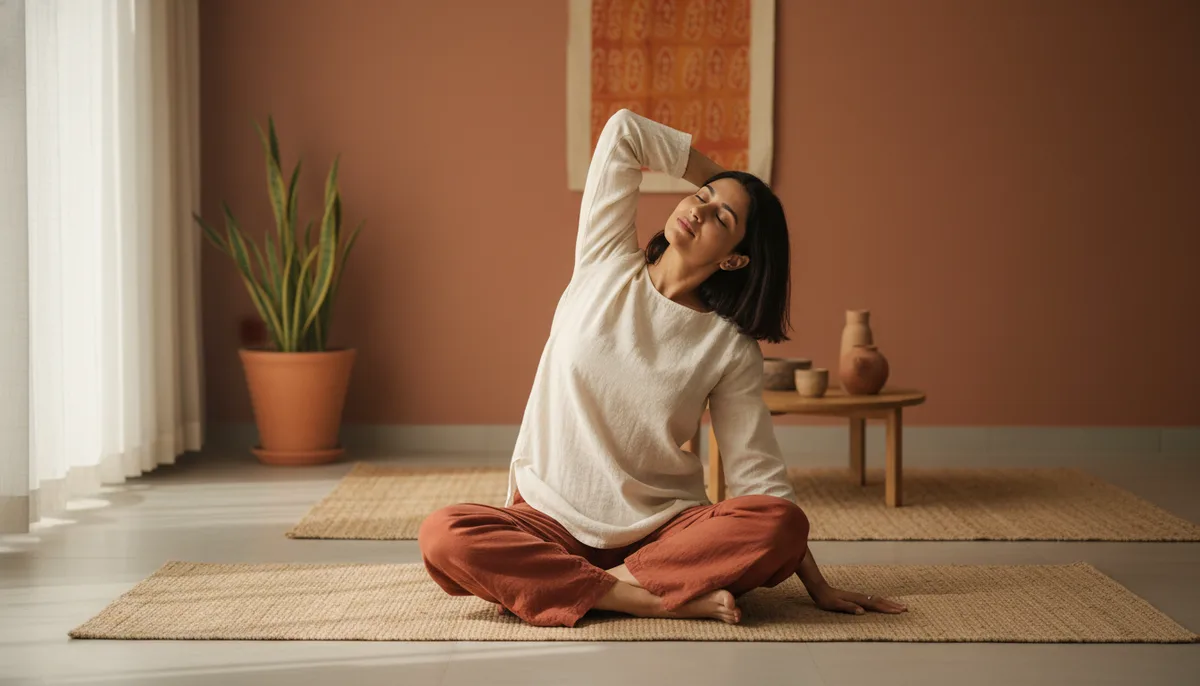
This sequence takes around 15 to 20 minutes. You need no equipment beyond a mat or a clean, firm surface. Do it in the morning before your workday begins, or in the evening after you have logged off. Both work well.
1. Seated Neck Side Stretch (Parsva Greeva Chalana)
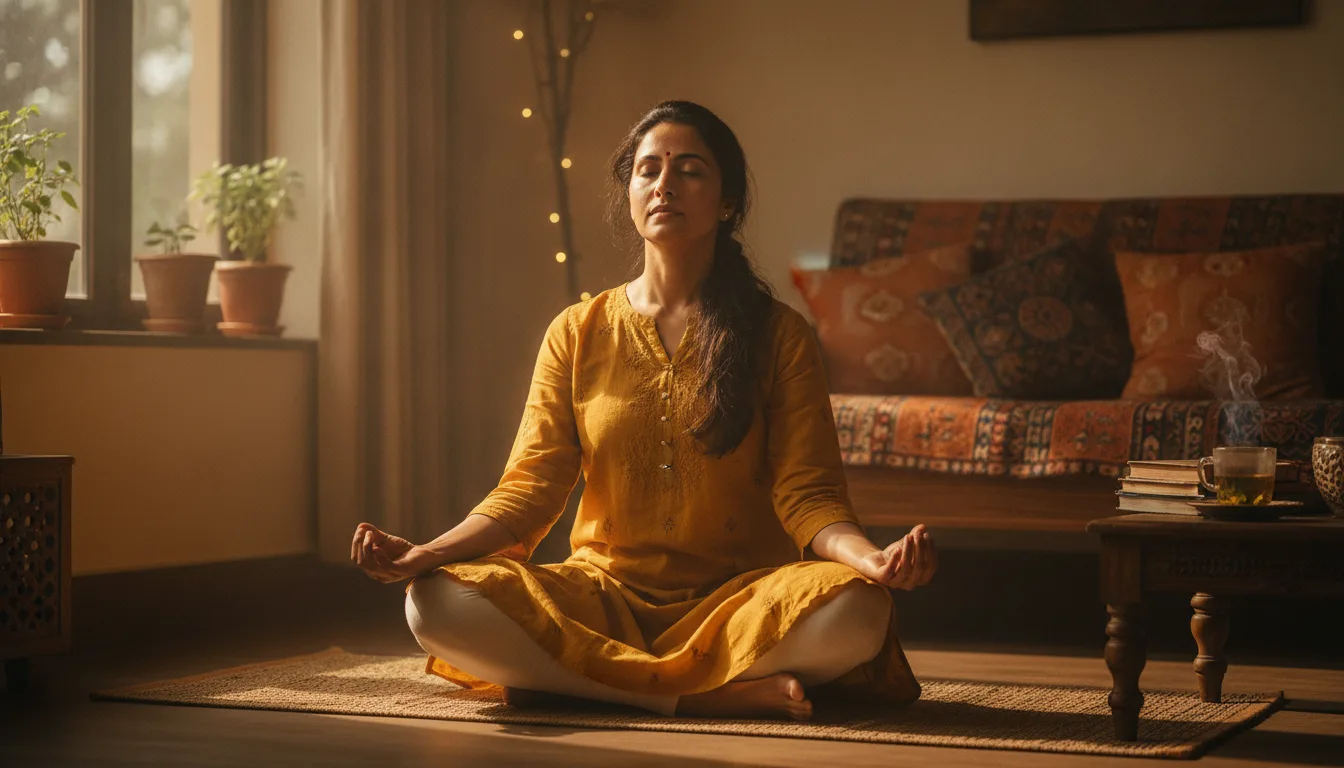
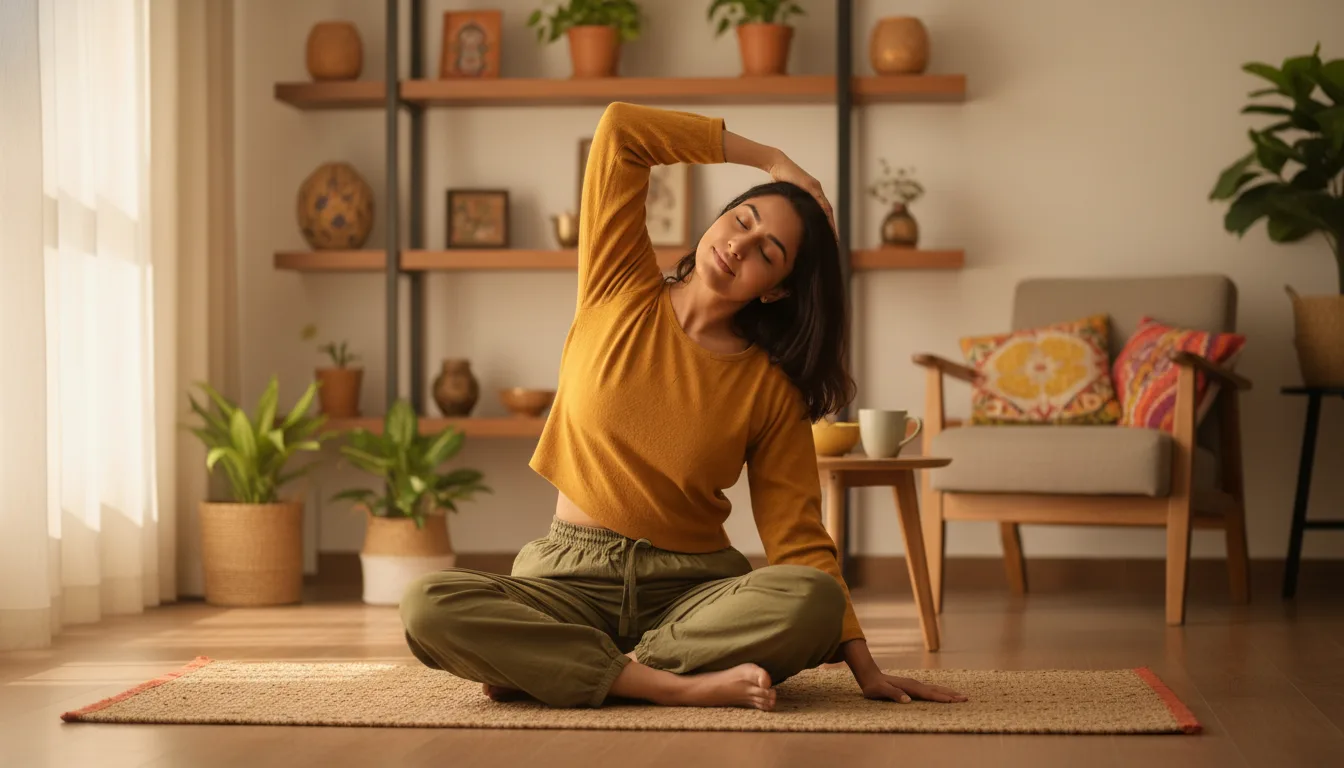
Sit comfortably with your spine upright - on a chair or cross-legged on the floor. Drop your right ear gently toward your right shoulder. Do not force it. Let the weight of your head do the work. Stay here for 5 to 6 slow breaths. You will feel a stretch along the left side of your neck. Switch sides. If one side feels tighter than the other, stay a little longer there.
2. Chest Opener Against a Wall
Stand facing a wall. Place your right hand flat on the wall at shoulder height, fingers pointing back. Slowly turn your body to the left, away from the wall, until you feel a stretch across your chest and the front of your right shoulder. Hold for 4 to 5 breaths. Repeat on the left side. This reverses the forward-hunch posture that builds up through the day.
3. Thread the Needle (Parsva Balasana)
Come onto all fours on your mat. Slide your right arm under your left arm along the floor, palm facing up, until your right shoulder and cheek rest on the mat. Your left arm can remain extended or bent. Breathe into the space between your shoulder blades. Hold for 6 to 8 breaths. This pose reaches the muscles of the upper and mid back that very few stretches access. Switch sides.
4. Eagle Arms (Garudasana Arms)
Still seated, extend both arms forward. Cross your right arm under your left, bending both elbows, and try to bring your palms together. If that is not comfortable, hold opposite shoulders instead. Lift your elbows slightly and draw them away from your face. Feel the broadening across your upper back. Hold for 5 breaths, then switch arm positions.
5. Supported Child's Pose (Balasana)
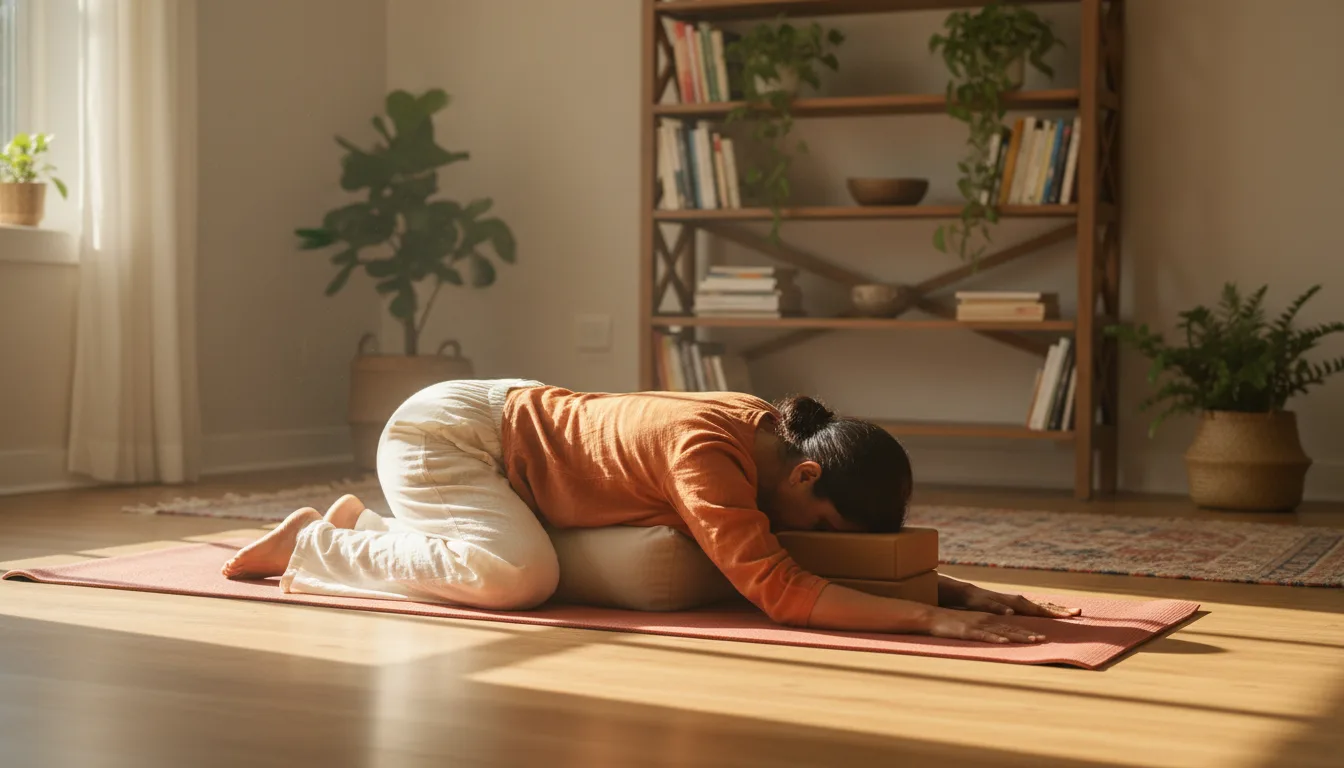
From all fours, sink your hips back toward your heels and stretch your arms forward on the mat. Let your forehead rest on the floor or on a folded blanket. This is a full release for the spine and the back of the shoulders. Stay here for 8 to 10 breaths. If your hips do not reach your heels, place a folded blanket between your thighs and calves as support.
6. Supine Twist (Jathara Parivartanasana)
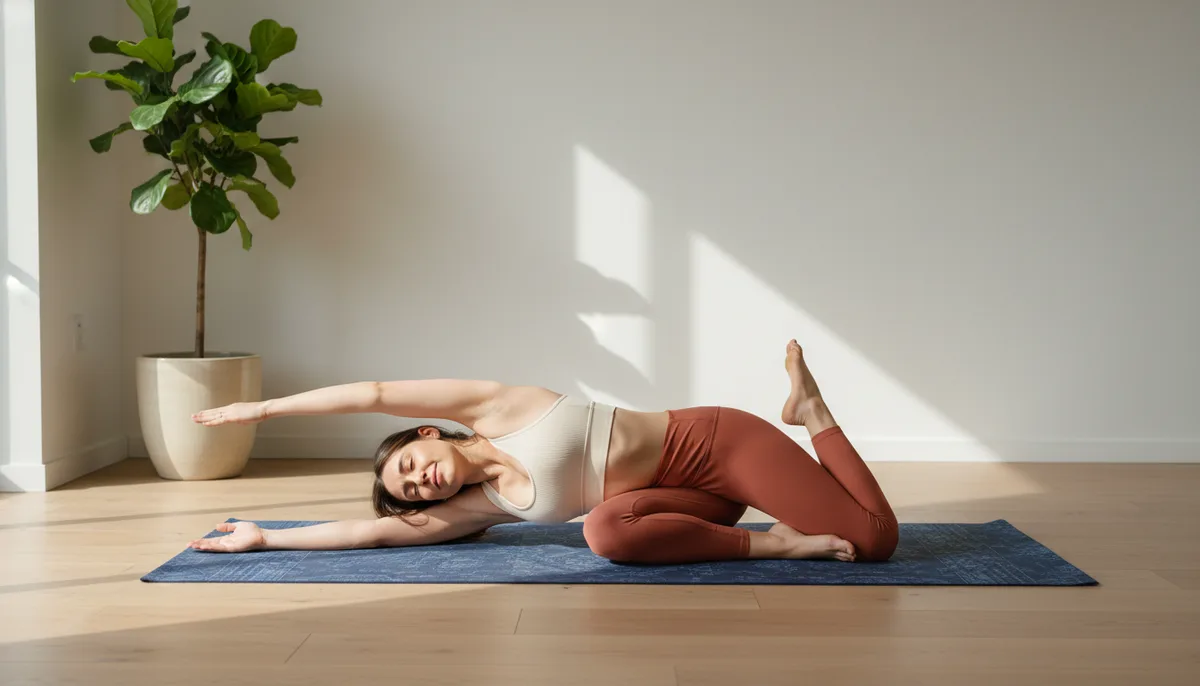
Lie on your back. Draw your knees to your chest, then let them fall to the right. Extend your arms out to the sides in a T shape. Look to the left if that is comfortable for your neck. This gentle spinal twist releases residual tension in the back and creates space along the side of the neck. Hold for 6 breaths per side.
Timing and Frequency That Actually Work
The honest answer is that consistency matters far more than duration. Twenty minutes daily will serve you better than an hour-long session twice a week. If your work week is packed, even 10 minutes of the above sequence done consistently will create a noticeable shift over two to three weeks.
During Indian summers, morning practice before the heat sets in is ideal. In winter months, an evening session can feel particularly restorative. During festival seasons like Diwali or Pongal, when schedules get chaotic, a short version of this sequence - even just neck stretches and child's pose - keeps the habit alive without demanding a full slot.
The Grihasana Premium plan is structured around this reality. Sessions are designed to fit real Indian schedules, not idealized ones. You can start with the 1-week trial to see how the practice fits your day before committing to a longer plan.
What to Watch Out For
A few things worth noting before you begin:
- Pain is different from discomfort. A stretching sensation is normal. Sharp or shooting pain is a signal to stop and speak to a doctor before continuing.
- Avoid deep neck circles. Rolling the head all the way back puts unnecessary pressure on the cervical spine. Side-to-side and forward-and-back movements are safer.
- If you have a cervical disc issue, check with your physiotherapist before starting any new neck-focused routine.
- Be patient with the first week. You may notice the soreness increases slightly before it eases. This is normal as the muscles begin to move through their full range again.
Building It Into Your Actual Life
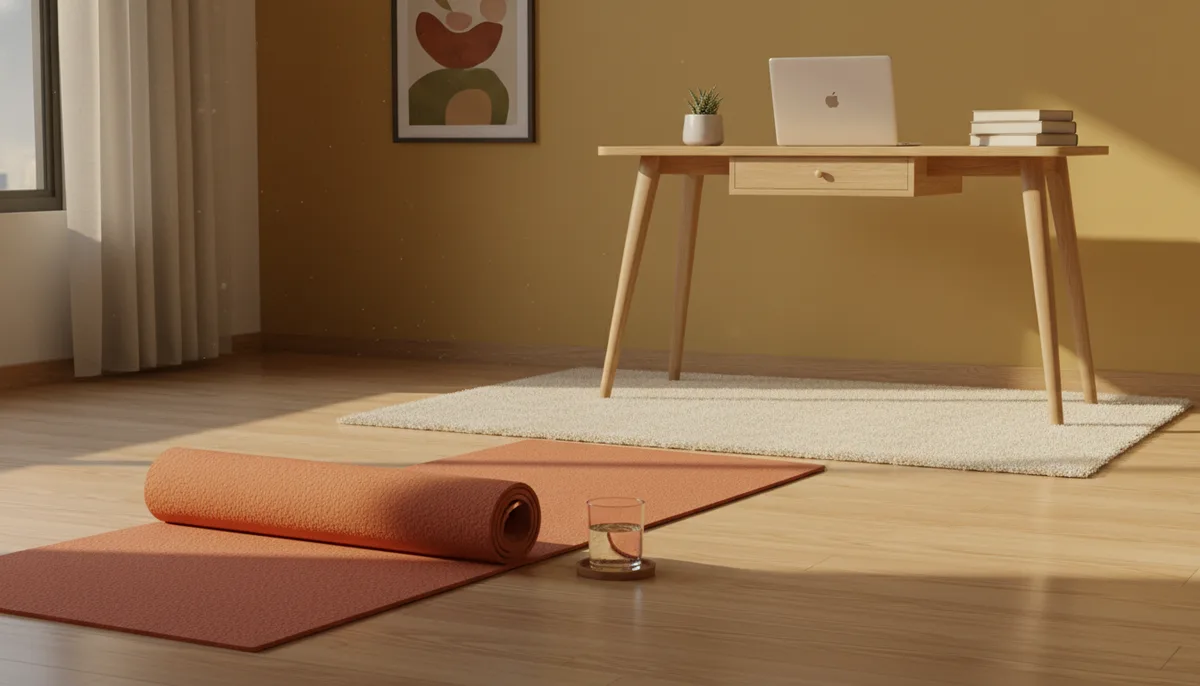
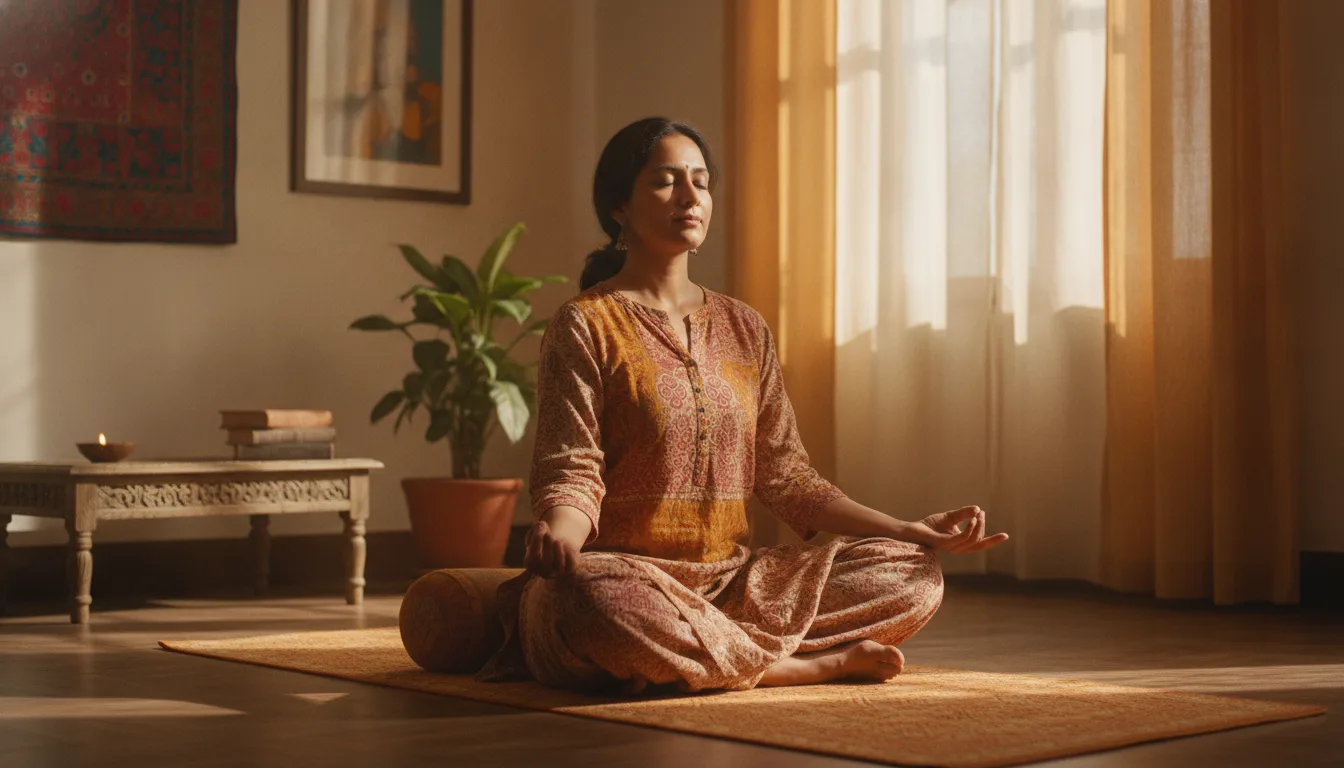
The biggest obstacle to a consistent home practice is not motivation - it is friction. The sequence above is short enough that it does not require a dedicated block of free time. Some people do it immediately after waking up, before the day picks up speed. Others use it as a deliberate transition between work hours and evening time.
A simple cue helps: keep your mat rolled out somewhere you will see it. Out of sight genuinely means out of mind for most people. A visible mat near your work desk or in the corner of your bedroom acts as a gentle reminder without any pressure.
If you want a guided experience rather than following a written sequence, Grihasana Premium walks you through sessions at your own pace, with cues tailored for people who are new to this or returning after a long gap. There is no intimidating studio setting, no comparison to anyone else's flexibility, and no performance required.
Stiff shoulders and a tight neck are common. But they are not permanent fixtures. A small, regular practice - done quietly at home - can shift how your body feels over the course of a few weeks. Not as a dramatic fix, but as a steady, accumulating relief.