Why Sleep Feels So Hard These Days
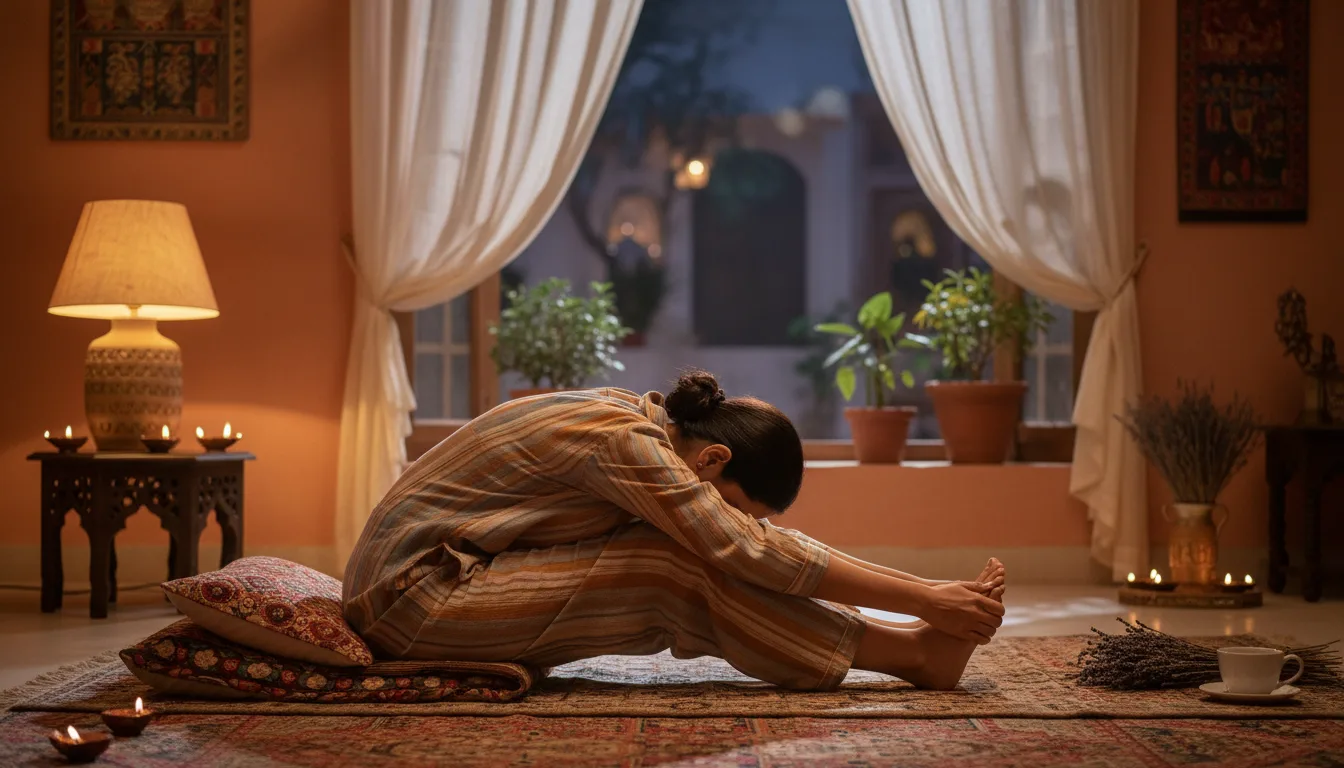
If you lie down at night with your mind still running through tomorrow's to-do list, you are not alone. Across Indian cities and towns, millions of adults are dealing with disrupted sleep, late-night screen time, and bodies that simply do not know how to switch off. The problem is rarely laziness. It is that we move from full speed to bed with almost nothing in between.
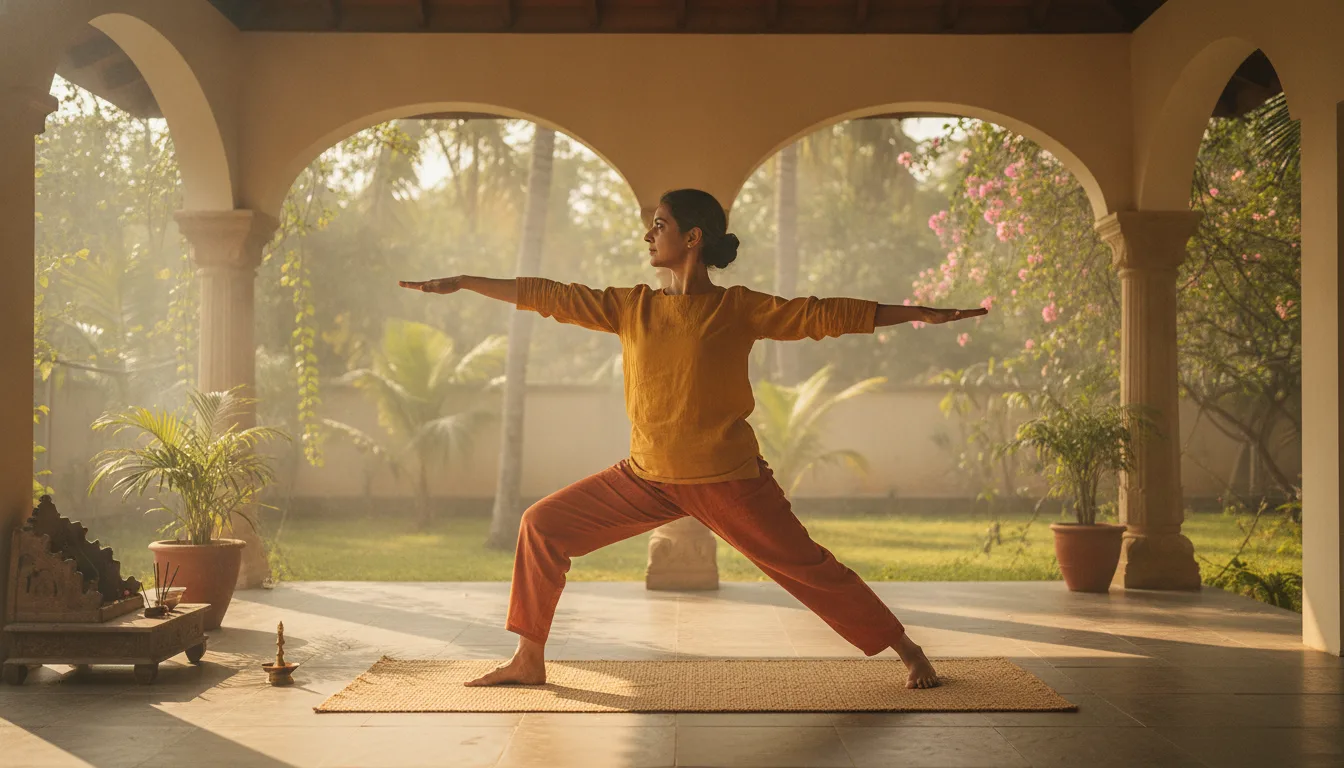
Yoga, practiced gently in the evening, can act as that missing bridge. Not the vigorous sun salutation kind - we are talking about slow, grounded movement that signals to your nervous system: it is safe to rest now. You do not need a studio, a mat with special markings, or an hour of free time. A folded blanket on your bedroom floor and 15 to 20 minutes is enough to start.
What Happens in Your Body Before Sleep
Understanding a little bit of the science helps you trust the practice. When you are stressed or overstimulated, your body runs on its sympathetic nervous system - often called the fight-or-flight mode. Your heart rate stays elevated, your muscles hold tension, and your brain keeps scanning for threats.
Slow, rhythmic movement and deep breathing activate the parasympathetic nervous system instead. This is the rest-and-digest mode. Breathing slows down. Muscles release. The body temperature at your extremities rises slightly, which is actually one of the biological signals that you are ready to sleep.
This is why a gentle yoga sequence before bed is not just relaxing in a vague way - it is working with your body's own sleep chemistry.
Setting Up Your Bedtime Practice at Home
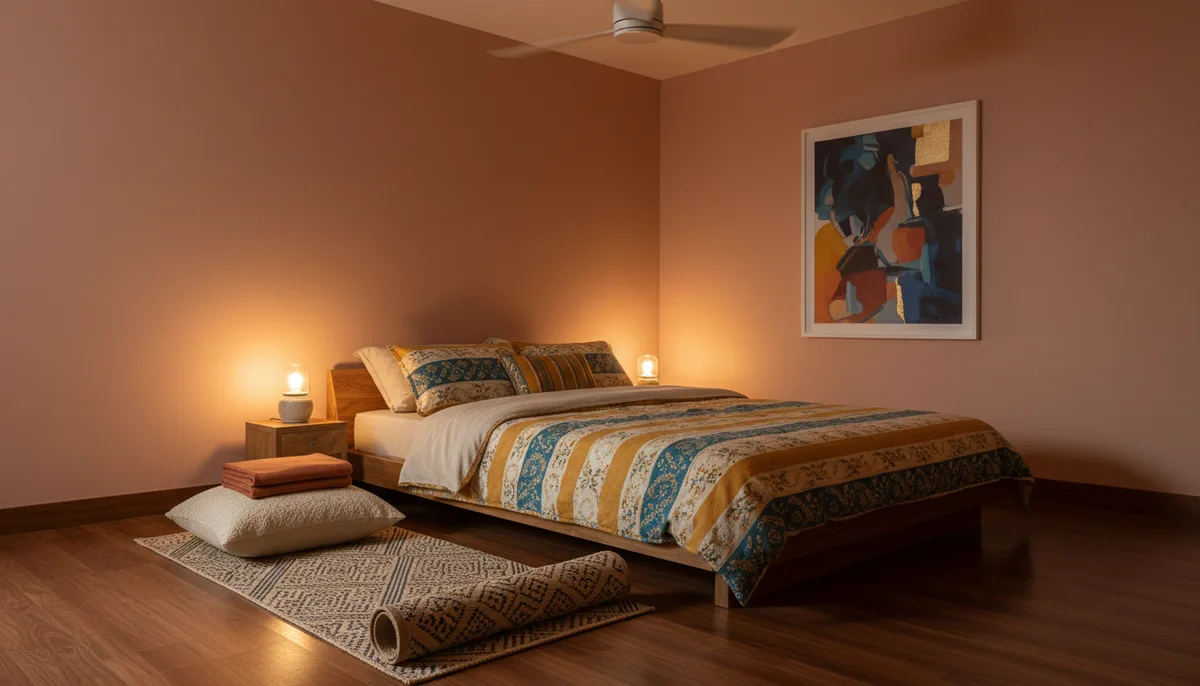
One of the best things about a bedtime yoga practice is how little you need. Here is what works well:
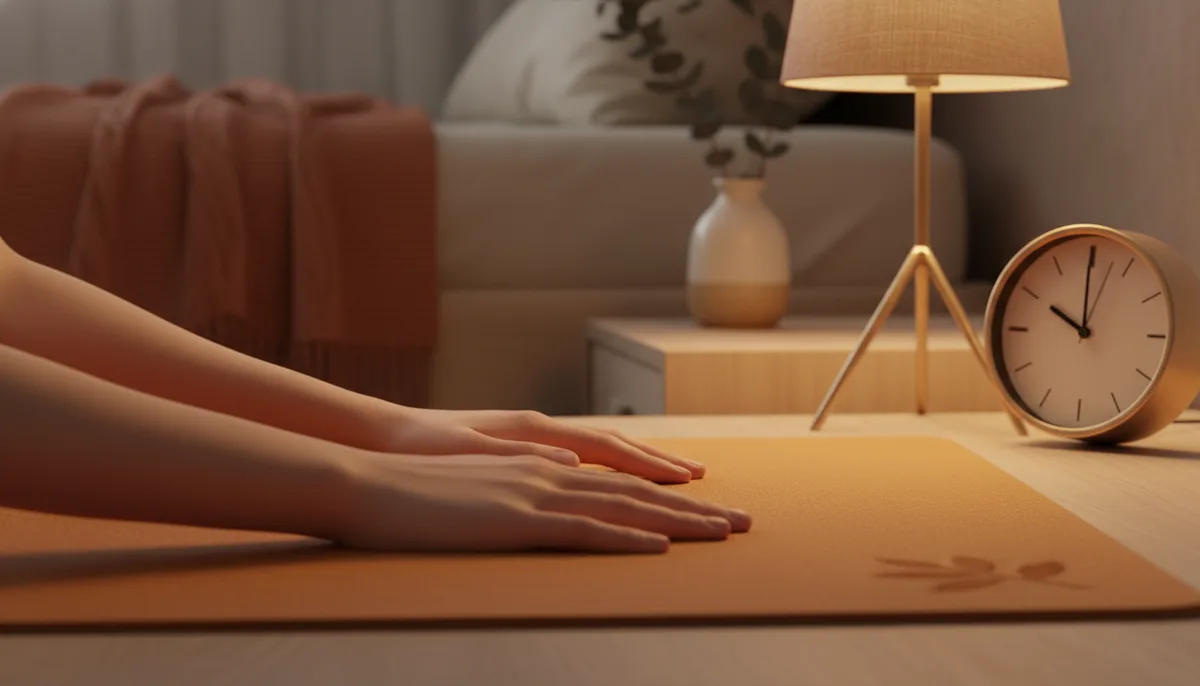
- A yoga mat or a folded blanket on the floor beside your bed
- Dim lighting - even switching off the overhead light and using a bedside lamp makes a difference
- Loose, comfortable clothing (your regular nightclothes work perfectly)
- A cushion or bolster if you have one, though it is not essential
Try to keep your phone face down and notifications off for this time. If you are using a guided session, set it up before you begin so you are not scrolling to find it mid-practice.
With Grihasana Premium, you get access to guided evening sessions designed specifically for home practice - sessions that account for real Indian living spaces, not a breezy studio with perfect acoustics.
A Simple Bedtime Sequence to Try Tonight
This sequence takes roughly 15 to 20 minutes. Hold each pose for 5 to 8 slow breaths unless otherwise noted.
1. Seated Neck Rolls and Shoulder Release (2 minutes)
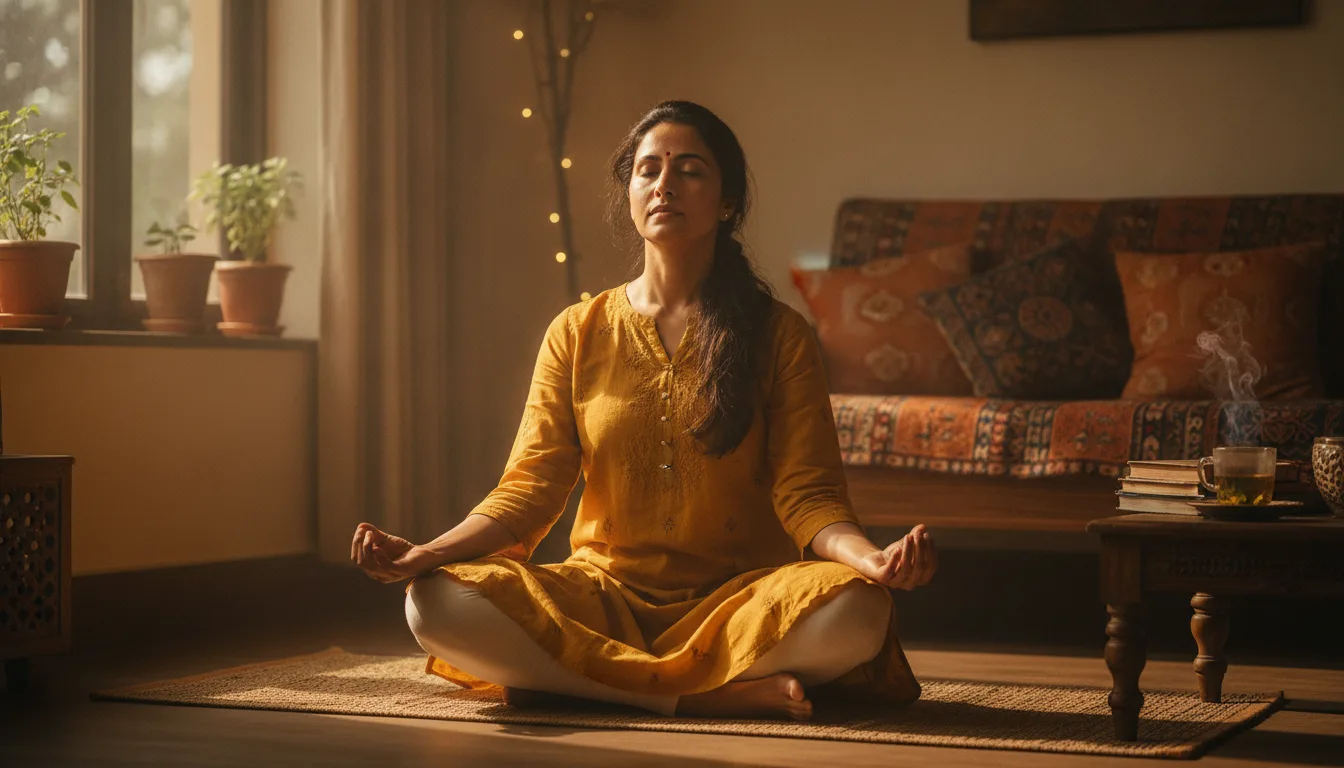
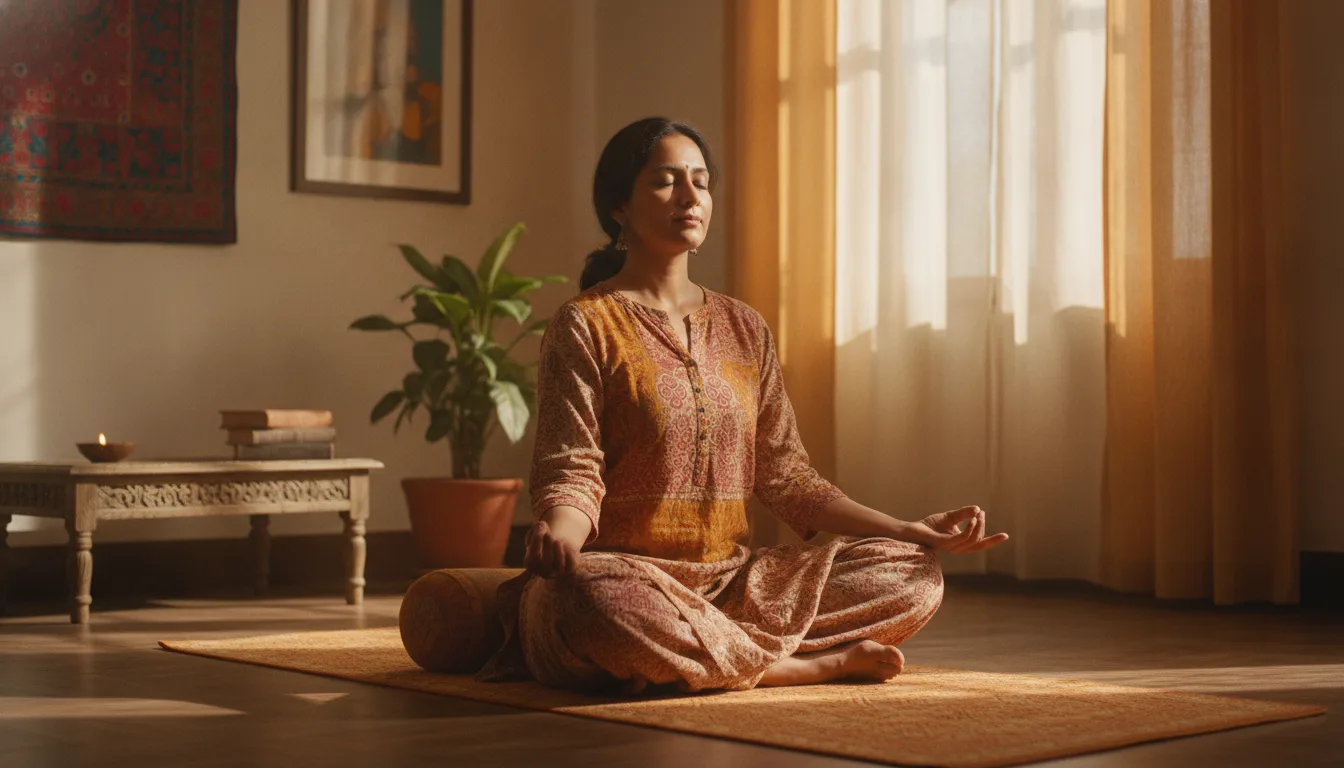
Sit cross-legged or on the edge of your bed. Close your eyes. Slowly drop your right ear toward your right shoulder, breathe into the left side of your neck, and then switch. Follow with gentle shoulder rolls - forward and backward. This is where most of us carry the day's tension without realising it.
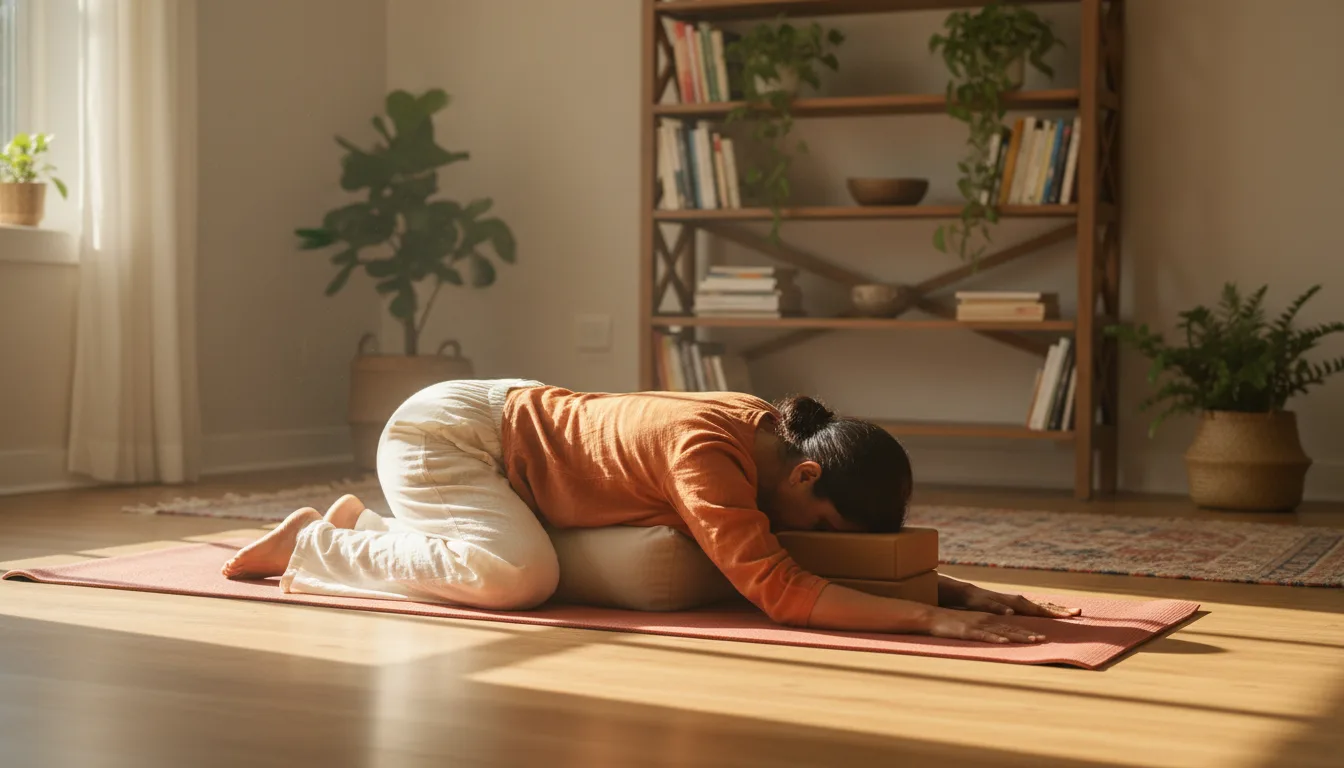
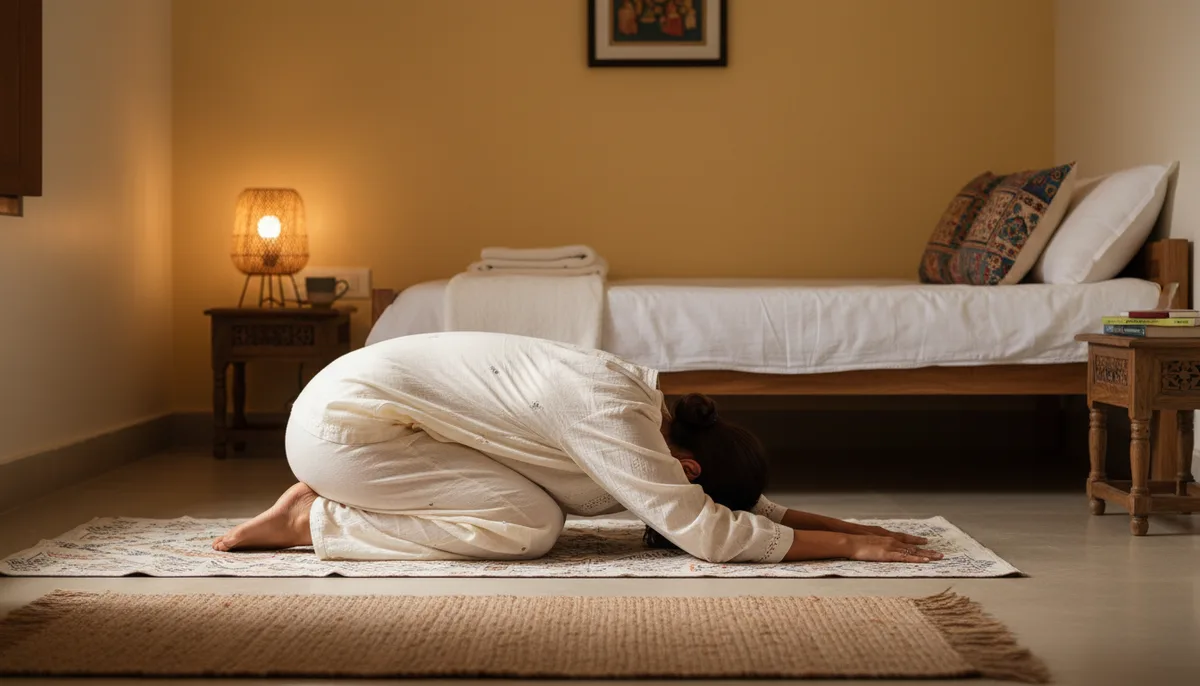
2. Child's Pose (Balasana)
Come onto your hands and knees, then sit your hips back toward your heels and extend your arms forward along the floor (or rest them alongside your body if that is more comfortable). Let your forehead rest on the mat or a folded blanket. This pose is deeply calming for the nervous system. If your knees protest, place a rolled blanket behind them for support.
3. Supine Twist (Supta Matsyendrasana)
Lie on your back. Draw your right knee to your chest, then let it fall across your body to the left while you extend your right arm out to the side and turn your gaze right. Hold, breathe into the right side of your ribcage, then switch. This pose gently wrings out the tension that builds in your lower back and hips through the day - especially if you sit at a desk.
4. Legs Up the Wall (Viparita Karani)
Scoot your hips close to a wall and swing your legs up so they rest vertically against it. Your arms fall out to the sides, palms facing up. This gentle inversion encourages blood to move away from your tired feet and legs, and the position naturally quietens the mind. Stay here for 5 to 10 minutes if you like. Many people find this pose alone makes a noticeable difference to how quickly they fall asleep.
5. Corpse Pose (Savasana) with 4-7-8 Breathing
Lie flat on your back with your legs slightly apart and your arms a little away from your body. Close your eyes. Practice 4-7-8 breathing: inhale quietly through your nose for a count of 4, hold your breath for a count of 7, exhale slowly through your mouth for a count of 8. Repeat 4 to 6 cycles. This breathing pattern has a particularly strong calming effect and is easy to continue even as you drift into sleep.
Adjusting the Routine for Indian Seasons
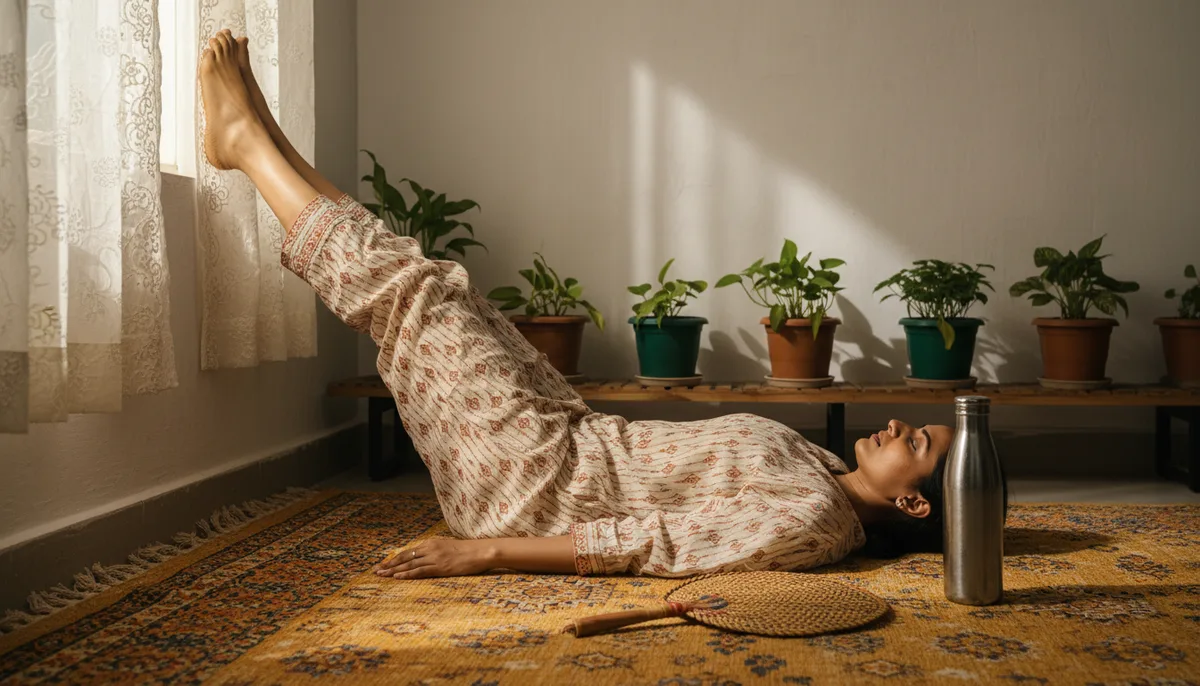
India's climate affects sleep in ways we often underestimate. In summer months - especially in cities like Delhi, Chennai, or Ahmedabad - the heat disrupts sleep quality significantly. During these months, practice near a fan, keep the sequence shorter (10 minutes is fine), and focus more on the breathing exercises than the physical poses.
During winter, especially in northern India, cold muscles can feel stiff at the start of your practice. Begin with a minute or two of gentle self-massage on your calves and thighs before moving into poses. You can stay under a light shawl during the final resting pose.
During festival seasons - Diwali, Navratri, Dussehra - when late nights and rich food are common, even a 5-minute breathing practice before bed can help your body recalibrate. You do not have to skip the celebrations to take care of your sleep.
How Long Before You Notice a Difference
This is a fair question, and an honest answer matters here. Most people notice that they feel more settled when they get into bed after just a few sessions. Falling asleep faster often happens within the first week for people who practice consistently, even if that consistency means 4 out of 7 nights.
Deeper, more sustained improvements in sleep quality tend to come after 3 to 4 weeks of regular practice. The body builds what you might think of as a sleep association - it begins to recognise the sequence as a signal that rest is coming, much like how brushing your teeth primes you psychologically for bed.
The Grihasana Premium 4-week plan is particularly well suited to this kind of habit building. It gives you enough structure to stay consistent without feeling like a rigid program. And because plans are fixed-duration rather than auto-renewing, you are always in control of what you are signing up for.
A Few Things Worth Knowing
You do not need to be flexible to do any of this. Every pose here can be modified. If Child's Pose is uncomfortable on your knees, sit against a wall and fold forward instead. If Legs Up the Wall is difficult, simply lie on your back with your knees bent and feet flat on the floor - the effect is similar.
Try not to eat a heavy meal within 90 minutes of your practice. A light dinner, common in many South Indian households, actually supports better bedtime yoga and better sleep overall.
And if you fall asleep during Savasana - that is not a failure. That is the practice working exactly as it should.
Getting Started
The simplest way to begin is tonight. Roll out a mat or a blanket, dim the lights, and try just the supine twist and legs up the wall. Five minutes is enough to start. Build from there.
If you want a more guided experience with sessions designed for Indian home practice, the Grihasana Premium 1-week trial at just Rs. 749 is a low-commitment way to explore what a structured bedtime routine can feel like when someone walks you through it. No studio required. No perfect flexibility needed. Just your bedroom floor and a little quiet time before you sleep.