
Why Busy Professionals Give Up on Yoga (and Why It Doesn't Have to Be That Way)
If you've ever downloaded a yoga app, attended two sessions, and quietly abandoned it by week three - you're not alone. For working adults in Indian cities, life moves fast. The 7 AM alarm is followed by a commute, back-to-back calls, a rushed lunch, more screens, and then home responsibilities that don't pause for wellness routines.
The common belief is that yoga requires a full hour, a dedicated room, and a calm morning. None of those things are guaranteed in a Bengaluru apartment or a Delhi flat with one shared bathroom. So people skip it. And then feel guilty. And then skip it again.
But here's what often gets lost: yoga is not measured in minutes. It's measured in consistency. A 12-minute session three days a week will do more for your body and mind than a 90-minute class you attend once a month when everything lines up perfectly.
What a Realistic Short Practice Actually Looks Like

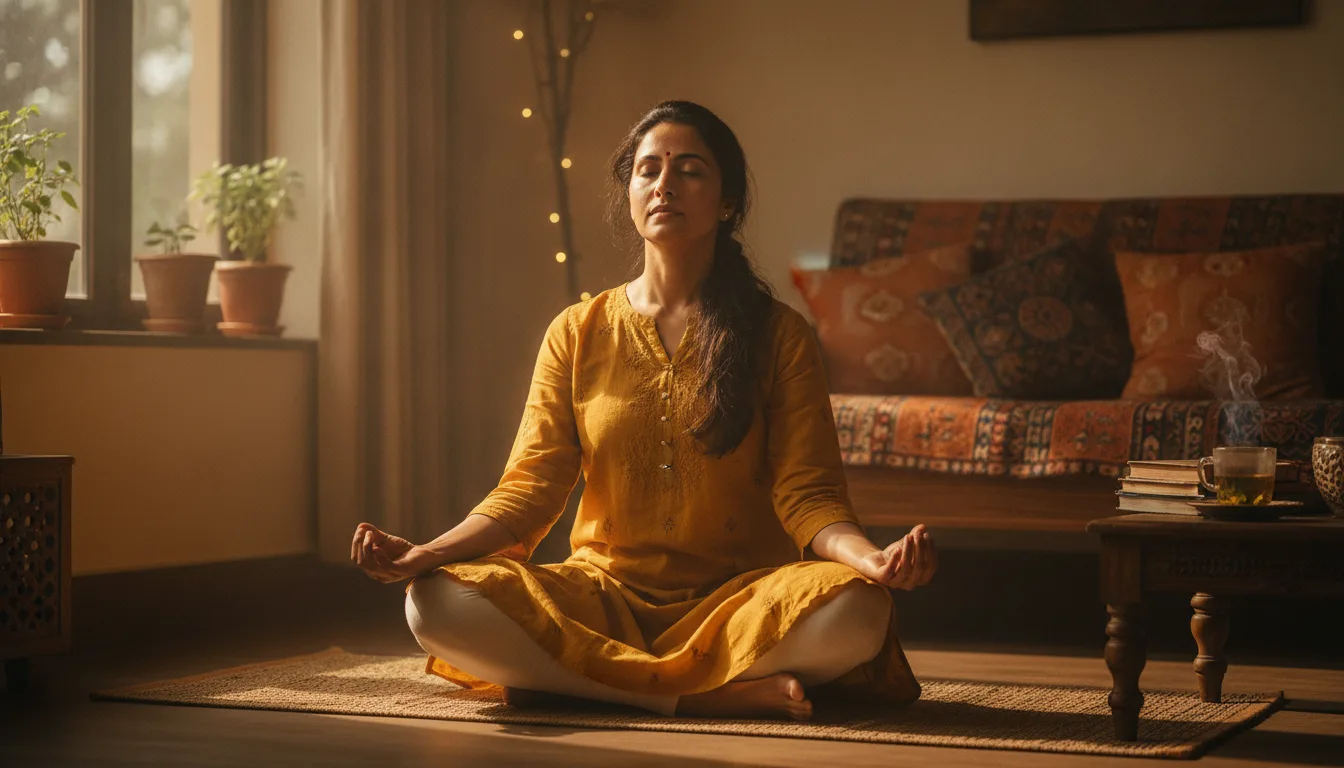
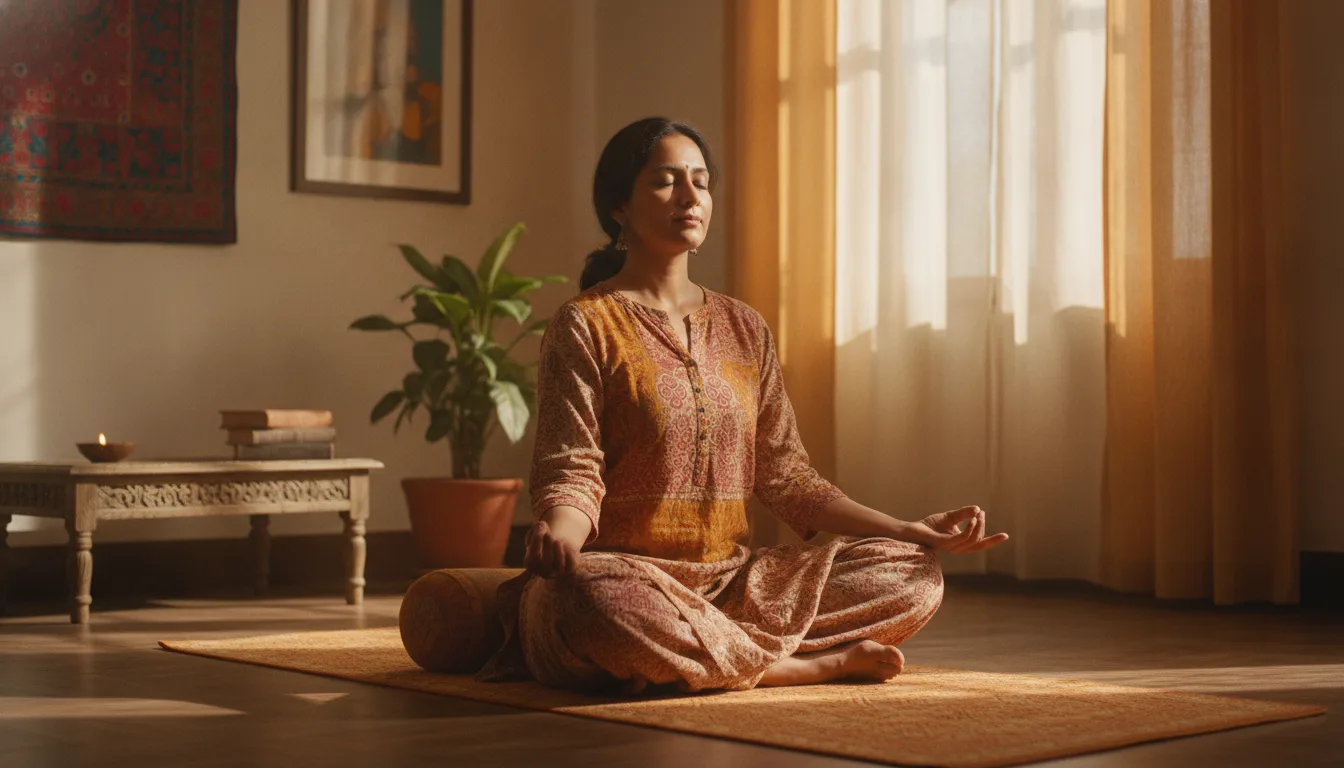
A short home session doesn't mean a watered-down practice. It means a focused one. Here's how a 15-minute session might be structured for a working professional:
- 2 minutes: Seated breathing to shift from work mode to practice mode
- 5 minutes: Gentle movement - cat-cow, a forward fold, a hip opener
- 5 minutes: One or two standing postures depending on energy levels
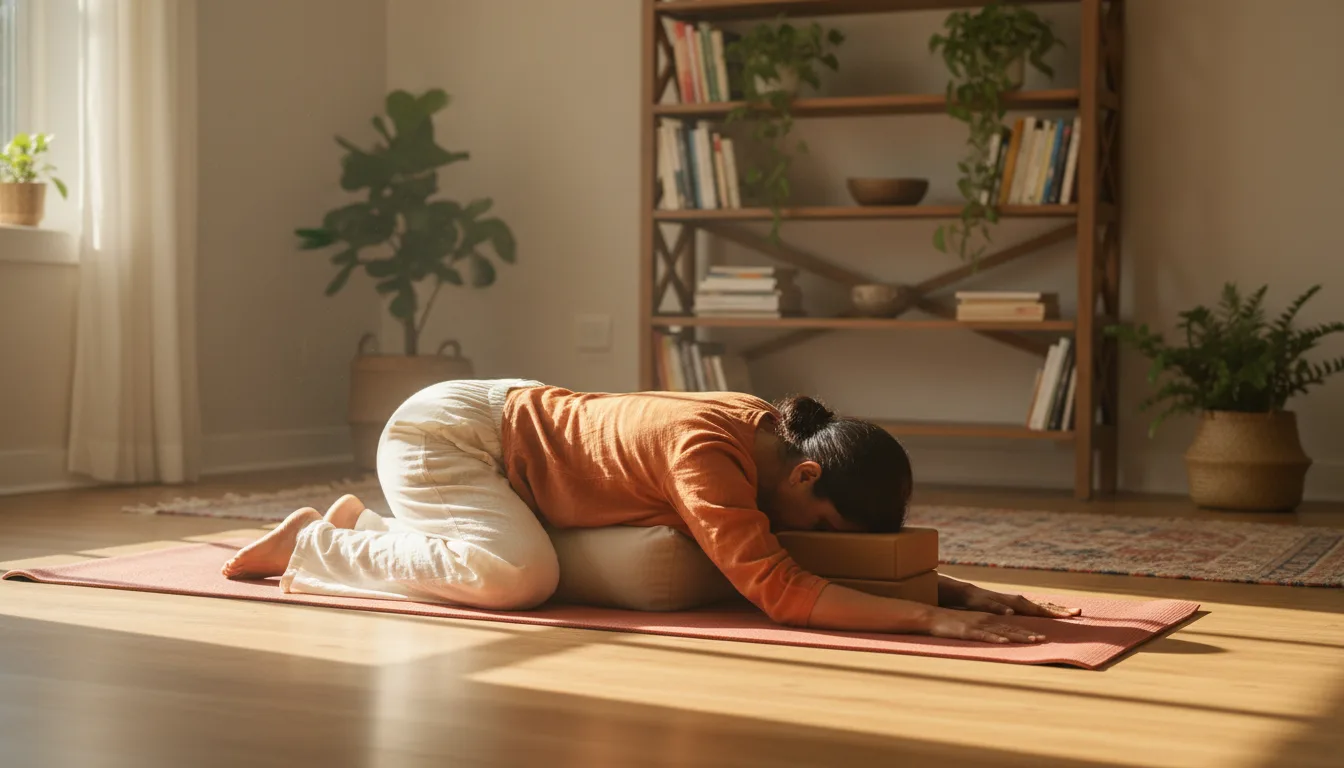
- 3 minutes: A simple lying-down rest or legs-up-the-wall
That's it. No Sanskrit chanting required. No special outfit. Just a mat, a quiet corner, and a few minutes that are genuinely yours.
The key is matching the session to the time of day and your energy. A morning session before your first meeting might focus on movement and breathing. An evening session after a long day of sitting might focus on hip release and a gentle twist to undo the desk posture you held for eight hours.
The Indian Work Schedule and Why It Makes Yoga Harder
Indian professionals often deal with work patterns that don't fit the Western wellness model. Many IT and services jobs have late hours, especially teams with US or European time zones. Families in India rarely have solo mornings - there are school runs, elderly parents, shared kitchens, and prayer routines that fill the early hours.
This is why generic yoga apps built for someone with a quiet apartment in Amsterdam or a calm suburban morning in California don't quite land. The pacing feels off. The assumptions don't match.
A more useful framing: find your "edge time." This is the 15 to 20 minutes just before something else starts - just before a meeting, just after the kids leave for school, just before the household wakes up. Edge time is consistent even when schedules aren't. It's the same sliver of space you already use to scroll, and it's available every day.
Seasonal Rhythms Worth Paying Attention To
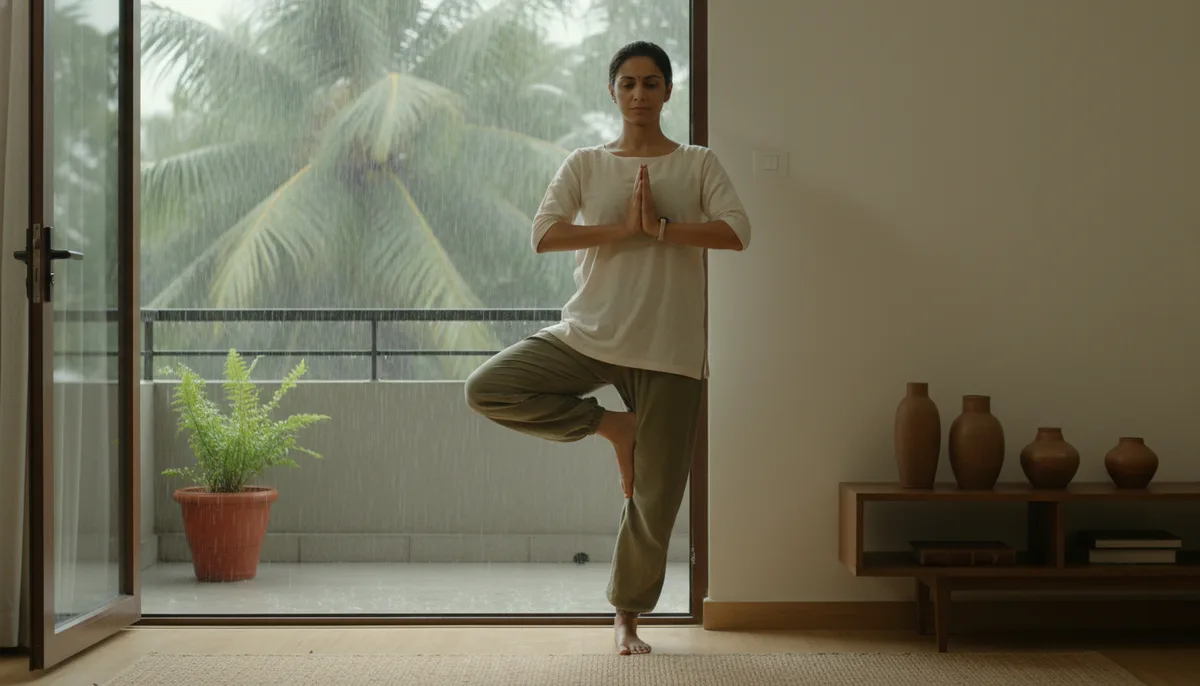
India has seasons that genuinely affect how the body feels. In the peak of a Chennai or Hyderabad summer, an intense flowing practice at noon is uncomfortable and potentially draining. In the cool Bangalore mornings of December and January, the body takes longer to warm up and needs gentler entry into movement.
A short home practice is actually better suited to working with seasons than a fixed studio class. You can soften the practice in summer heat, lean into more grounding seated work during the monsoon slump, and do a few more energising rounds in the cooler months when the body feels lighter.
This kind of responsiveness - listening to what your body needs today, in this season, after this particular week - is what makes a home practice feel personal rather than generic.
When You Only Have 5 Minutes
Some days, five minutes is all you have. That's not a failure condition. That's a practice.
Five minutes of conscious movement is genuinely useful. A slow neck roll. A seated forward bend. Three rounds of deep, deliberate breathing with a hand on your belly. These things shift the nervous system. They remind your body that it's not always running.
The trap is thinking that if you can't do the full session, you shouldn't do anything. That logic is how weeks go by without a single moment of intentional stillness. Instead, think of the five-minute version as your minimum viable practice - the thing you always do, no matter what, because it takes less time than a cup of tea.
Over time, these five-minute sessions add up. They keep the habit alive on hard days. And on easier days, five minutes naturally stretches to ten, then fifteen, because the body remembers how good it feels to move with intention.
Building a Routine That Doesn't Rely on Motivation
Motivation is unreliable. It shows up when things are good and disappears precisely when you need it most - during a stressful project, after a disrupted night's sleep, or in the grey week after a festival holiday when everything feels flat.
The antidote is structure, not willpower. A short home practice becomes habitual when it's anchored to something that already happens every day. For most Indian households, that anchor is easy to find: the morning chai, the period before the first video call, the end of the afternoon just before cooking starts.
Once the anchor is set, the practice attaches to it. You don't decide to do yoga - you just do what comes after chai. The decision is already made.
This is exactly the approach built into the Grihasana Premium membership - sessions that are designed to be short enough to fit real days, not idealised ones. The structure is already there. You just show up.
What to Do About Guilt on Days You Skip
You will skip days. That's not a prediction of failure - it's just honesty about how human schedules work. A quarterly review season, a family health situation, a long train journey for a wedding in another city - life interrupts practice. It always will.
The only thing that matters is what you do after a skipped day. Most people feel guilty, and then the guilt compounds into avoidance, and three days becomes three weeks. The alternative is simpler: come back without ceremony. Do five minutes. Rebuild the anchor.
A plan like the Grihasana Premium plan is built around this reality. Sessions pick up where you are, not where you think you should be. There's no penalty for starting over, no streak to protect. Just a practice waiting for you when you're ready.
A Practical Starting Point for This Week
If you want to try a short professional-friendly home practice this week, here's a simple entry point:
- Choose one time slot - morning, afternoon break, or evening. Pick the one that already has a natural anchor in your day.
- Commit to 10 minutes only. Not 30. Not when you have time. Ten minutes, at the same slot, for five days.
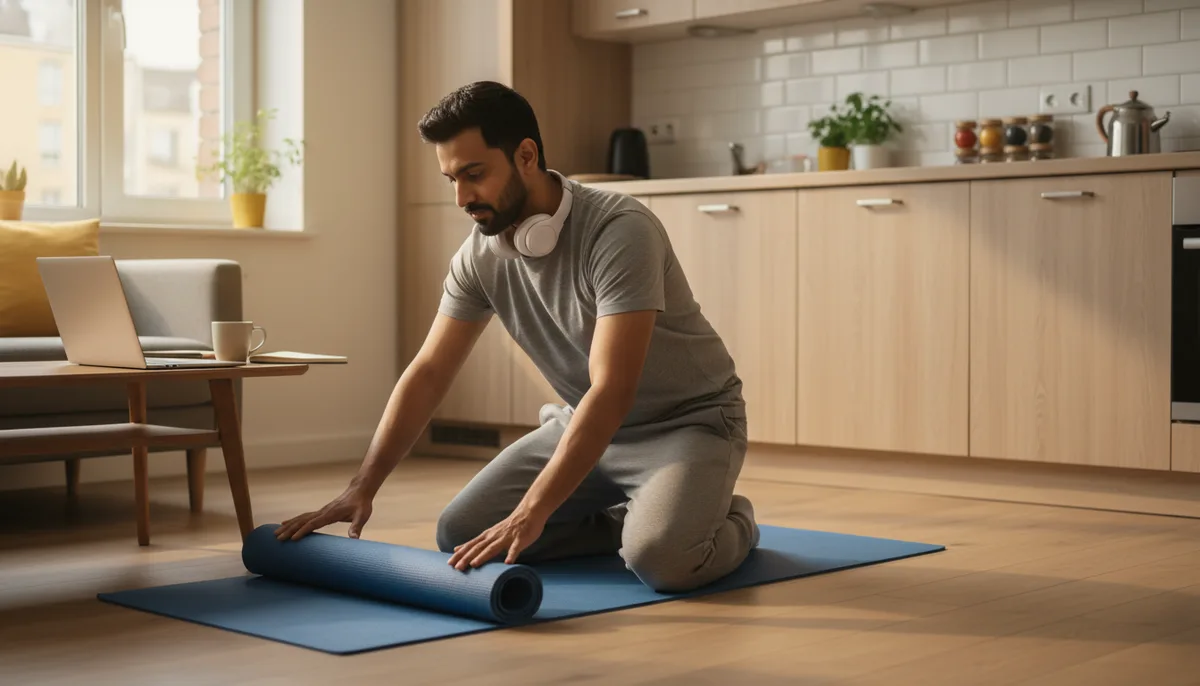
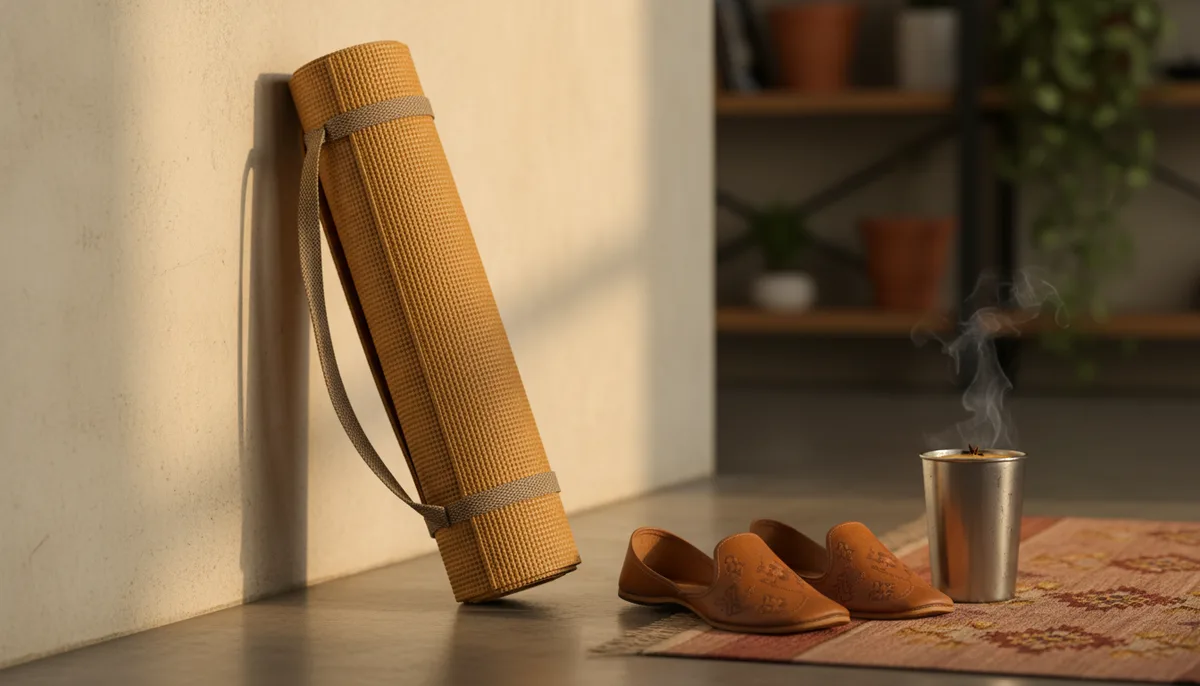
- Keep the mat visible. In an Indian home, a mat rolled up in the corner is a quiet prompt. Out of sight really does mean out of mind.
- Start with breathing. Even if the postures don't happen some days, two minutes of intentional breathing counts as practice.
- Track nothing. No app streaks to protect, no journaling required. Just show up and move.
After five days, you'll have done more yoga than in the previous month. That's the compound effect of small, consistent effort - no dramatic claims, just something genuinely worth building.
If you'd like guided sessions built specifically for short Indian home schedules, explore Grihasana Premium - with a 1-week trial available so you can try the approach before committing to anything longer.