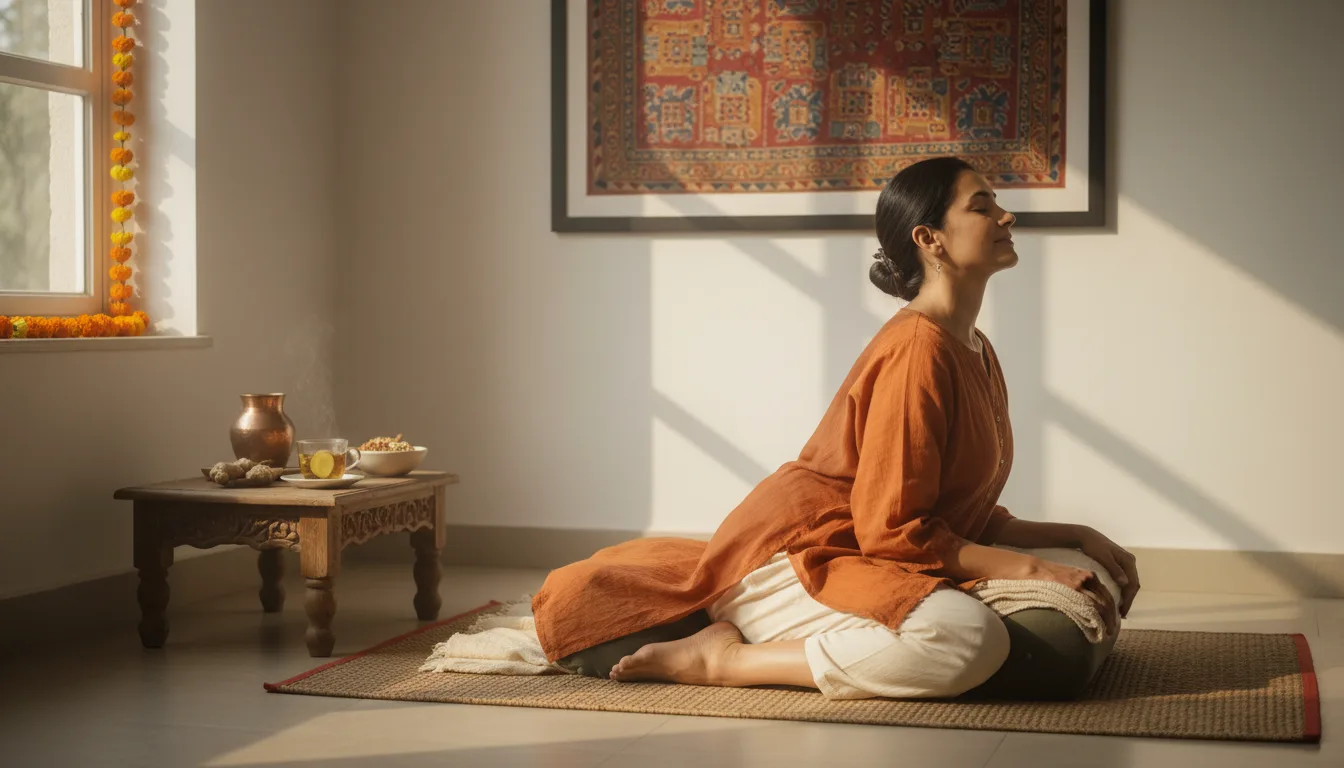

Why Most Home Yoga Attempts Don't Last
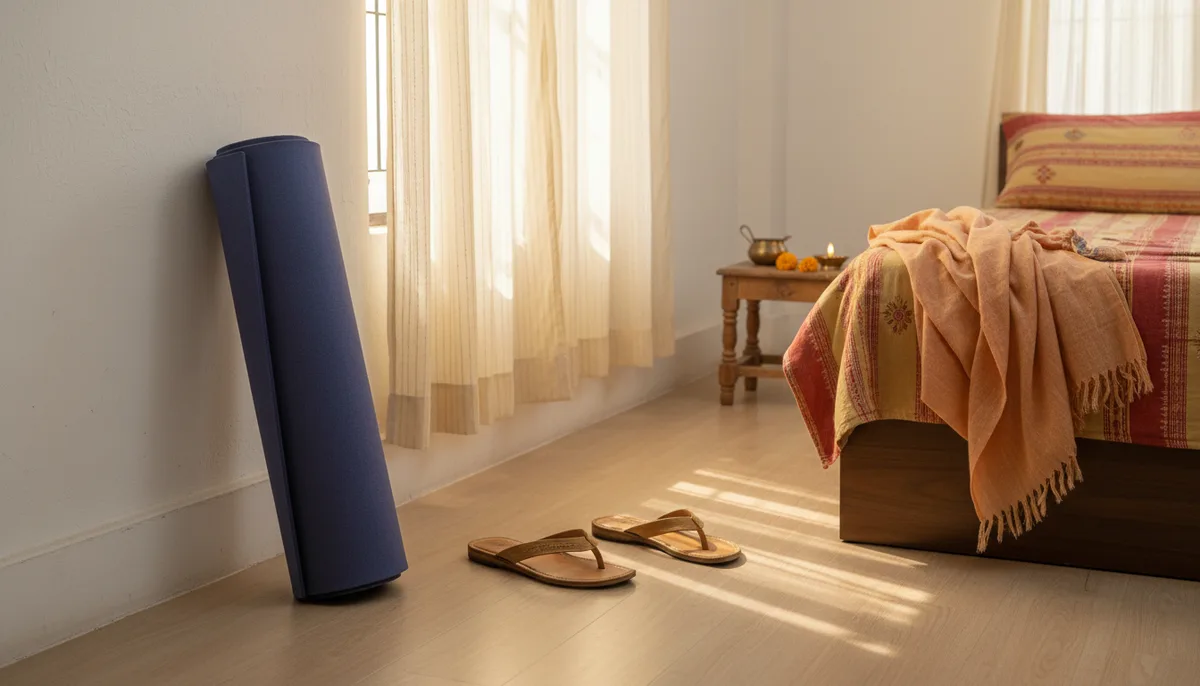
You roll out the mat. You follow along with a video for three days. Then life happens - a long day at work, a family function in the evening, monsoon fatigue - and by day five, the mat is back under the bed collecting dust. If this sounds familiar, you're not alone.
The problem isn't willpower. It isn't even time. The real reason most home yoga attempts fizzle is that people start with too much, too soon - an ambitious 45-minute session, a rigid schedule, and the quiet pressure of doing it perfectly. When one day gets missed, the habit feels broken, and it's easier to stop than restart.
Building a sustainable yoga practice at home looks nothing like what Instagram suggests. It's quieter, messier, and far more personal - and that's exactly what makes it work.
Start Smaller Than You Think You Should
Most people decide to "do yoga every day" and immediately picture a full session: warm-up, flow, cool-down, maybe some breathing at the end. That's a 30-to-45 minute commitment before the day has even started. For someone juggling a morning commute to an IT park in Bangalore, or managing a household in Chennai before the kids wake up, that window simply doesn't exist every single day.
Start with five minutes. Not as a warm-up - as the entire practice. Five minutes of gentle movement when you wake up, or five minutes of stretching before bed, still counts. The goal in the first two weeks isn't flexibility or strength. The goal is showing up. That's it.
Once the showing-up becomes automatic - once you stop debating whether to do it - adding time becomes natural. But you can't skip the boring first phase where you're just training your brain to connect a cue (the mat, the time of day, a specific corner of your room) with the action of practice.
The Two-Minute Rule for Low-Motivation Days
On days when you truly don't feel like it - and those days will come, especially during the heavy humidity of July or the festival chaos of October - make a deal with yourself: two minutes only. Sit on the mat, close your eyes, breathe slowly. If you want to do more after two minutes, great. If not, you still showed up. The streak stays alive. The habit stays intact.
This isn't about being easy on yourself. It's about understanding how habits are built: through consistency of action, not duration.
Design Your Space (Even If It's Tiny)
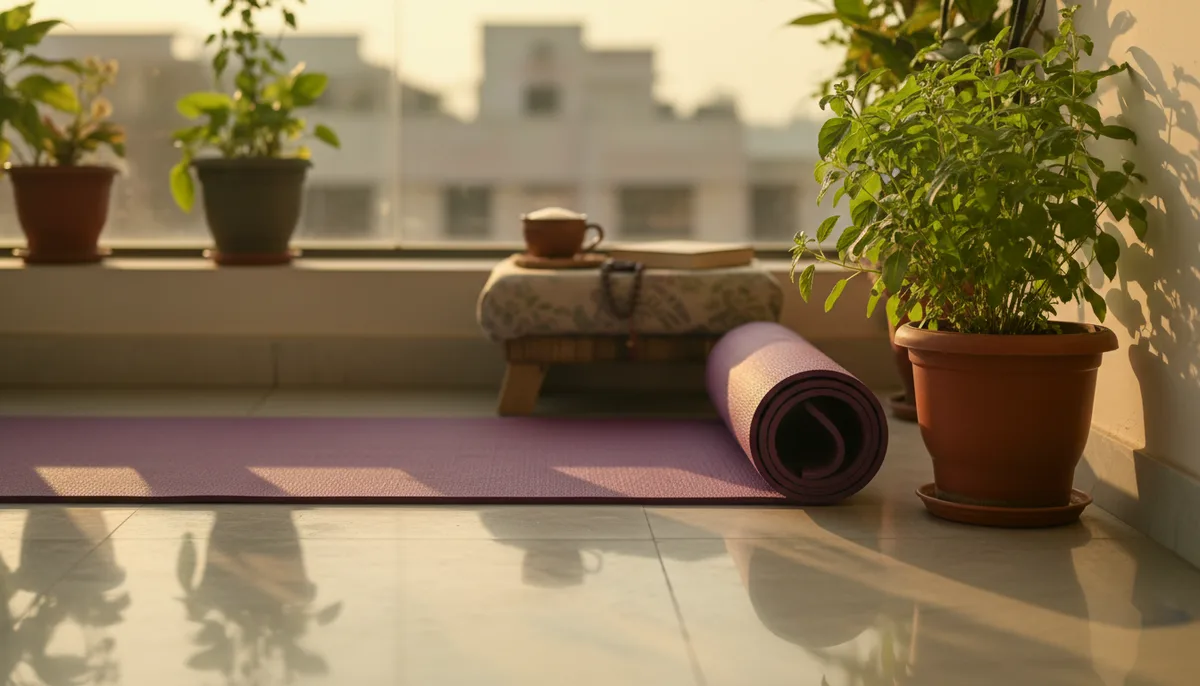
You don't need a dedicated yoga room. Most Indian homes don't have one. What you do need is a consistent spot - a corner of the bedroom, the balcony in the morning before the sun gets harsh, the living room after everyone leaves for work or school.
The location matters more than its size. When your brain sees that specific spot, it starts preparing for practice. Over time, just rolling out your mat in that corner becomes a signal that it's time to slow down and breathe. Keep it clean, keep it minimal, and if possible, keep your mat visible - when it's rolled up in a bag inside a cupboard, it's easy to forget it exists.
Some people like a small plant nearby, or the morning light coming through a window. These aren't luxuries - they're cues that make the environment work for the habit, not against it.
Follow a Structured Plan - Don't Wing It Every Day
One of the biggest mistakes new home practitioners make is deciding what to practice after they've already sat down on the mat. That decision fatigue is enough to make you pick up your phone instead. Having a plan already in place removes that friction entirely.
This is where a guided programme makes a real difference. When the sequence is chosen for you - and tuned to your body, your pace, and the time you have - you can just follow along instead of spending five minutes figuring out what comes next. Grihasana Premium offers daily home yoga sessions designed exactly for this: structured plans in 1-week, 4-week, and 12-week formats, so whether you're testing the waters or building a serious routine, there's something that fits.
The sequences are built for Indian home practitioners - people who may have a knee that acts up in cold weather, or a lower back that complains after long hours at a desk, or simply no experience with yoga terminology. The sessions meet you where you are, not where a generic app assumes you should be.
Work With the Indian Calendar, Not Against It
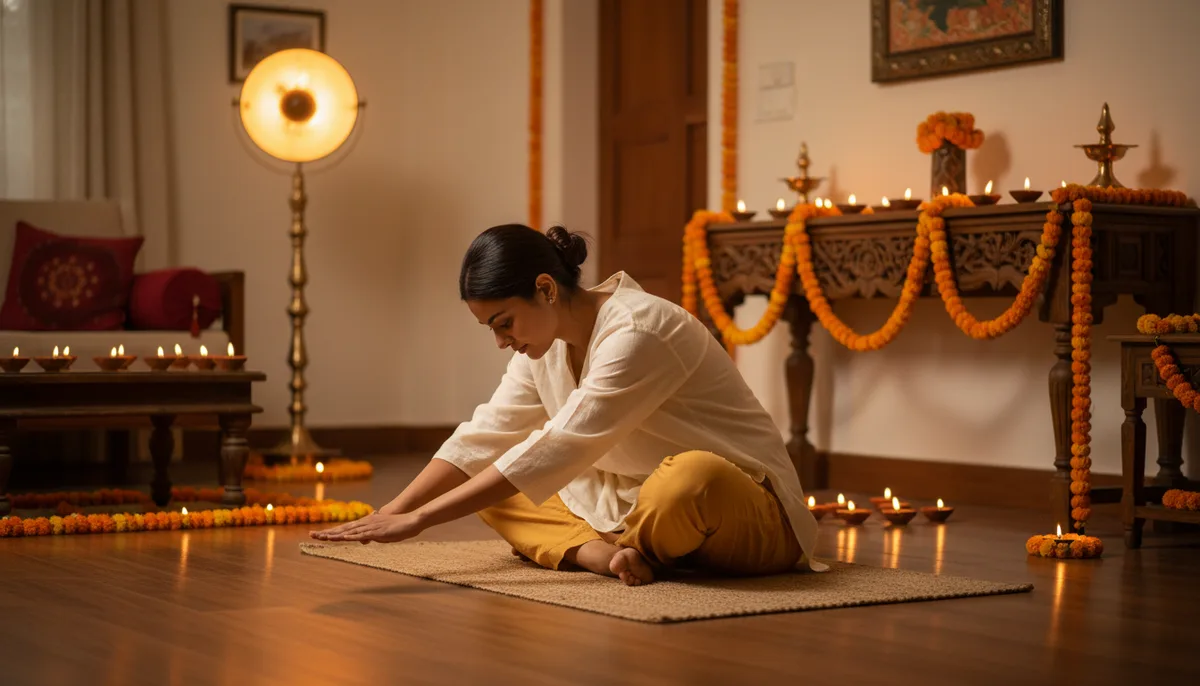
Here's something most global wellness apps miss: Indian life has a rhythm that's different from the Western productivity calendar. There are weeks in October and November when Navratri, Dussehra, and Diwali run one after another. There are summer holidays in April and May when the house is full of children. There are monsoon months when stepping outside feels impossible but the humidity indoors makes everything feel heavy.
A sustainable yoga habit accounts for these seasons instead of pretending they don't exist. During festival weeks, your five-minute rule becomes your lifeline - just enough to keep the habit alive without the pressure of a full session. During summer afternoons in north India when the heat peaks at 42 degrees, early morning practice becomes non-negotiable. During the cool Bangalore winter mornings (yes, all six weeks of it), a longer session feels genuinely pleasant.
Think of your practice as having seasons too. Some months you'll build. Some months you'll maintain. That's not failure - that's wisdom.
Track Progress Without Obsessing Over It
The human brain loves evidence. Seeing a simple log of days practiced - even just ticks in a notebook - creates a small but real sense of momentum. After two weeks of consistent practice, you'll start protecting your streak not out of discipline but because you genuinely don't want to break it.
But here's the balance: don't let the streak become the goal. The goal is how you feel - whether your shoulders are a little looser, whether you're sleeping slightly better, whether you're a bit calmer during a stressful call at work. These changes are subtle and slow, which is exactly how real change works. Progress in yoga compounds the same way interest compounds in a fixed deposit: quietly, steadily, and most noticeably when you look back after a few months rather than a few days.
What to Do After You Miss a Day (or a Week)
You will miss days. Accept this now so it doesn't feel like a catastrophe when it happens. Missing one day is not a broken habit - it's just a missed day. Missing a week is not a failed attempt - it's a pause. The only version of failure is deciding the pause is permanent.
When you return after a gap, resist the urge to "make up" for lost time with a longer or harder session. Just come back to your regular five minutes. Treat it like picking up a conversation you left mid-sentence - no drama, no apologies, just continue.
Give Yourself a Real Starting Point
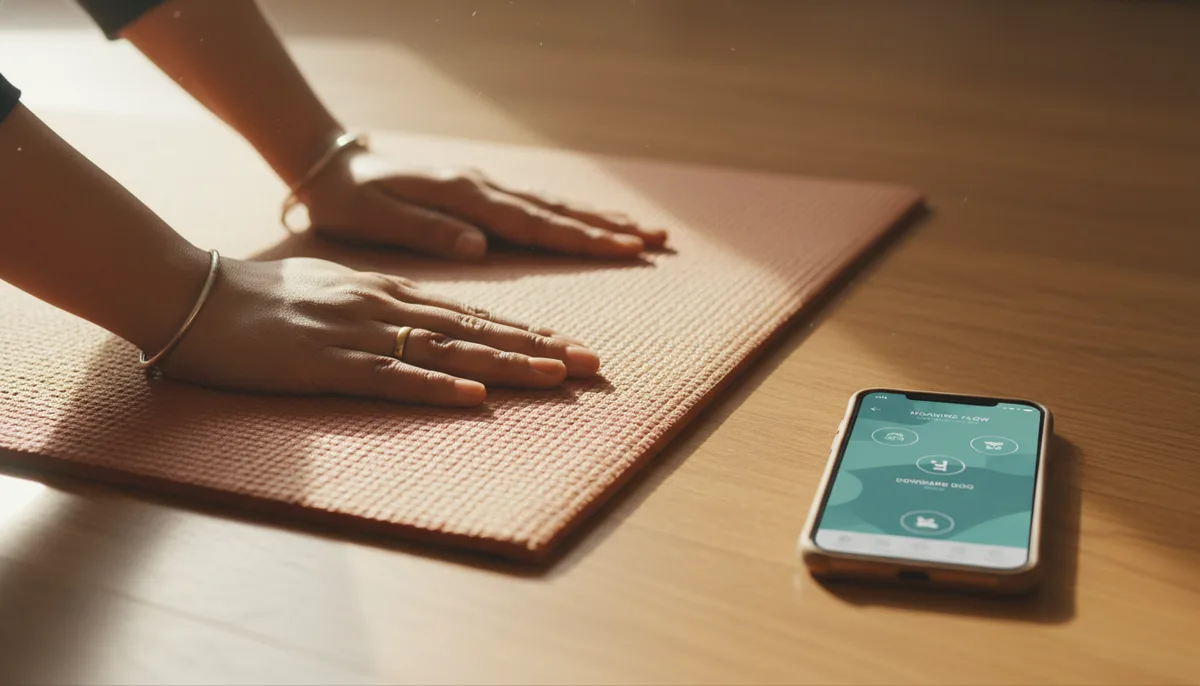
The biggest barrier to starting is usually the feeling that you need to know more before you begin - more about poses, more about breathing, more about the "right" way to practice. You don't. You need a mat, a quiet corner, and something to follow along with.
If you've been meaning to start for a while and keep putting it off, the Grihasana Premium 1-Week Trial exists precisely for this moment. Seven days, guided sessions, no commitment beyond the week - it's a low-pressure way to find out what a home practice actually feels like when it's designed for you. And if it works, you'll know it within those seven days.
A daily yoga habit isn't a grand resolution. It's a small, repeatable choice made easier every time you make it. Start smaller than feels worthwhile. Stay longer than feels necessary. Come back when you leave. That's the whole practice.