Why Stress Feels Different in India
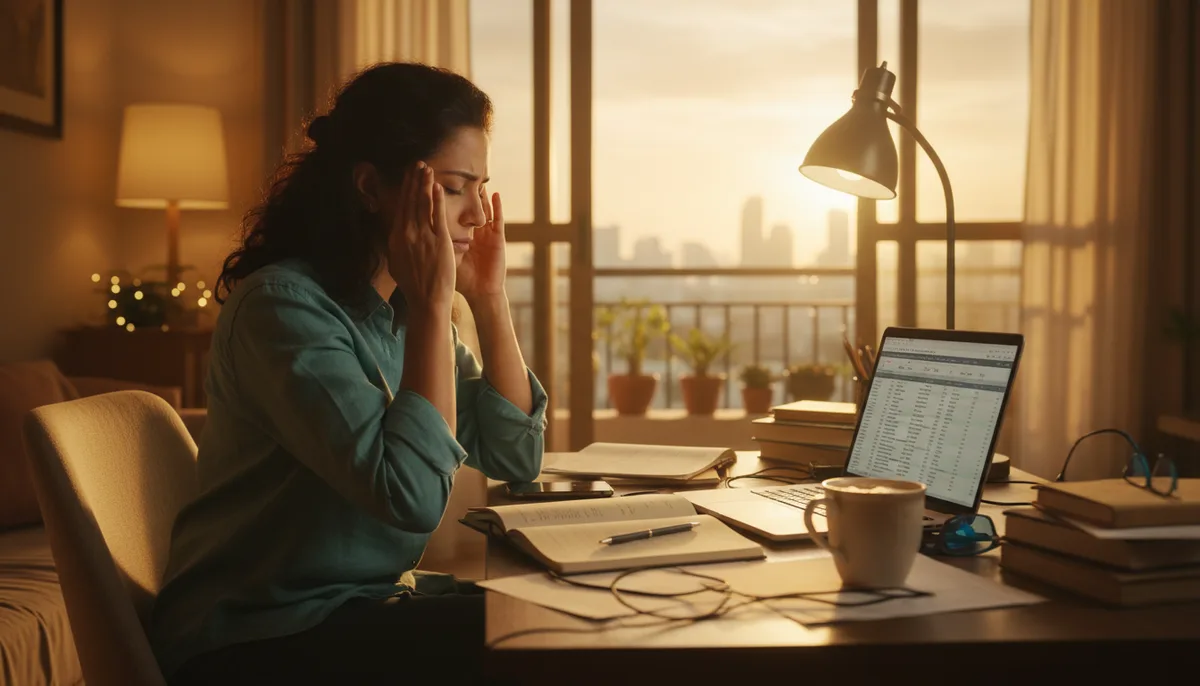
Let's be honest - stress in an Indian household has its own flavour. It's the 8 PM work call that bleeds into dinner. It's the festival prep that somehow doubles your to-do list. It's the commute in Bengaluru traffic or the noise of a Delhi afternoon. It's not one big thing; it's a hundred small things piling up quietly.
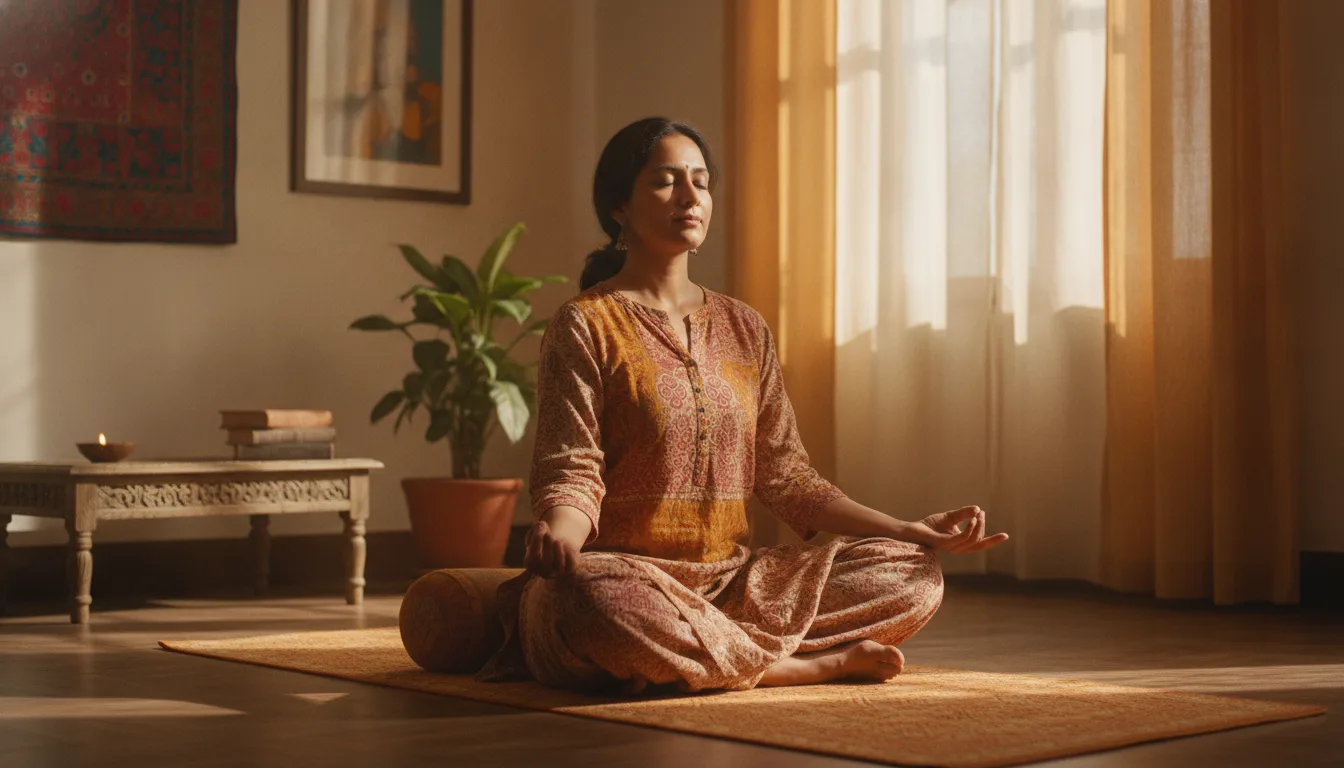
Most of us have learned to push through it. We tell ourselves we'll relax "when things settle down". But things rarely settle down on their own. What does help, slowly and steadily, is building a few minutes of intentional stillness into your day - and that's exactly what a home yoga practice is designed for.
This isn't about dramatic results or "becoming a new person". It's about feeling a little less wound up by evening. That's a real and worthwhile goal.
What Stress Actually Does to Your Body
When we're stressed, the body moves into a low-level alert mode. Shoulders creep up toward the ears. The jaw tightens. The breath gets shallow and quick. Digestion slows. Sleep becomes restless. Over weeks and months, this adds up in ways we barely notice - until we do.
Yoga works on stress not by fixing your thoughts, but by interrupting these physical patterns. A slow, deliberate exhale signals your nervous system that you are safe. Releasing tension from your hips or chest lets your body stop bracing. These are small shifts, but they compound over time.
The key word is time. This isn't a one-session fix. It's a habit, built gently, at home, on your schedule.
Poses That Help With Everyday Stress
You don't need an hour on a mat to feel the difference. Even fifteen to twenty minutes of the right kind of movement can shift how your body holds tension. Here are some practices worth starting with:
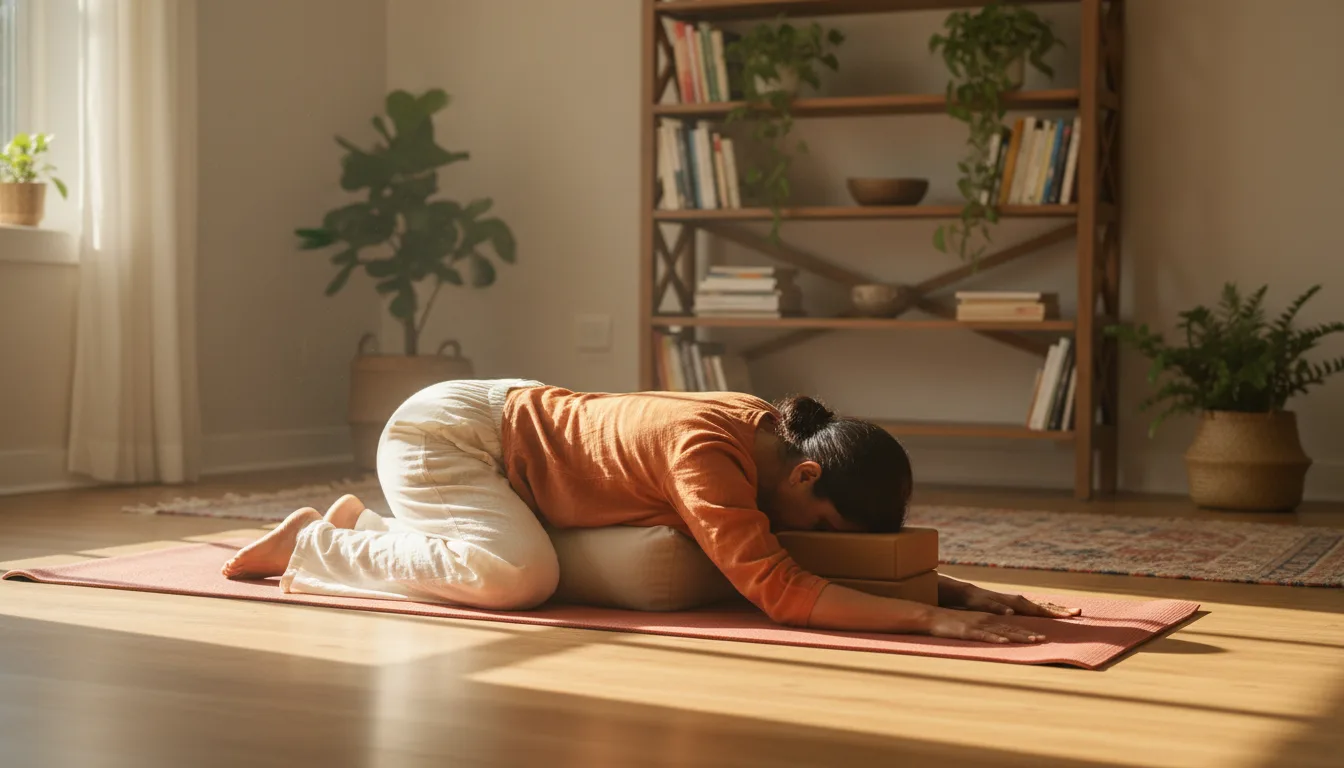
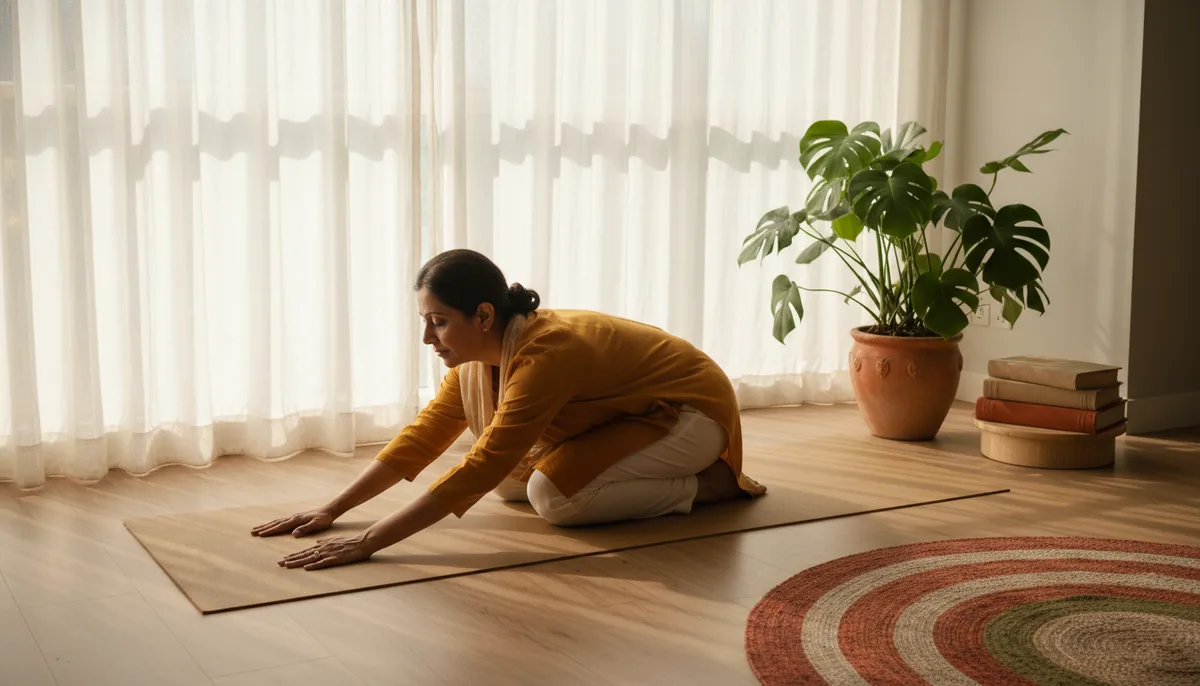
Child's Pose (Balasana)
This is the simplest reset in yoga. Kneel, fold forward, and let your forehead rest on the floor or a folded blanket. Arms can stretch forward or rest alongside your body. Stay here for ten slow breaths. It quiets the mind because it asks almost nothing of your body - just surrender to gravity. Many people find this pose alone changes their whole evening.
Legs Up the Wall (Viparita Karani)
Lie on your back and swing your legs up against a wall. That's it. Stay for five to ten minutes. This gentle inversion helps the nervous system shift from "alert" to "rest" mode. It's especially useful after a long day of sitting or standing, and it's one of those poses that looks deceptively simple but feels genuinely restorative. A bedroom wall works perfectly - no studio needed.
Seated Forward Fold (Paschimottanasana)
Sitting with legs straight, hinge forward from the hips and let your upper body drape over your legs. Don't chase the floor - just let your spine lengthen and your hamstrings release gently. Hold for eight to ten breaths. The internal quality of the pose matters more than how far you reach.
Supine Twist
Lying on your back, draw one knee to your chest and let it fall across the body while you gaze in the opposite direction. This wrings out tension stored in the lower back and hips - two areas where stress loves to hide. Switch sides and breathe slowly through both.
Corpse Pose (Savasana)
Don't skip this one. Lie flat, palms facing up, and do nothing for five minutes. The mind will wander - that's fine. Just keep returning to the feeling of your body against the floor. Savasana is where the practice settles in. Skipping it is like cooking a good meal and eating it standing over the sink.
The Role of Breathing in Stress Relief
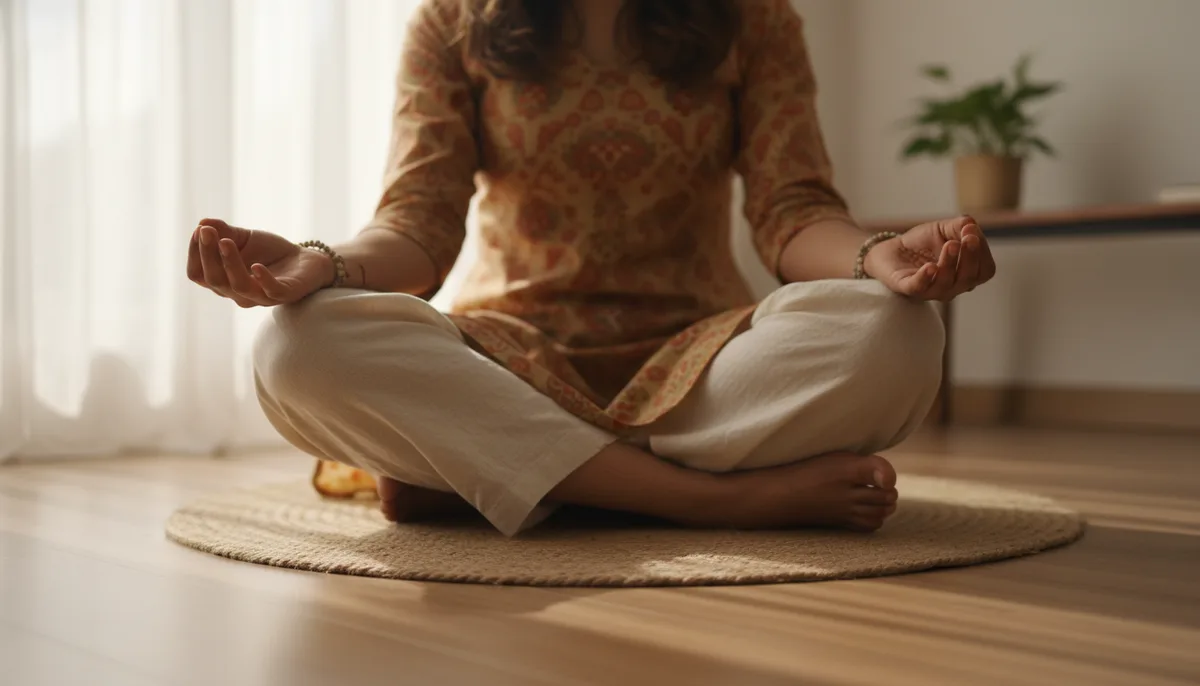
Breath is the fastest tool you have. Before you even unroll a mat, you can begin to shift your state with one simple technique: a longer exhale.
Breathe in for a count of four. Breathe out for a count of six or eight. Repeat for two or three minutes. This extended exhale activates the parasympathetic nervous system - the part of your body responsible for rest and recovery. It's backed by physiology, not mysticism, and it works even on a busy train or before a difficult meeting.
Many people who feel they "don't have time for yoga" find that starting with just breathwork - two to five minutes a day - builds enough of a foundation to eventually add movement. It's a legitimate starting point, not a shortcut.
Making It a Real Habit (Not Just a Good Intention)
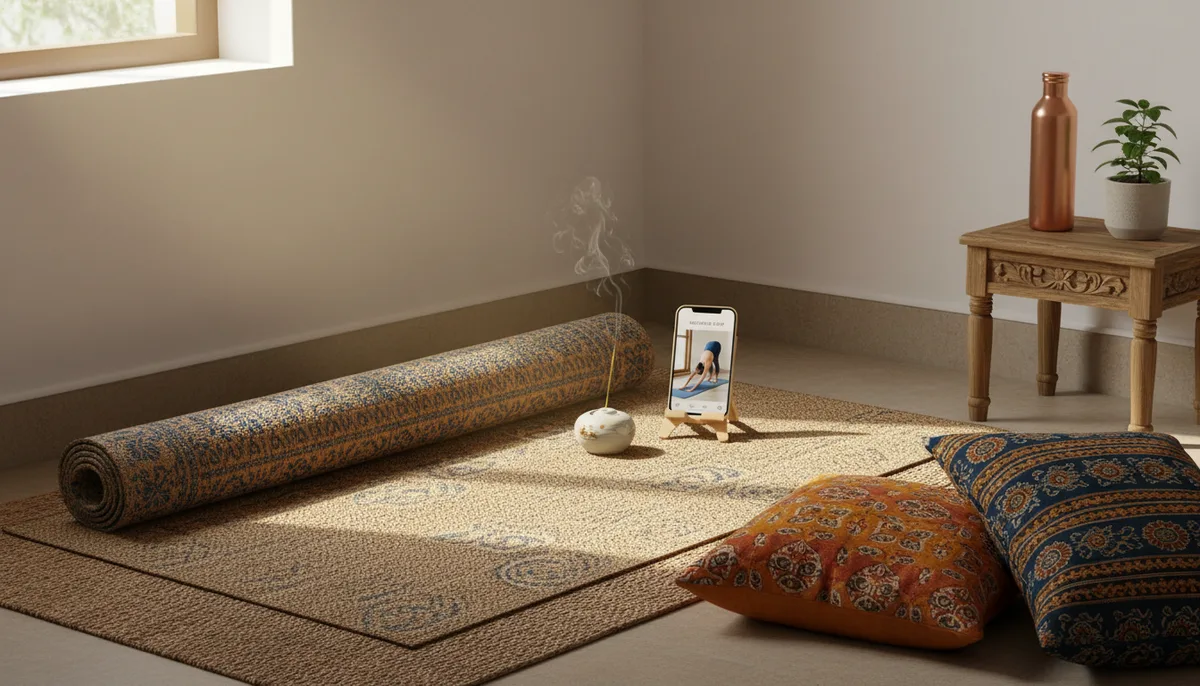
The honest truth is that most people already know yoga helps with stress. What stops them isn't knowledge - it's consistency. Life keeps intervening. Weeks pass. The mat stays rolled up in a corner.
A few things that actually help:
- Anchor it to something you already do. After your morning chai. Before you open your laptop. After the kids are in bed. Linking a new habit to an existing one makes it easier to remember and stick to.
- Keep the mat visible. If your mat is tucked away in a cupboard, it's easier to skip. Leave it out. A corner of your bedroom or living room is enough.
- Start absurdly small. Five minutes is a real practice. Ten minutes done four times a week is better than an hour done once. Let the practice earn its place in your life rather than demanding a big commitment upfront.
- Use a structured plan. Having someone (or something) tell you what to do next removes the friction of decision-making. When you're tired and stressed, the last thing you want is to figure out a sequence from scratch.
This is where Grihasana Premium fits in naturally. The app offers daily sessions of five to twenty-five minutes, designed specifically for home practice in Indian households - not a gym, not a studio, just your living room floor. Sessions are sequenced thoughtfully, so you're not piecing together random videos. You follow a rhythm, and the rhythm does a lot of the work for you.
Yoga for Stress Across Different Life Stages
Stress doesn't look the same at every age or life stage, and neither should your practice.
If you're in your late twenties or early thirties, juggling career pressure and perhaps a new home or relationship, your stress is likely fast-moving and mental. Short, grounding practices - five to fifteen minutes in the morning - tend to work well. They set a calmer tone before the day accelerates.
In your late thirties and forties, the stress often involves more layers - career, aging parents, children, health concerns of your own. Here, evening practices that release physical tension from the body (hips, shoulders, lower back) tend to be especially valuable. Longer holds, quieter poses, more breath focus.
For those returning to yoga after a gap - maybe you practiced in college or in your twenties and then life took over - the body may feel stiffer than you remember. That's completely normal. A gentle, progressive approach matters more than picking up where you left off. Grihasana Premium includes sessions suitable for people returning to practice, so you can ease back in without frustration or injury.
A Small Shift in How You Think About Stress
Yoga won't eliminate the traffic, the deadlines, or the noise. It won't make your in-laws less opinionated or your boss less demanding. What it can do is change your relationship with stress - giving you a small but reliable way to discharge it before it accumulates into something heavier.
Think of it less like a cure and more like a daily hygiene practice. You brush your teeth not because today was particularly dirty, but because the habit protects you over time. A short yoga session works similarly. It's maintenance, not miracle.
If you're curious about starting and want something low-pressure to try first, the 1-Week Trial is a good way to explore without committing to a longer plan. Seven days, your own home, your own pace.
Stress will keep showing up. But so can you - a little steadier, a little softer in the shoulders, a little more present. That's what the practice is for.